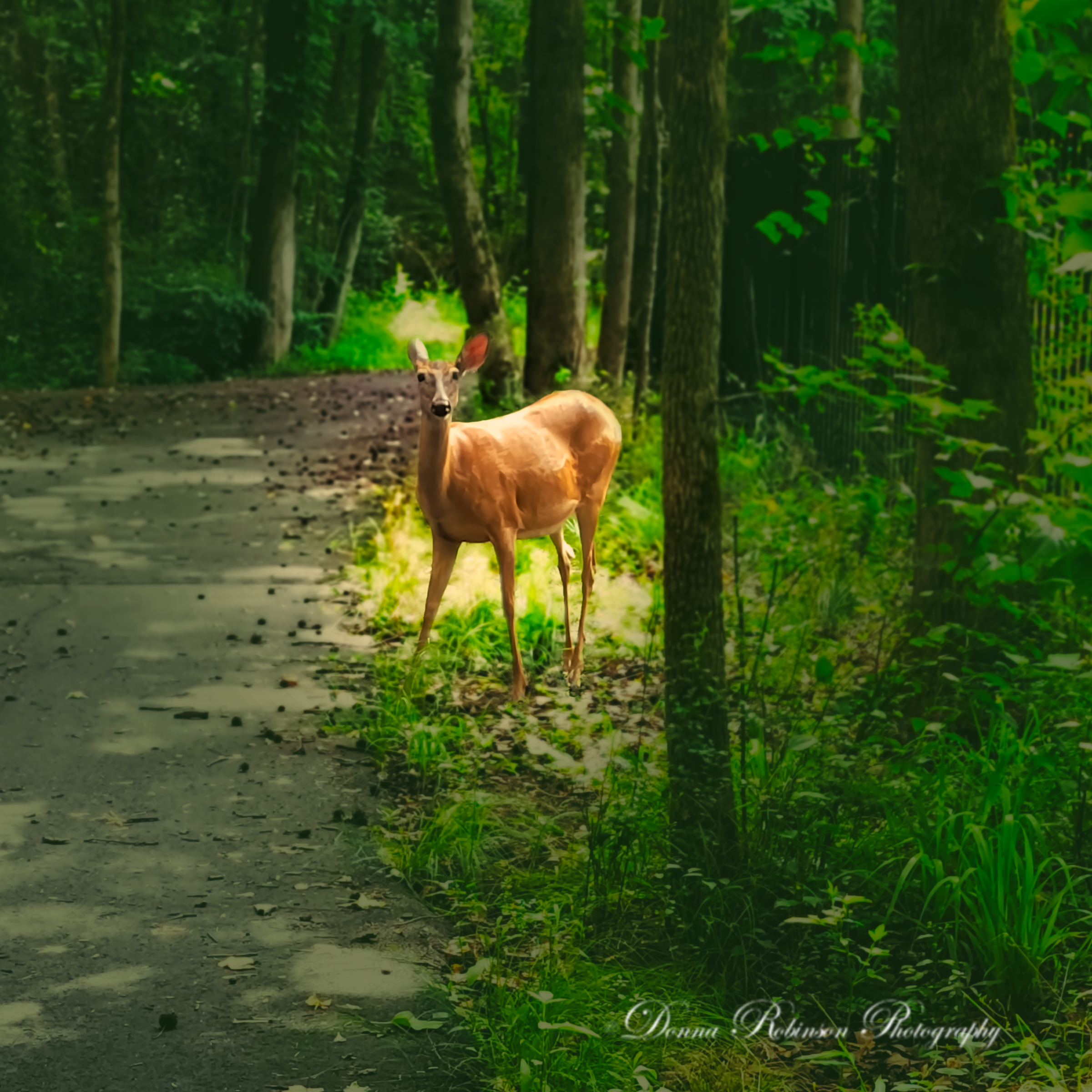
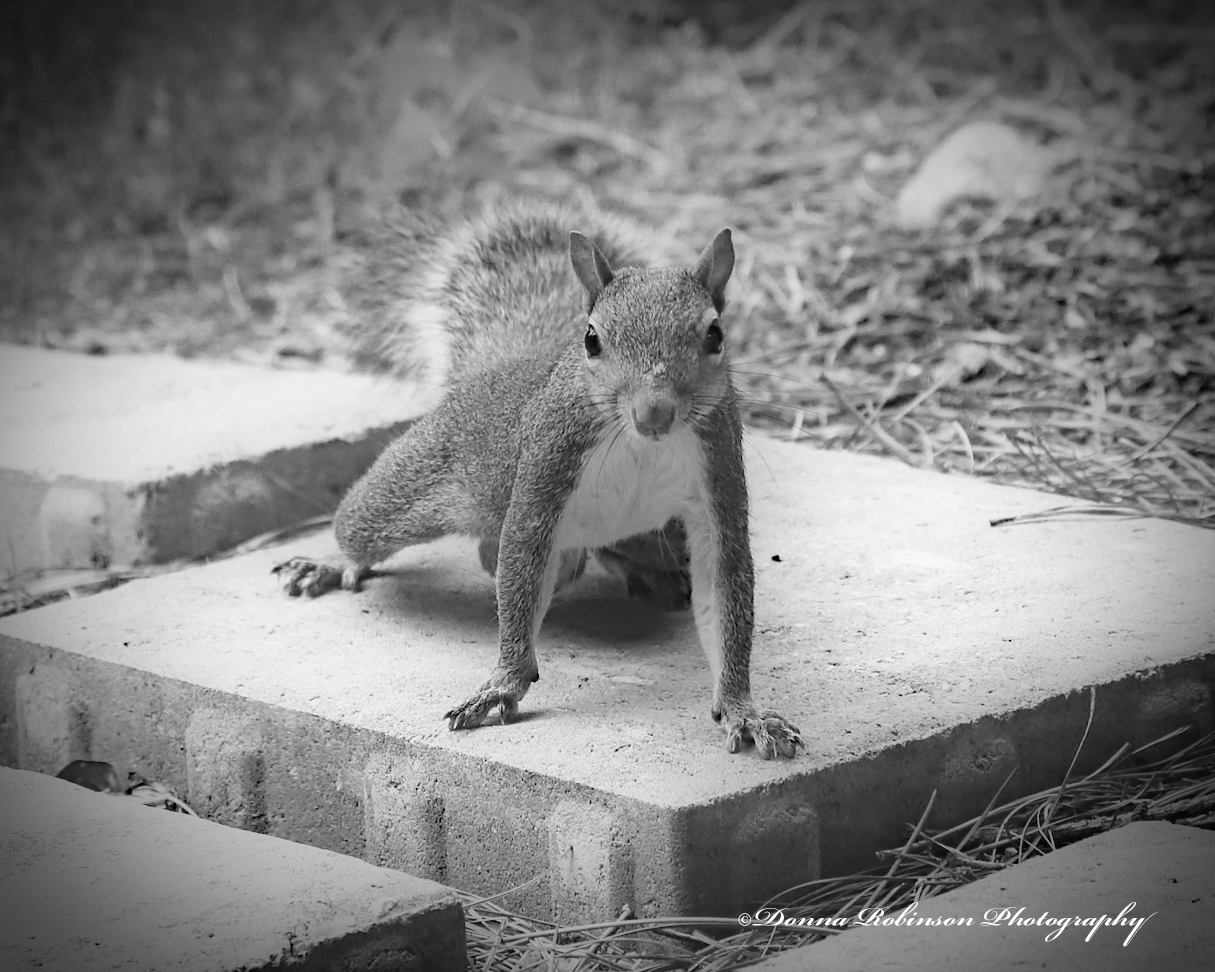
“In the presence of nature, the deer teaches us to be still, to listen, and to appreciate life’s simple moments.” ~unknown
What can be simpler than a chance encounter with Mother Nature?
I took this photo on one of our walks last week using my Samsung Galaxy Note 20. After a few edits in Affinity Photo (lighting, blurring, curves and vignette) this was the final result. I’m also linking this to John’s Cellpic Sunday.
If you’ve followed along with my blog for a while, you know that one of my all-time favorite bird is the hummingbird. They are cute, swift and very challenging to photograph.
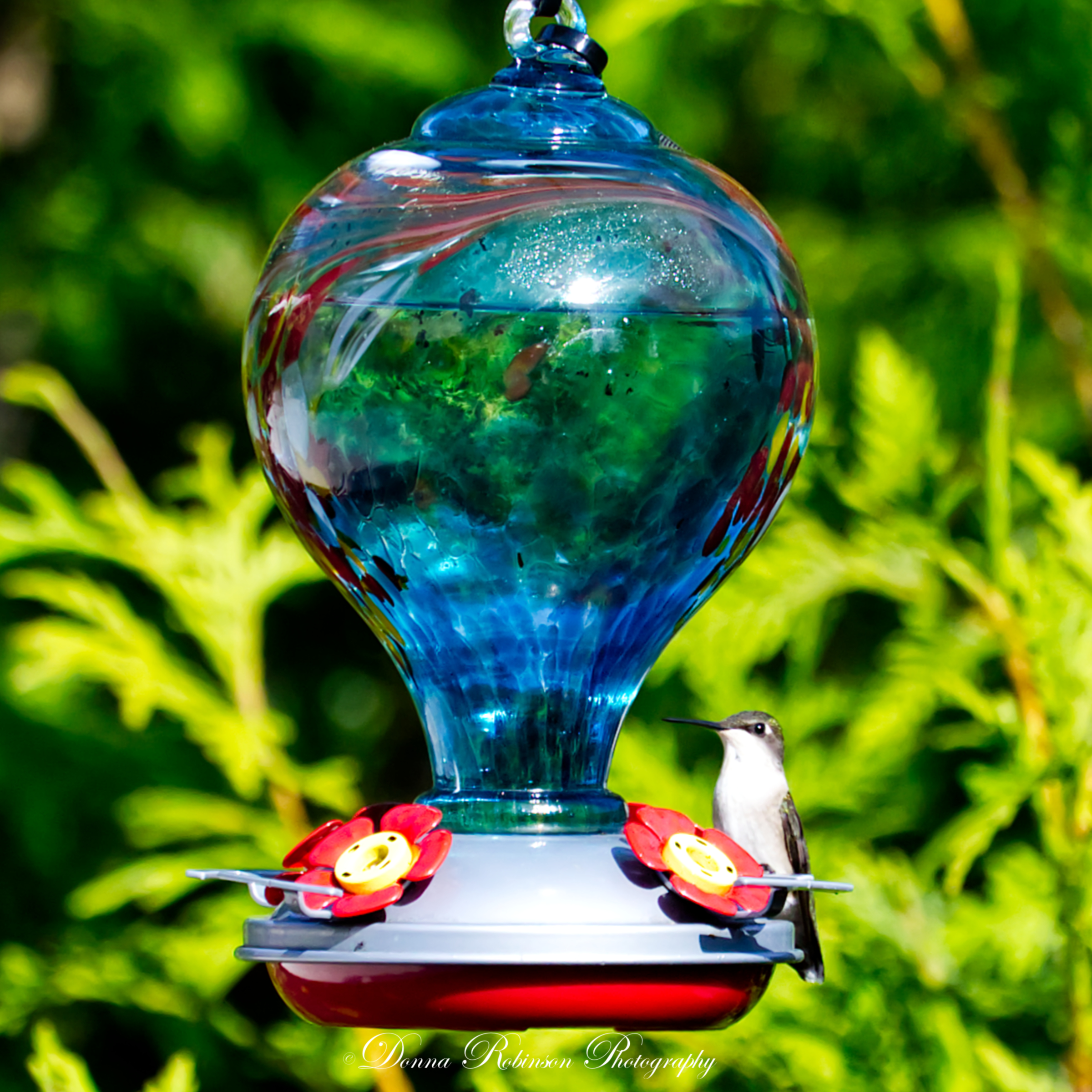
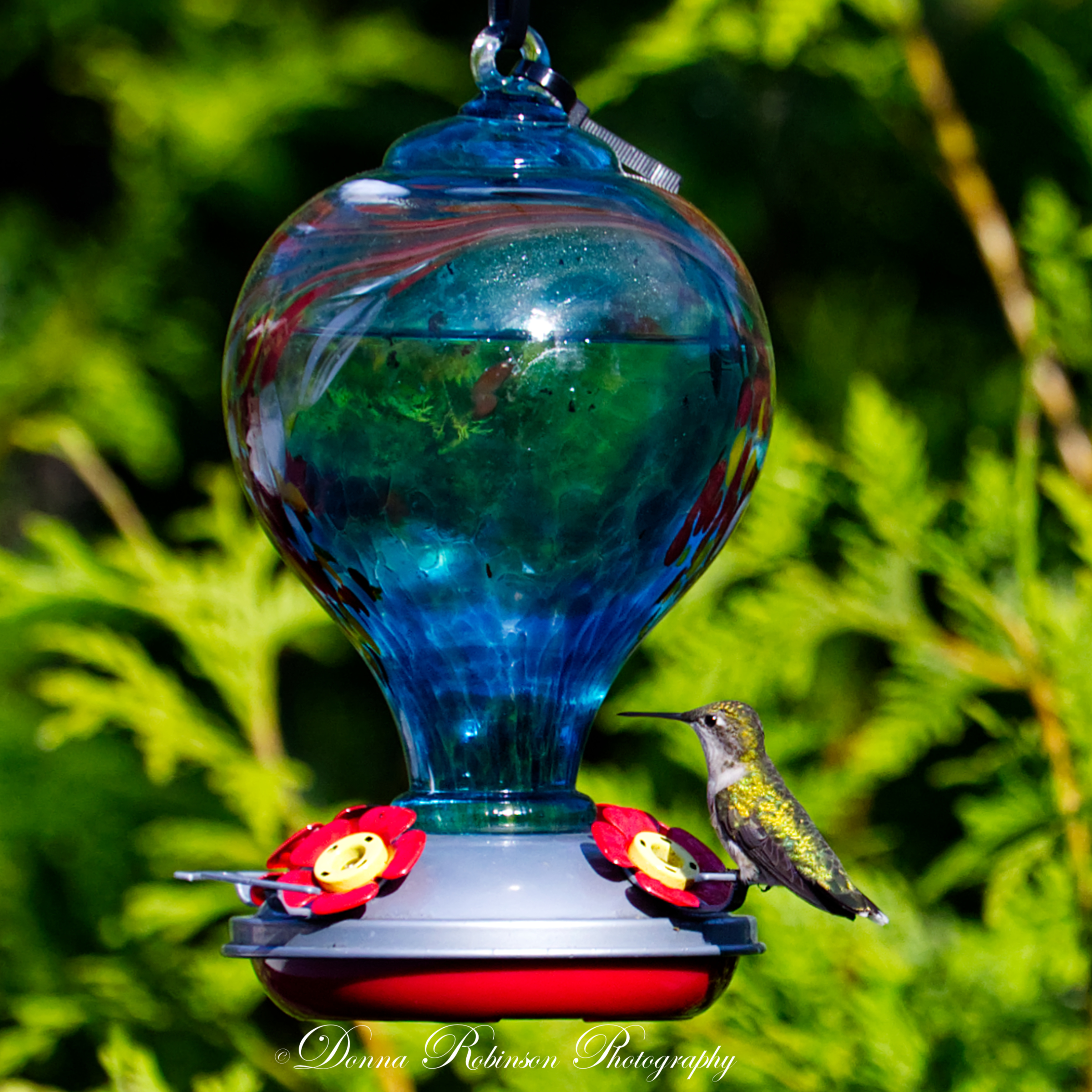
Except for the occasional scout, they were a little late showing up to the garden this year. But finally, this past Monday we had an emerald green hummer land on our feeder.
As you might imagine, Hummingbirds get their name from the humming sound their wings make when in flight. They hover at rapid wing-flapping rates, which vary from around 12 beats per second in the largest species to 99 per second in small hummingbirds (source: Wikipedia).
The feathers on a hummingbird don’t come from a specific pigment. Instead, the top layer contains prism-like cells that reflect the light (source: Hummingbird Info). Look how shiny and multicolored this little guy is.
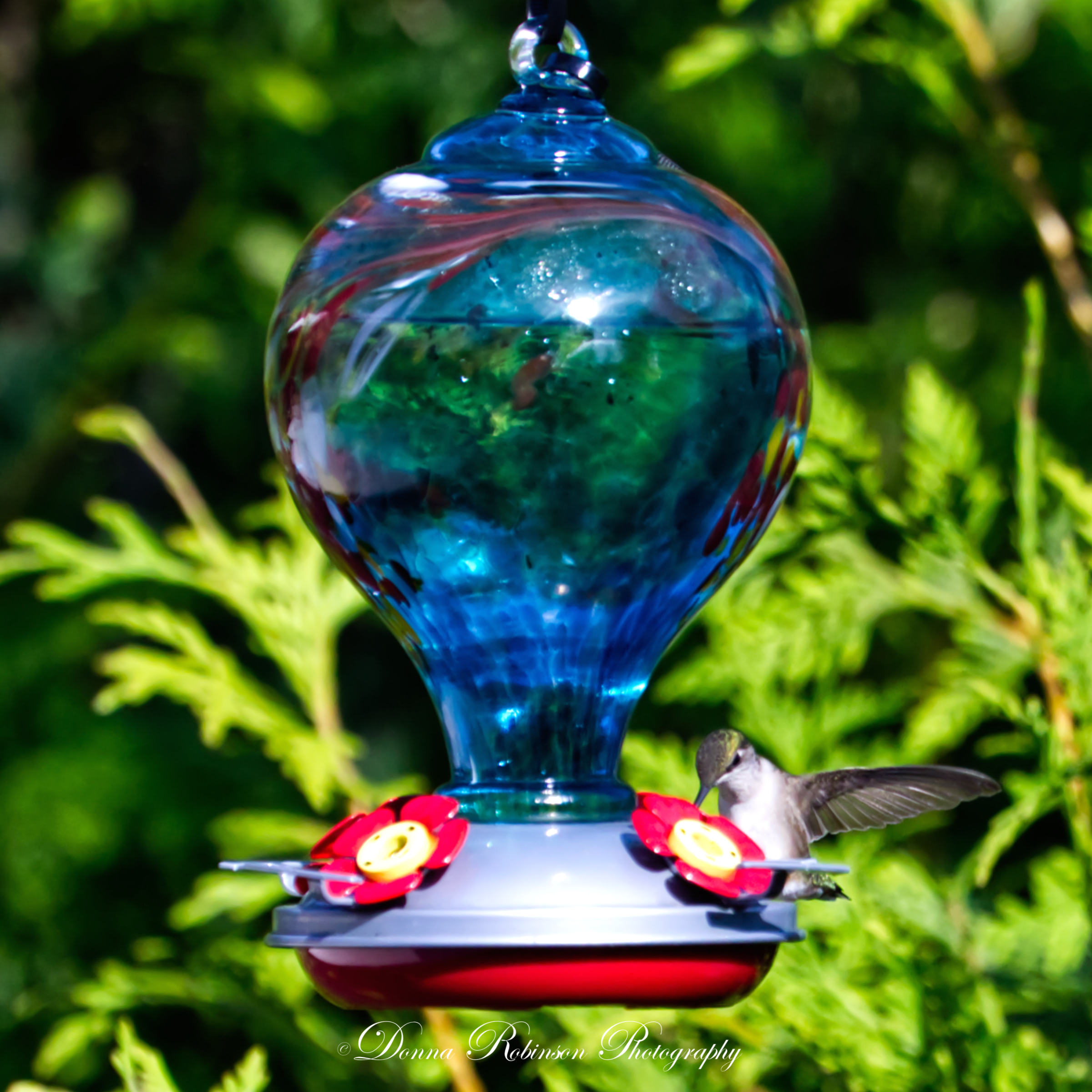
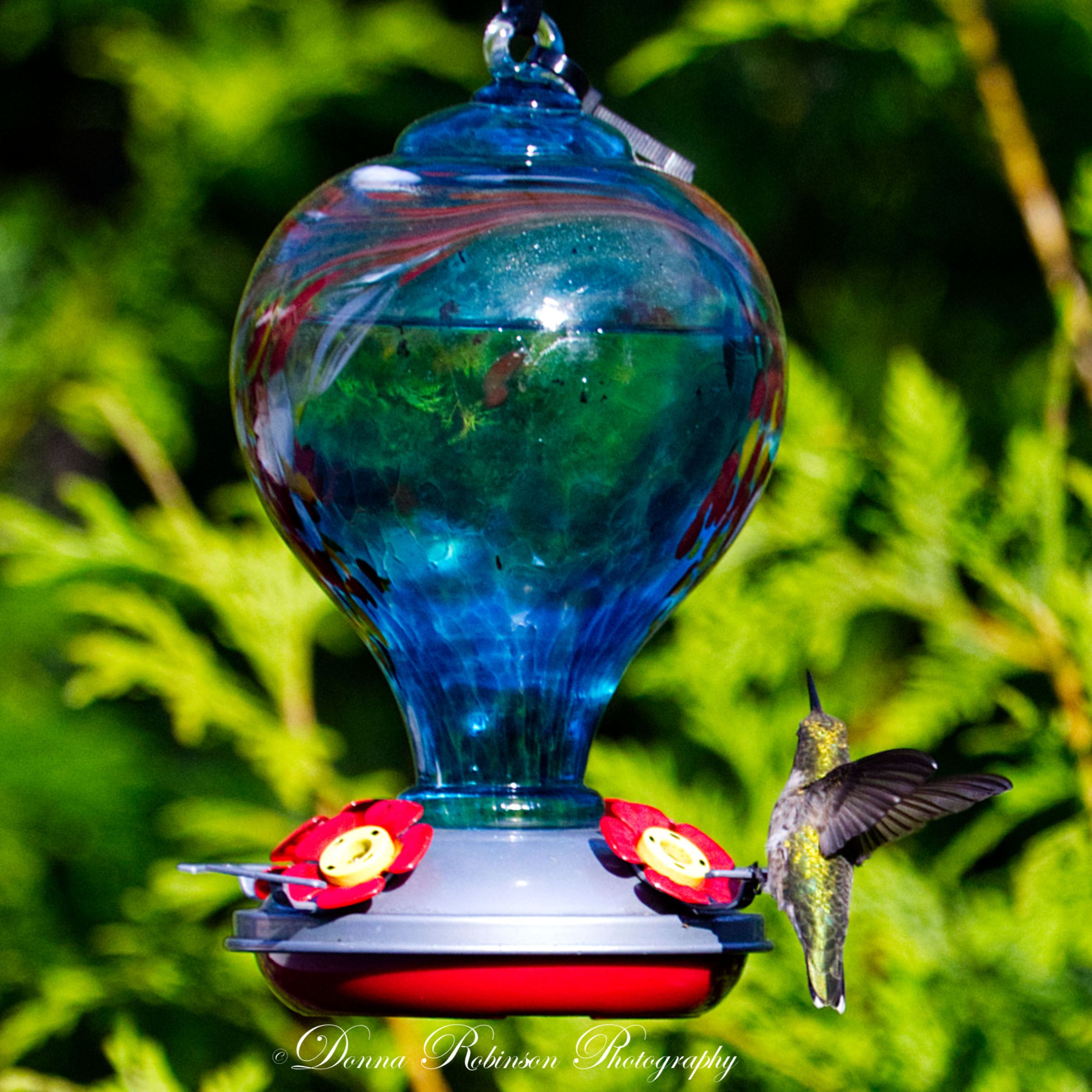
I’m a little rusty when it comes to capturing these cute garden fairies in flight. Normally, they fly at a speed of 25 – 30 miles per hour and when threatened they have a burst speed of 30 – 50 miles per hour (source: Hummingbird 101).
This was a lucky shot of this guy getting ready to leave the feeder.
I hope you enjoyed the fun facts about hummingbirds, today. Rest assured there will be more posts this summer of these beautiful creatures so stay tuned.
Until next time, have a great week and keep humming along.
“I asked a bird for advice. It said to just wing it.”
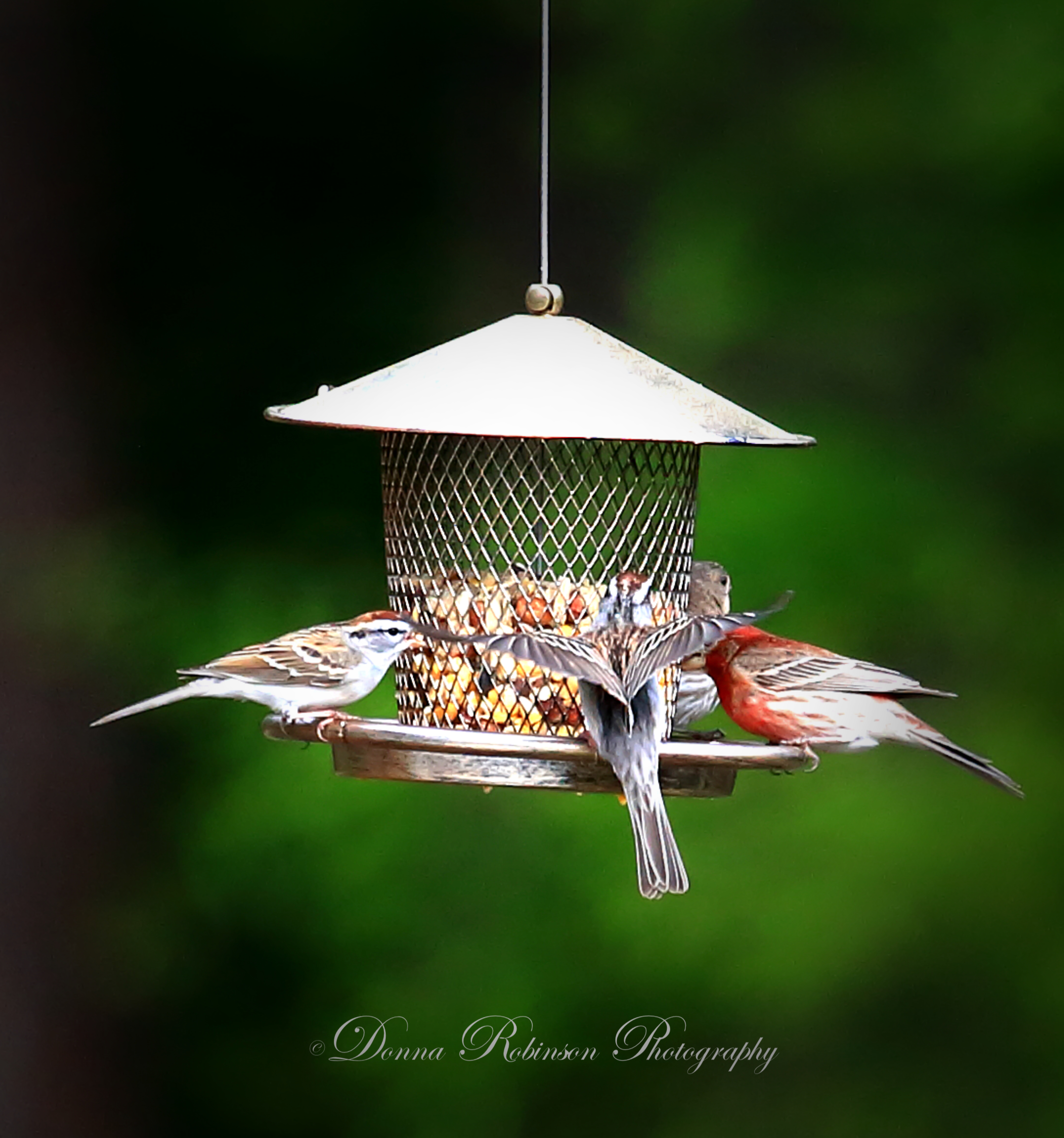
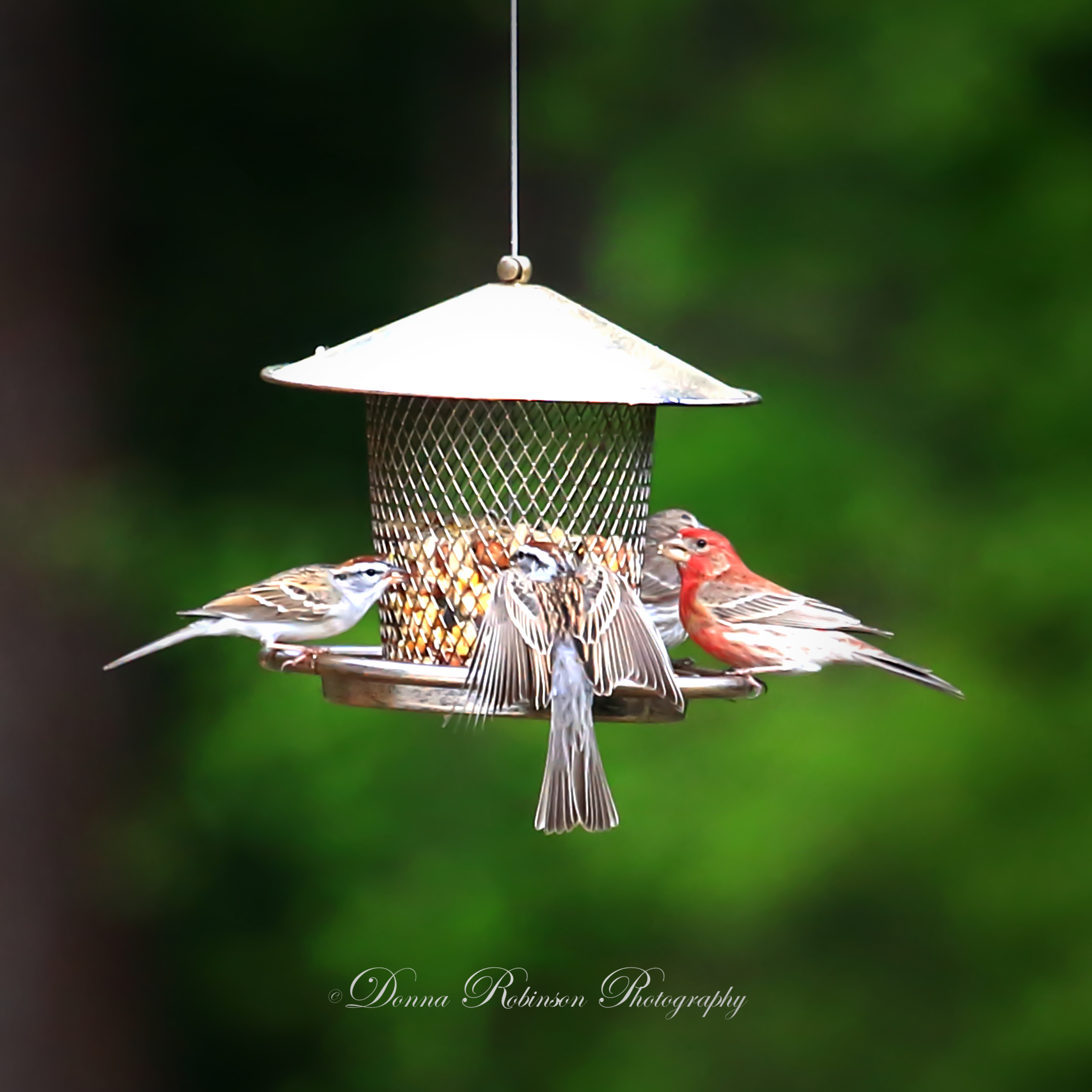
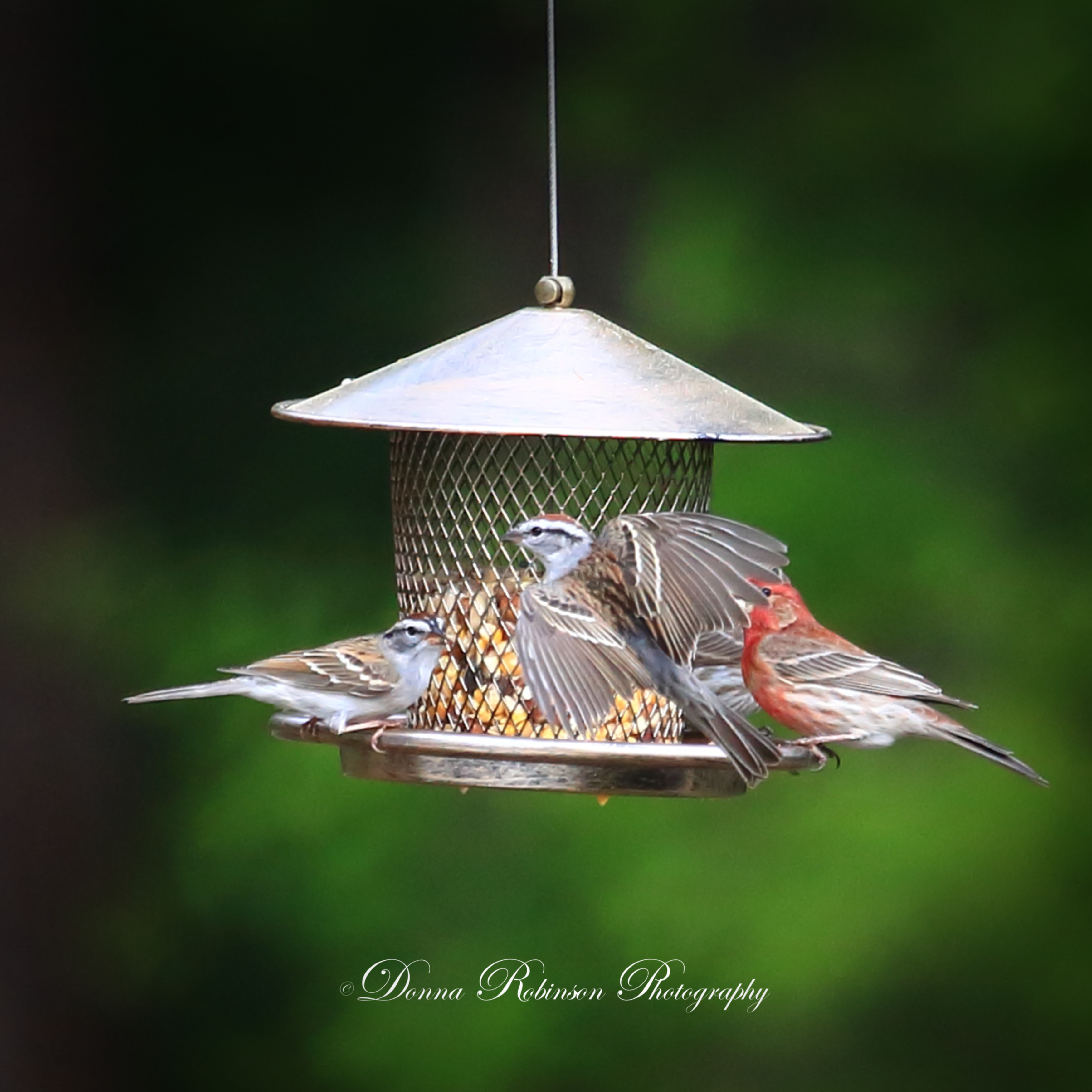
There was a group of finches hanging out at the feeder the other day. They all seemed to be having a good time, except for the middle one.
He was either uncomfortable with the company or was in a hurry to get to another feeder, because he never really settled in to eat, except for just a few bites.
As quickly as he arrived, he was taking off.
Oh well, nothing wrong with a little “dining and dashing.”
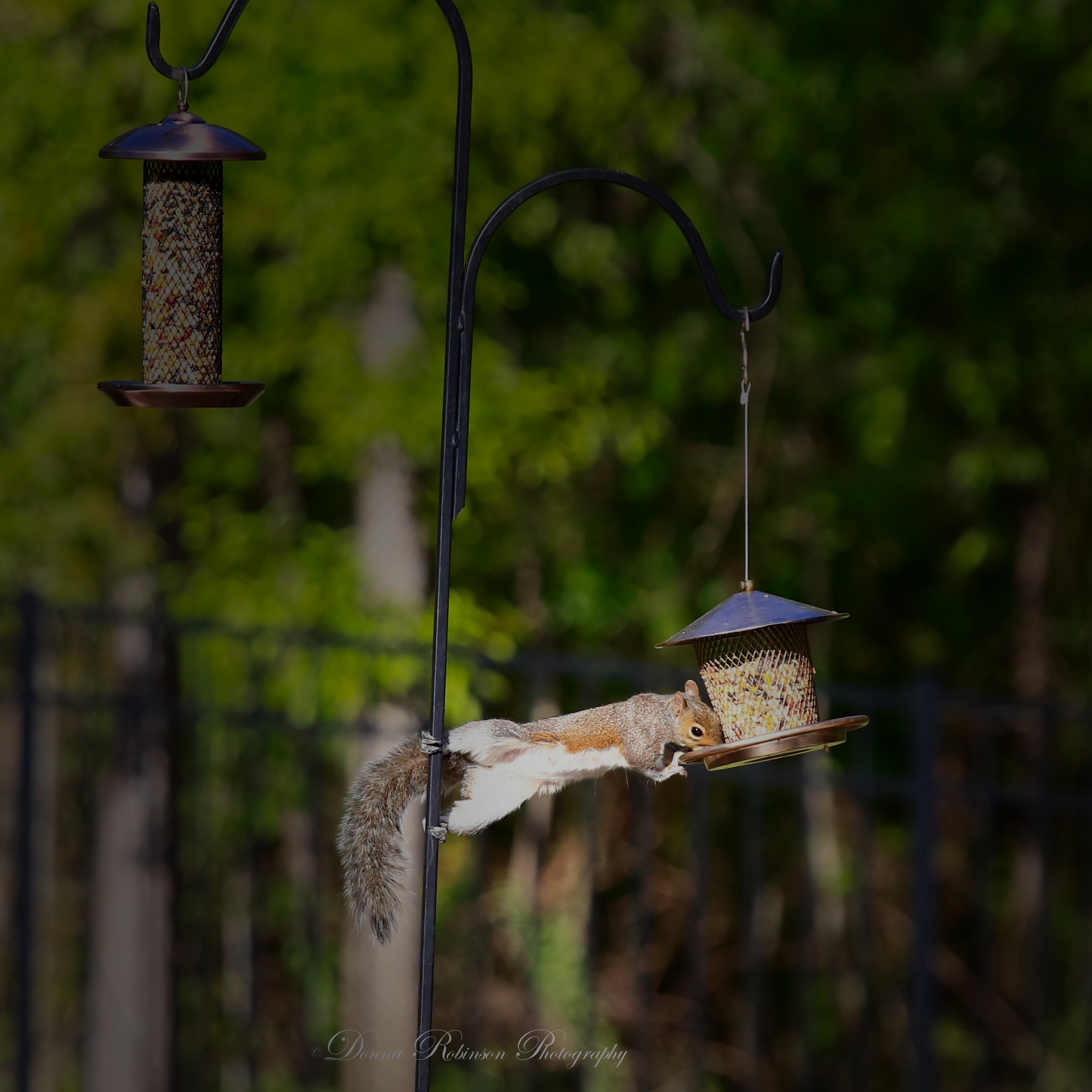
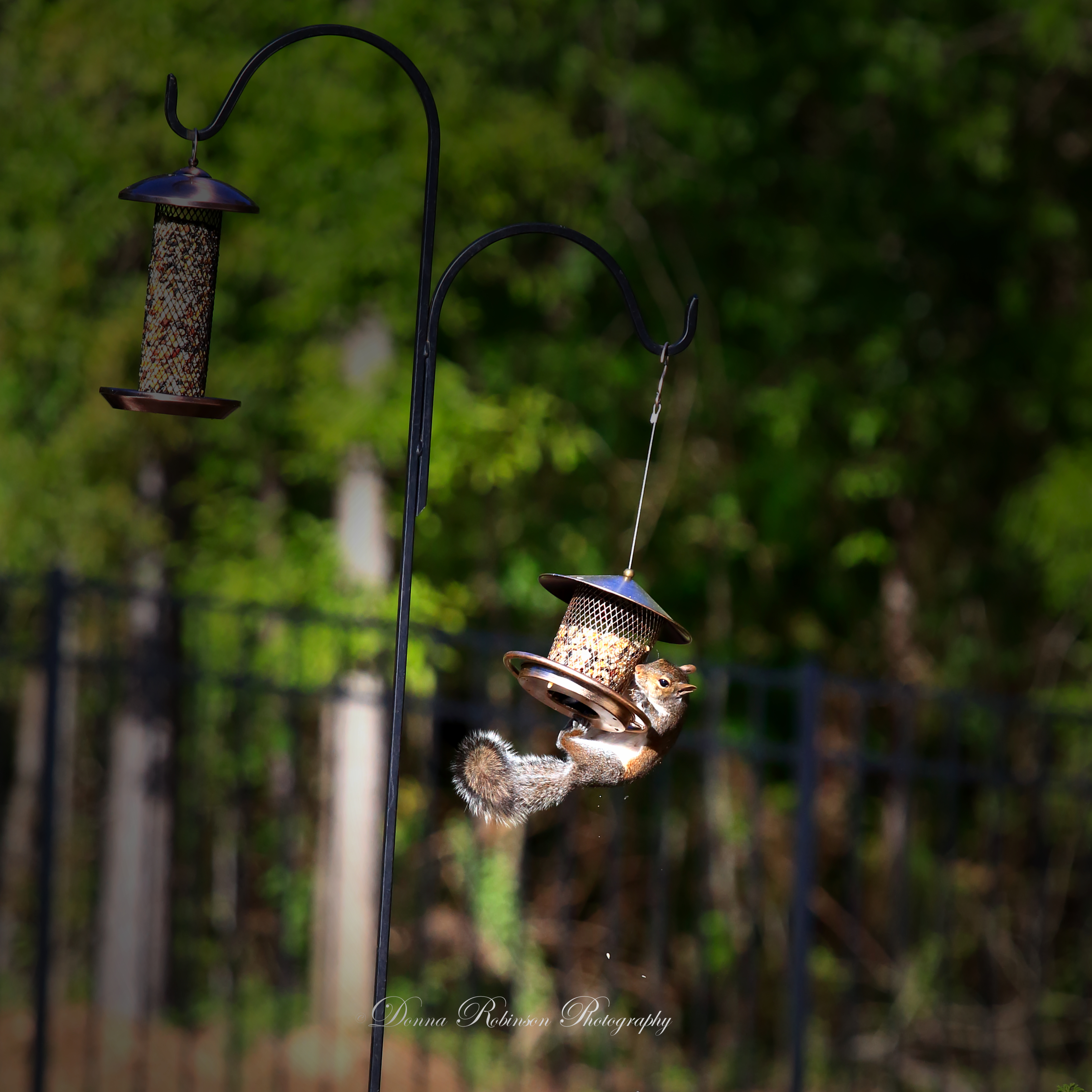
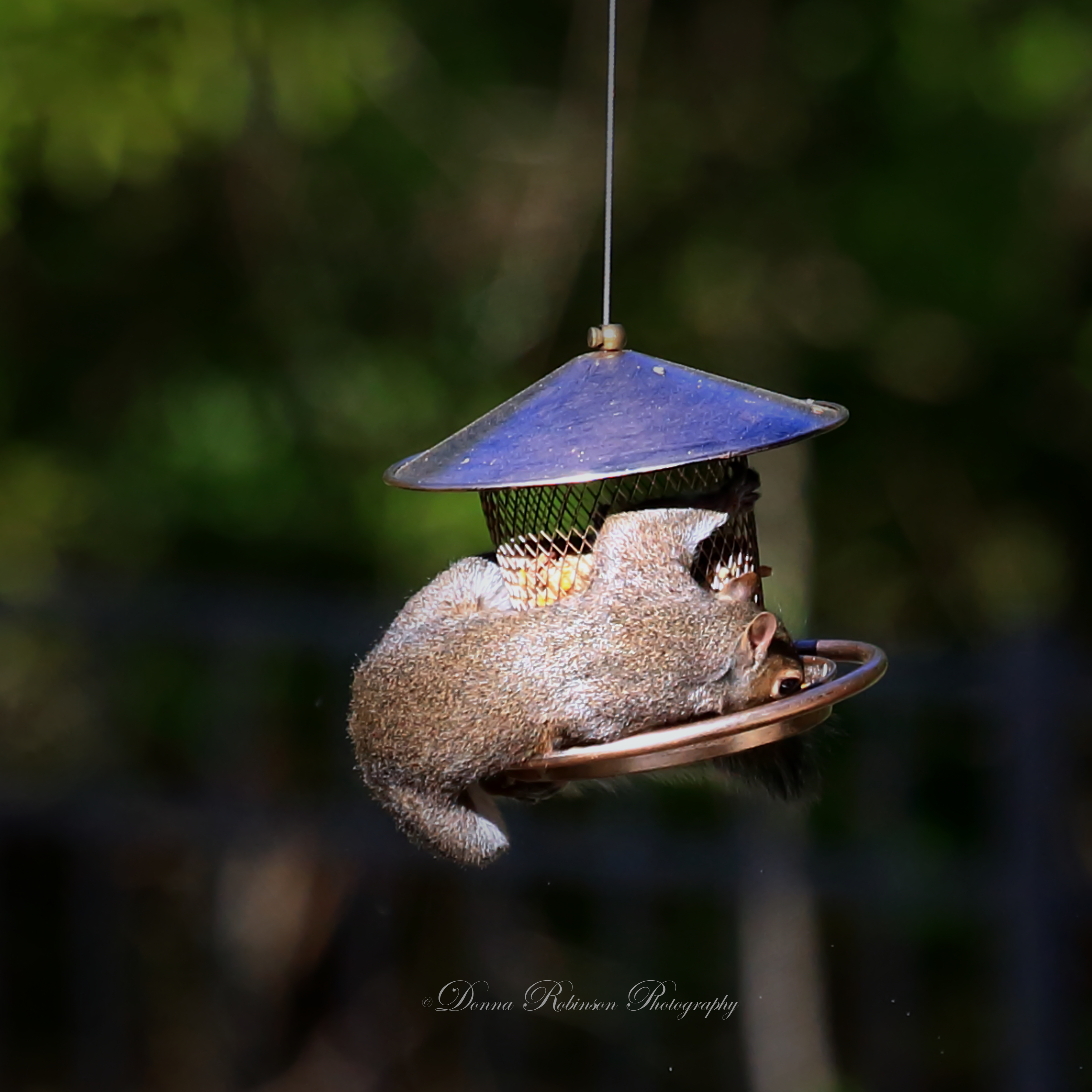
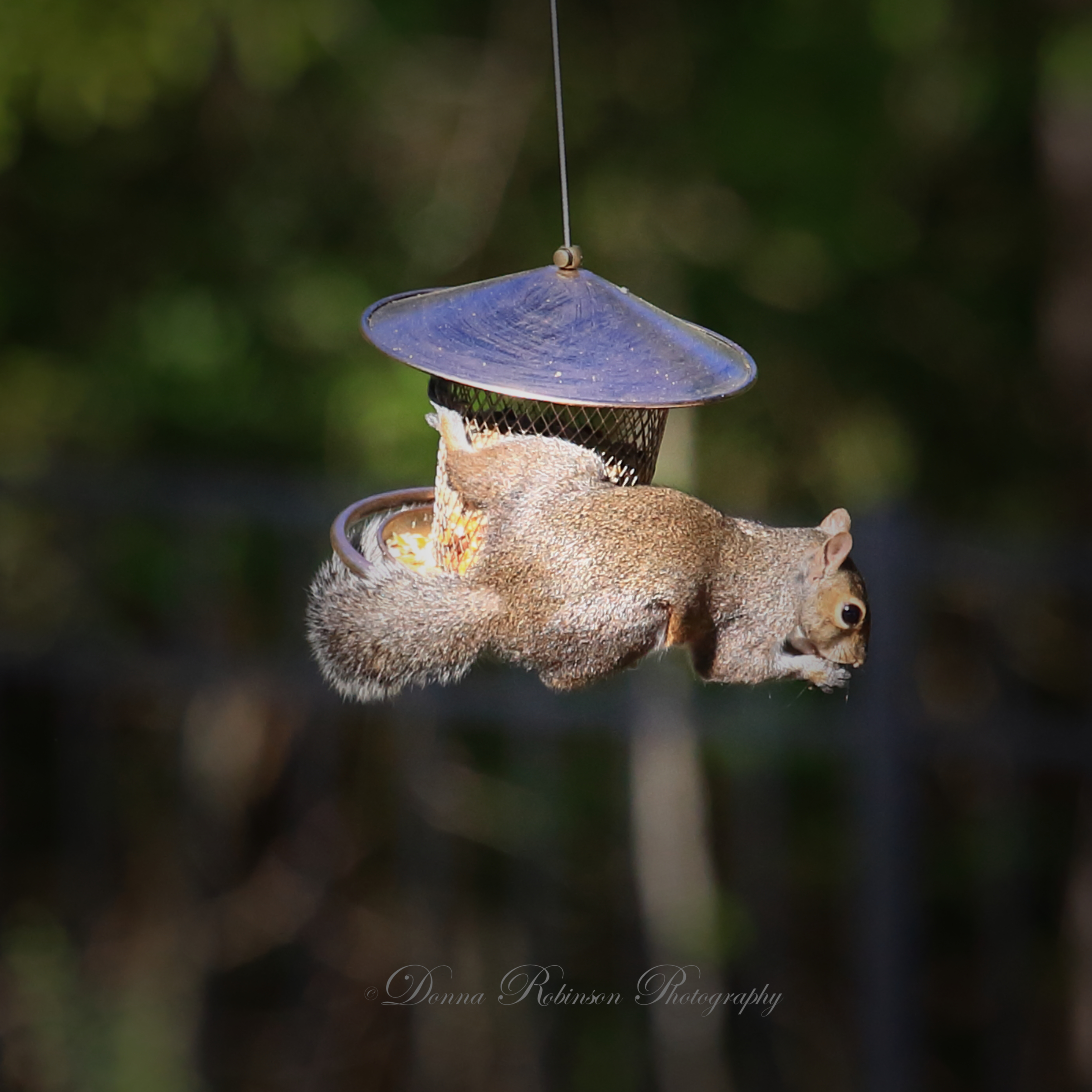
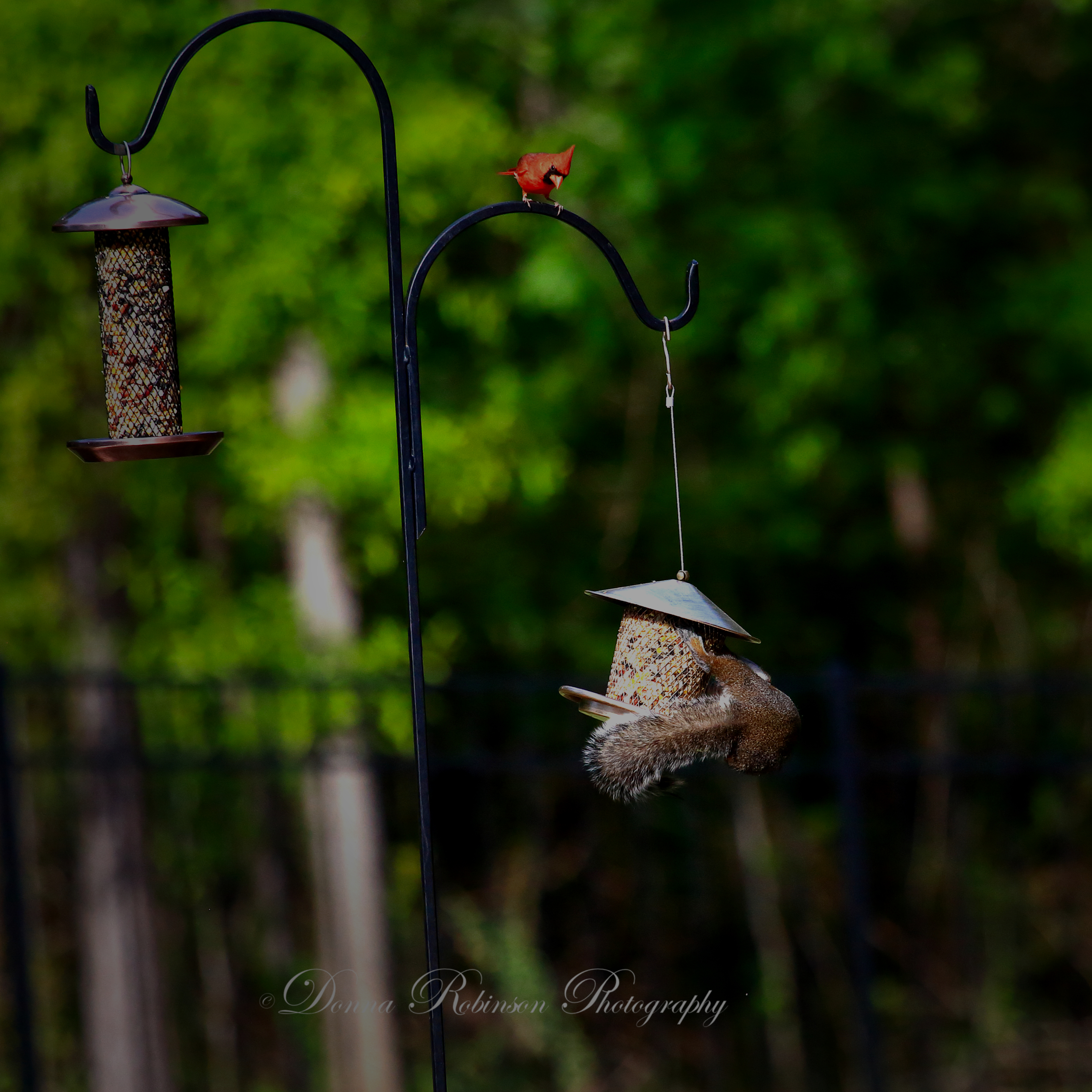
We have a VERY relentless squirrel hanging out around our bird feeders. He’s rather cute to watch as he comes scampering out of the woods across the lawn to the feeders. He even stops to snag a few droppings at the base of the feeders.
Quite honestly, I don’t understand why he feels the need to scale up the pole to the feeder. It seems to me it would be a whole lot easier for him to just grab from the leftovers. But hey, it is a squirrel after all.
He’s really quite funny to watch as he wraps himself around the feeder trying to get the optimal morsels of food.
Even the cardinal looks at little baffled as to why the squirrel is making it harder than it needs to be to get to the food.
Oh well, to each his own, “any which way you can.”
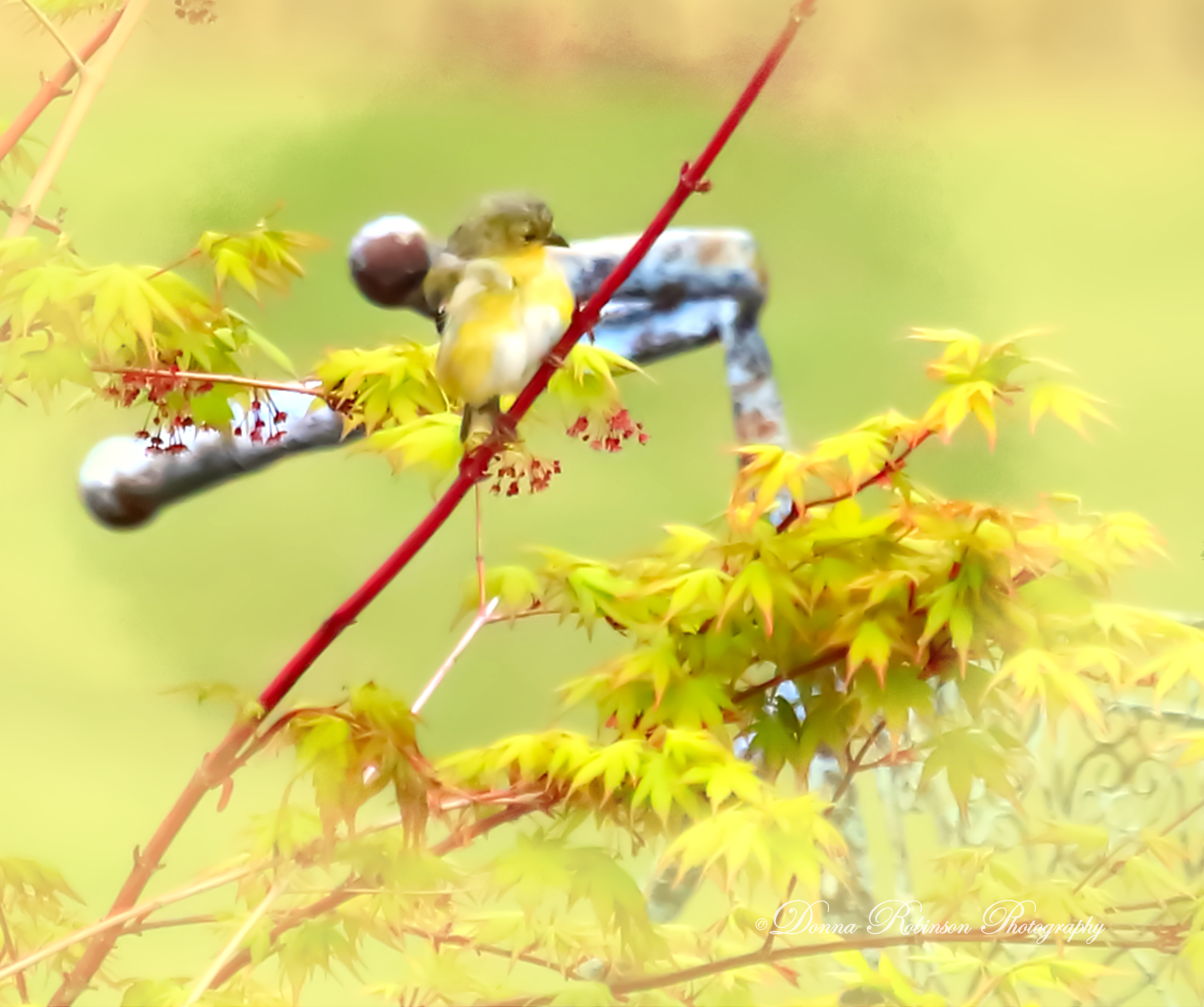
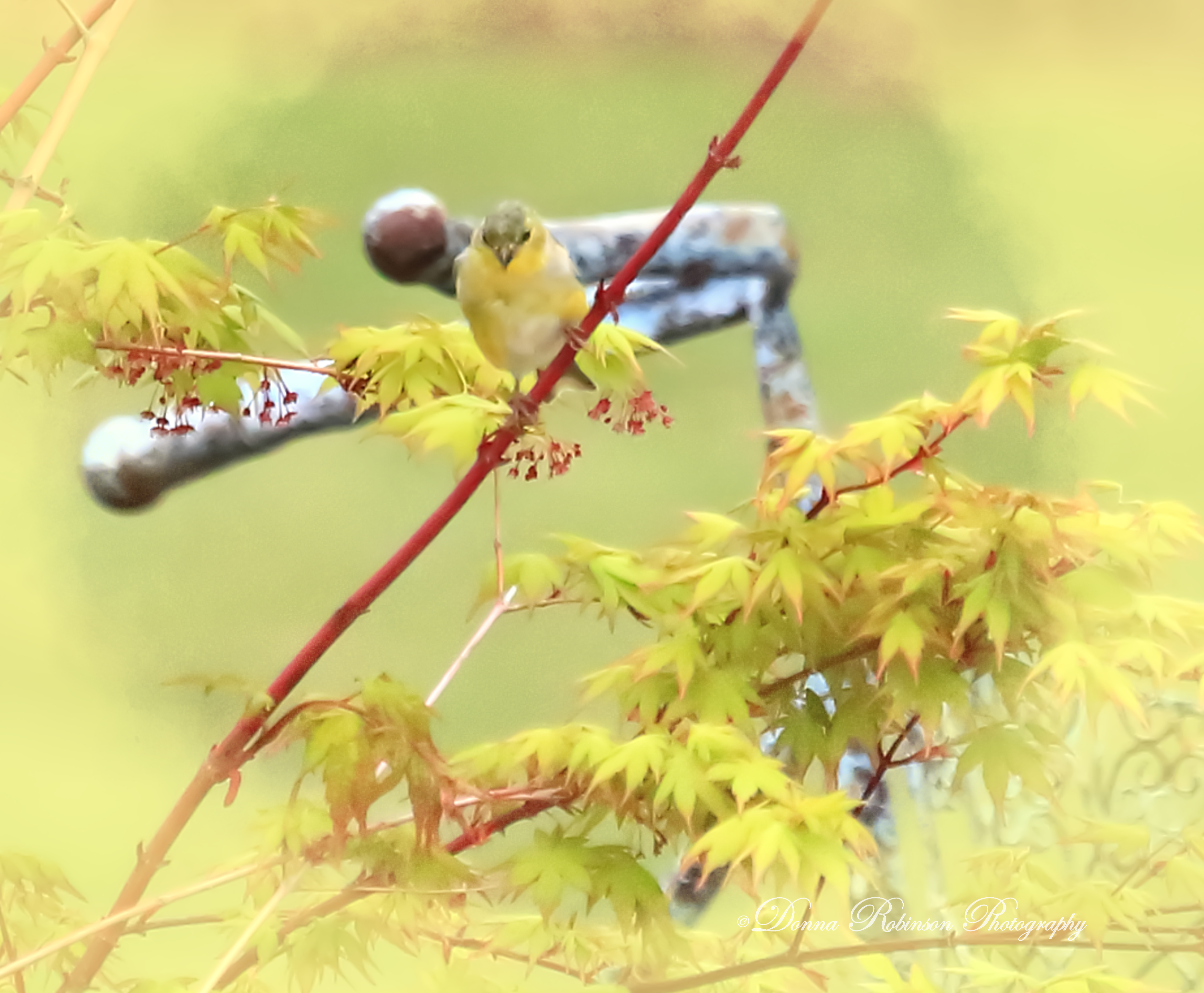
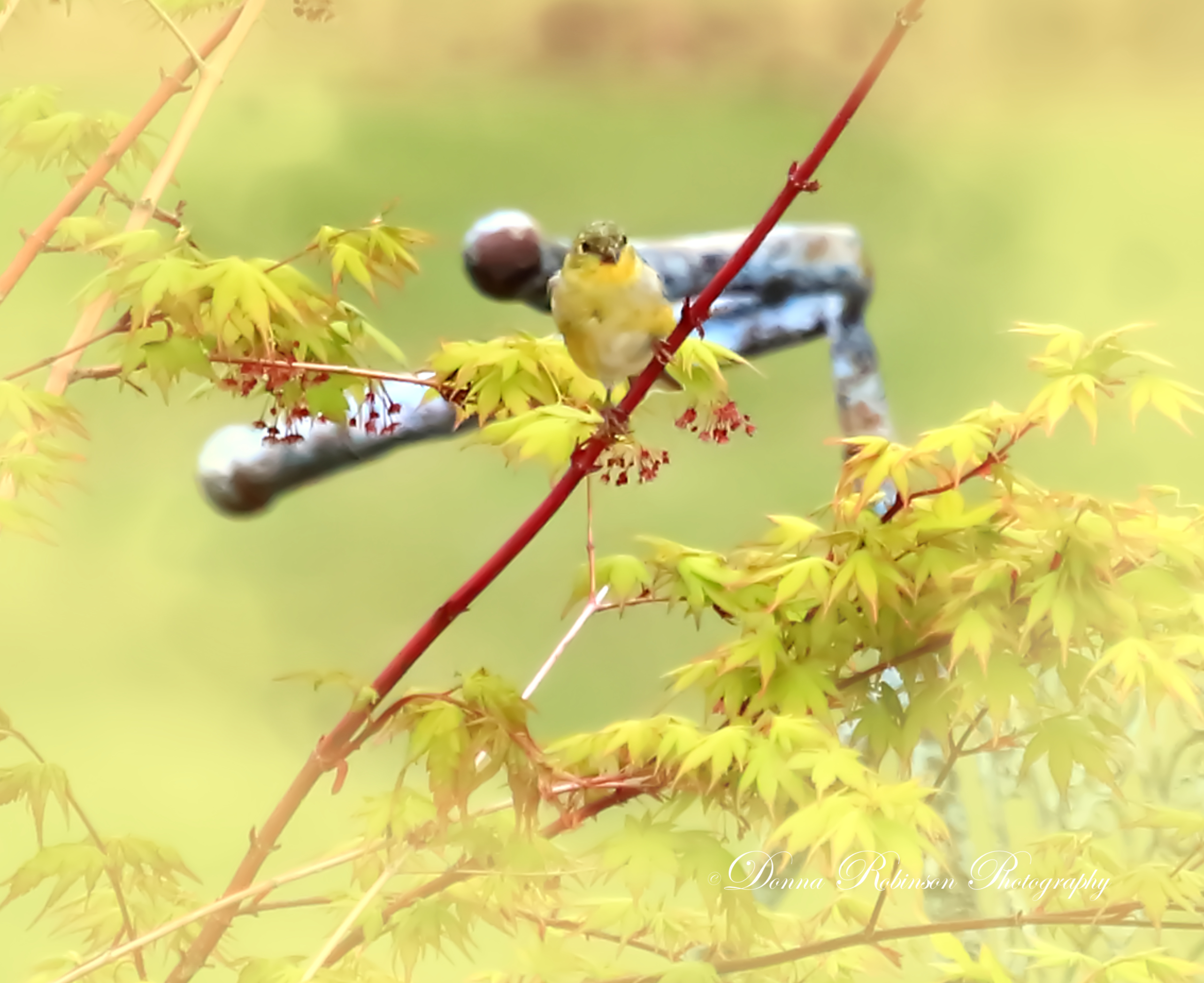
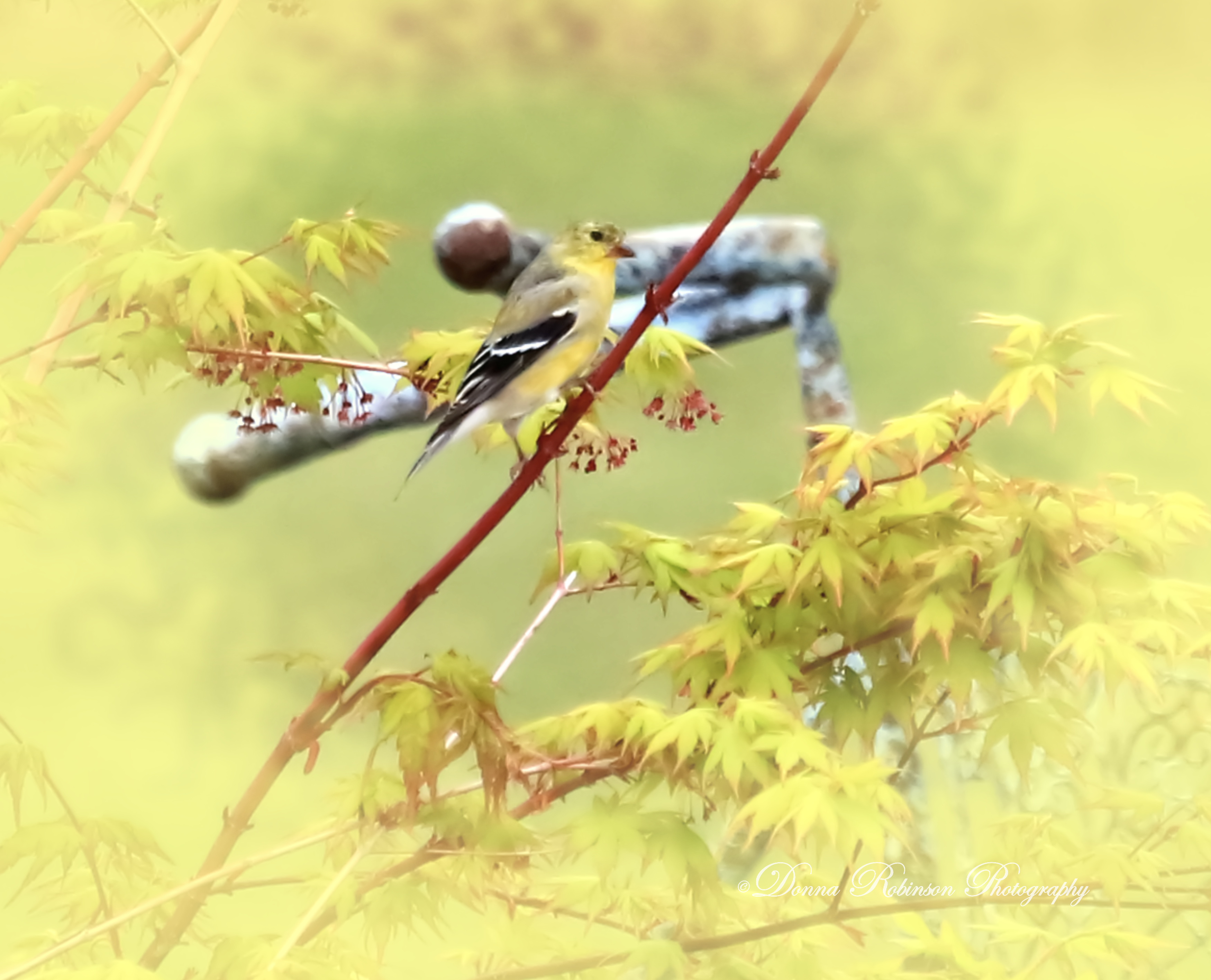
I don’t know if he was intentionally trying to hide from the other birds or not, but this little guy sure did give it a good try. So much so, I had a really hard time keeping the lens focused on him. You can tell because these photos aren’t as sharp as I would like.
This is one (1) of three (3) American Goldfinches we have visiting our yard this year.
Field Notes: F Stop 1/3200, AV 5.6, ISO 5000
Did you know the American Goldfinch is the state bird of Iowa, New Jersey and Washington?
Field Notes: F Stop 1/3200, AV 5.6, ISO 5000
They are also strict vegetarians in the bird world, eating an entirely vegetable diet albeit swallowing an occasional insect.
Field Notes: F Stop 1/3200, AV 5.6, ISO 5000
A breeding male Goldfinch can be identified by their bright yellow and black foreheads, black wings and white markings. They also breed later than most North American birds and wait to nest until June or July. This is the optimal time when milkweed, thistle, and other plants have produced their fibrous seeds, which goldfinches build into their nests and to feed their young.
Field Notes: F Stop 1/3200, AV 5.6, ISO 5000
I’m hoping to capture more of these little birds this summer. They always brighten my day.
Until next time,
~donna
Species Information Source: Cornell Lab – All About Birds
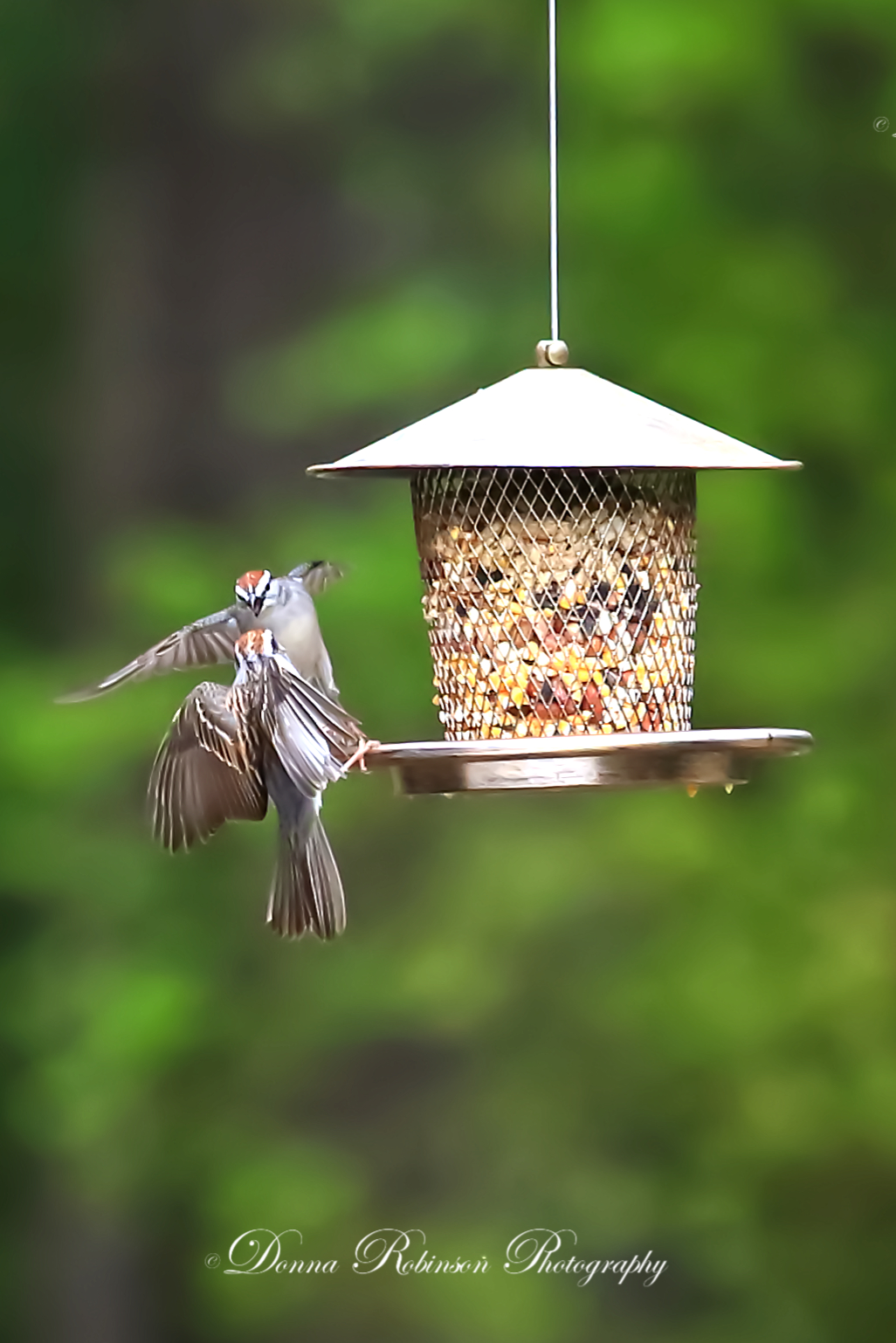
Spring is finally here and time to begin the afternoon birdwatching. Our backyard is full of all kinds of birds, especially house finches and we’ve made it very attractive for them with our new bird feeders.
I started to caption this “dinner for 2,” but they looked more like they were dancing (probably more like fighting) for their space at the dinner table.
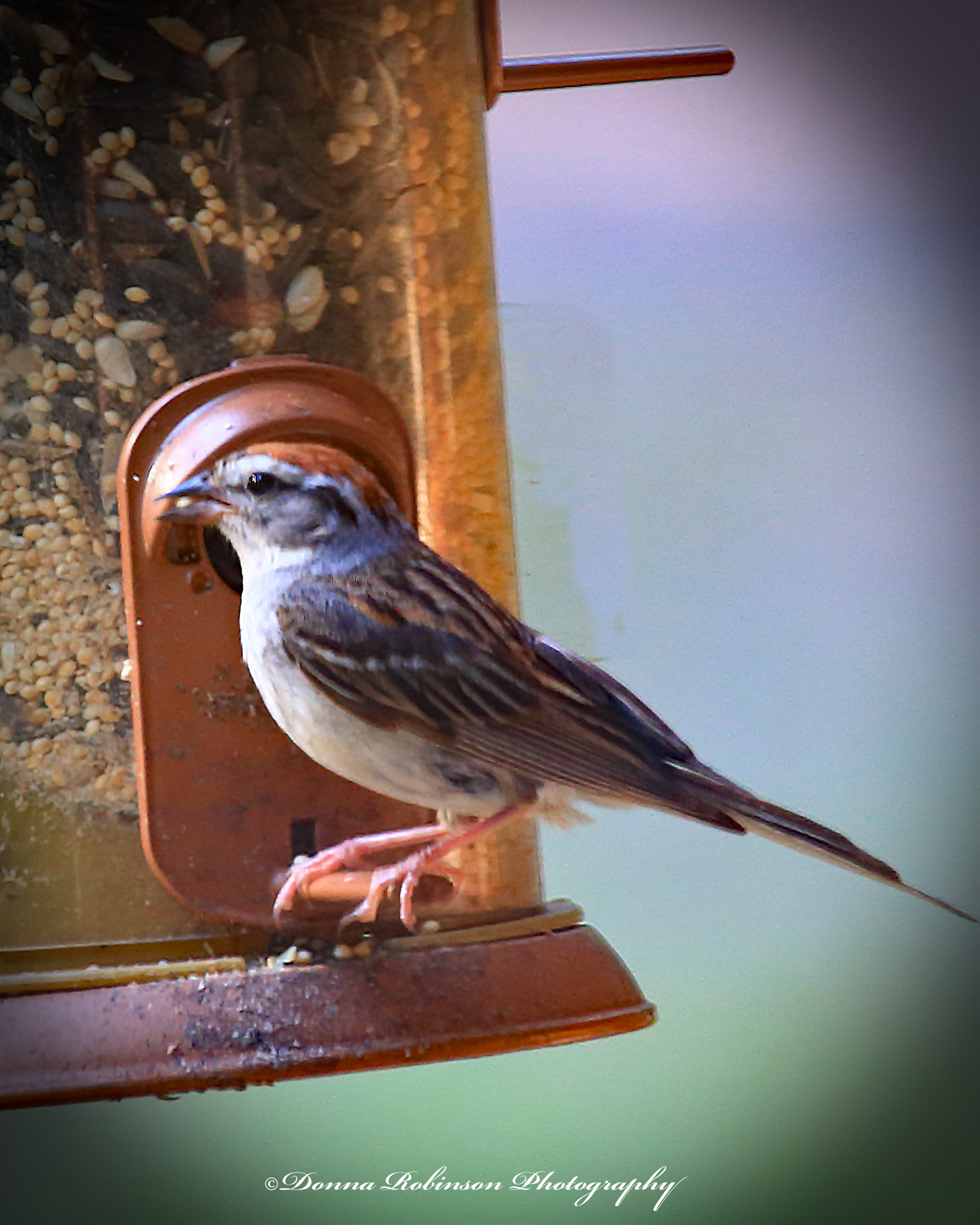
Day 7 – Back to the birds. This was a little challenging to shoot. The birds are very skittish and can see me pick up my camera through the back door. The second obstacle is the door is double pane window and casts a reflection if you’re not positioned correctly (hence why the image isn’t as sharp as I would like it to be). Nonetheless, here is the shot for Day 7 – Chipping Sparrow. Apologies for the dirty feeder…….the birds can be quite messy.
Field Notes: Focal Length – 390mm; Exposure – 1/100 sec, f7.1, ISO 1250
Day 4 – Well, if you live in the U.S. you probably were expecting something other than a squirrel shot for today. What can I tell you? Like life, photography is about the journey and capturing all things unexpected, not necessarily about shooting the predictable.
This squirrel is a regular to our bird feeders. He’s not as feisty as some of the others, but he’s determined to get his daily fill of food.
Field Notes: Focal Length – 105 mm; Exposure 1/100 sec, f6/3, ISO 500; Processing: Cropping, haze removal, Orton effect, conversion to black and white with vignette.