This photo pretty much sums up my attempt at a 31 Days of July Photography Challenge. I was reaching over my shoulder to scratch my back to make the shots happen every day.
If the hot temps and humidity weren’t bad enough for finding photo ops, I finally broke down and bought a long overdue new laptop. A great idea and a decision I’m very happy with. The problem is our wonderful friends at Adobe Photoshop no longer support my version of Photoshop Elements. So much so, they wouldn’t let me download it on my new laptop even though I had the serial number. Yes, I could always pay their exorbitant subscription prices, but for my photography needs, I think I’ll look for another option. Perhaps I’ll give Affinity a shot (pun intended) they seem to have some really good reviews and could certainly meet my needs.
So, for now, this is my last attempt at 31 Days of July. This photo was actually taken on Day 11. The squirrels are relentless with the bird feeders even though Michael keeps ample food for them on the ground. Hence my reference to “reaching over your shoulder to scratch your back.” The squirrels don’t need to climb the feeders; the food is already there for them in easy reach.
Editing notes: I applied the usual haze removal, some level balancing with the exposure, cropping and a final vignette.
Field notes: Focal length – 200mm; Exposure – 1/60 sec, f/9, ISO 1250.
I’ll return soon. Thanks for hanging with me on this challenge, although brief. 😉📷.
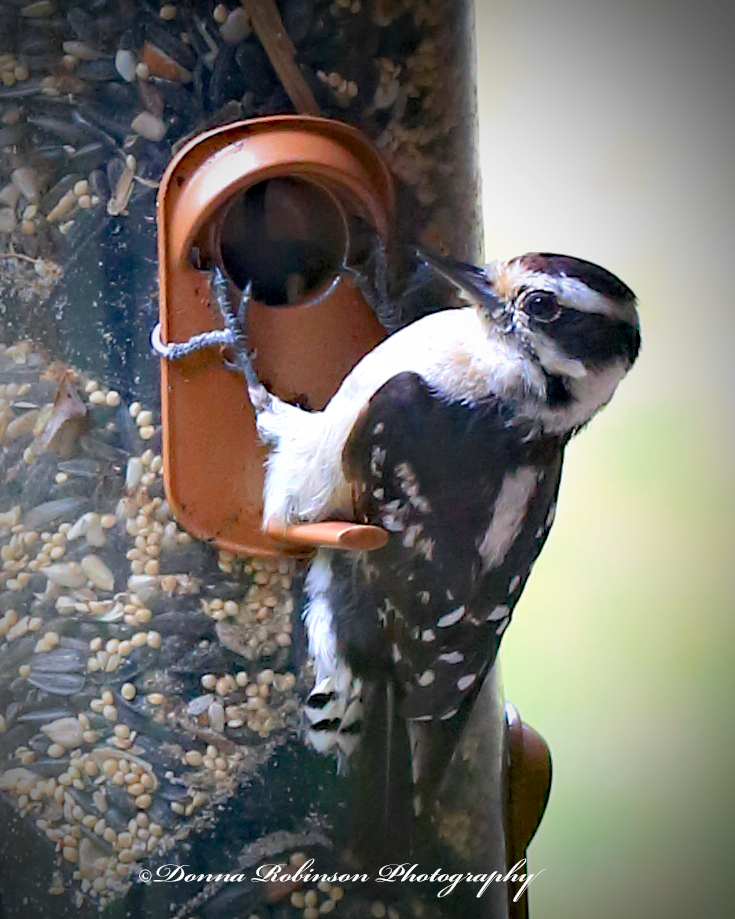
Day 10 – We have a new visitor at the birdfeeder today, an Eastern Female Downy Woodpecker. According to All About Birds“Downy Woodpeckers are small versions of the classic woodpecker body plan. They have a straight, chisel-like bill, blocky head, wide shoulders, and straight-backed posture as they lean away from tree limbs and onto their tail feathers. The bill tends to look smaller for the bird’s size than in other woodpeckers.”
Editing Notes: I applied a haze removal before cropping and made some minor level adjustments to the lighting before applying a final vignette for accent.
Field Notes: 170mm; Exposure: 1/100 sec, f/9, ISO 1250
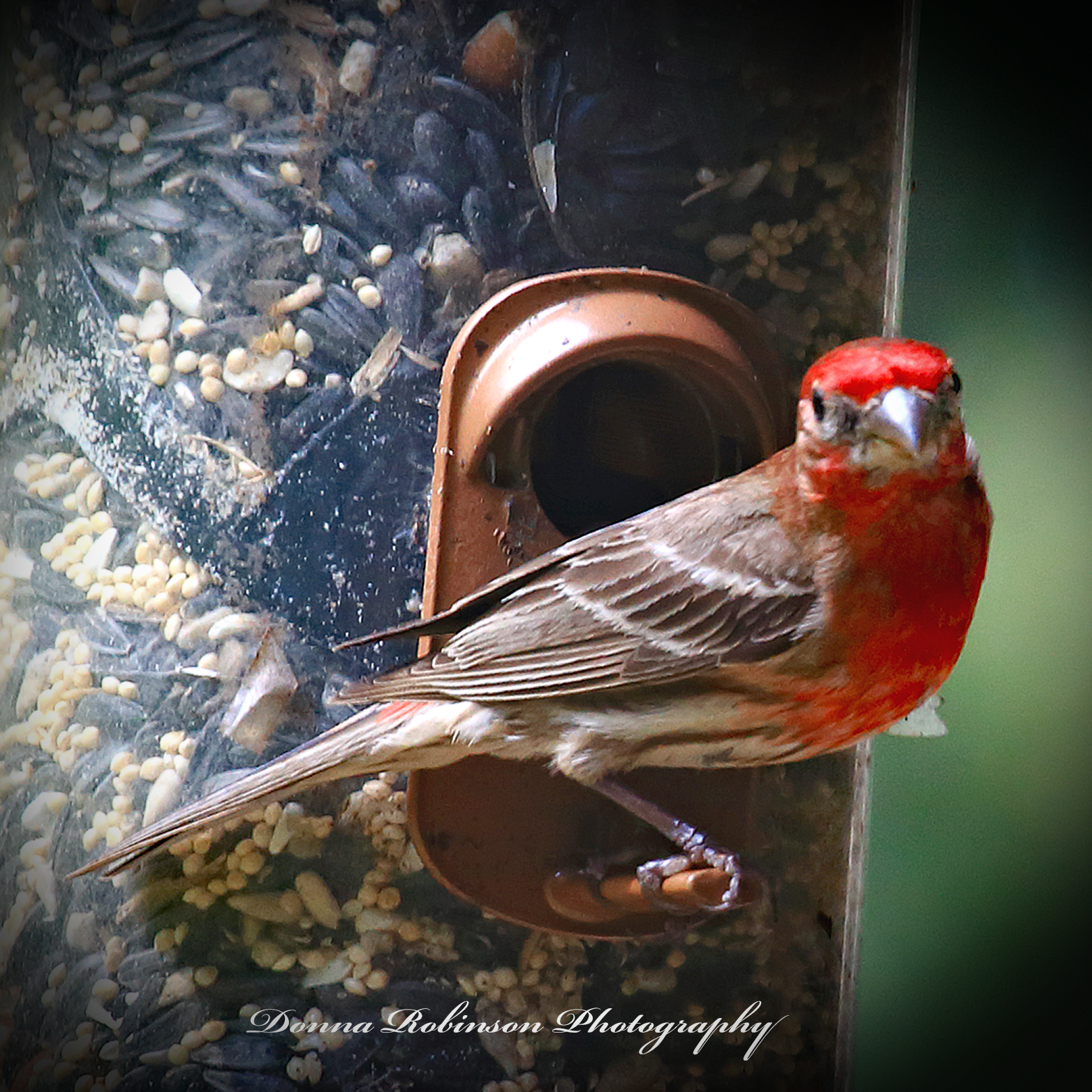
Day 9 – House Hen Finch. This little bird was having way too much fun at the feeder today, but I was lucky enough to get a shot of him staring at me. His face is not quite as crisp as I would have liked, but it’s nature and sometimes you just go with what you get. I’m also linking this to Becky’s Simply Red Squares Challenge.
Editing Notes: Today, I applied the normal haze removal, level adjustments (lighting) and some sharpness adjustments followed with the usual cropping and vignette application.
Field Notes: Focal Length: 400mm; Exposure 1/125 sec, f/9, ISO 1250
Day 8 – What was I thinking when I started a personal photography challenge in July, in Georgia? The temps are hot, and the humidity is worse. But here I am doing the best I can shooting photos from inside the house. Hopefully, this heat will break soon, and I’ll be able to venture out to find more interesting subjects. So, bear with me on this journey, you may be seeing a few more bird, squirrels or macro photos.😉
Today’s photo is of one our frequent mourning dove visitors. At any given time, there could be one, two or upwards to five of them hanging out around the bird feeders or on this limb waiting their turn. The complexity of this shot came from shooting it through a window screen. Fortunately, the bird didn’t move too much, and with an ISO of 1250 I was able to maintain focus and achieve somewhat of a crisp photo. Editing comprised of cropping and level adjustments in both lighting and color to achieve the depth and detail. I also applied a vignette outline.
Field Notes: Focal Length: 400mm; Exposure: 1/125 sec, f/9 ISO 1250
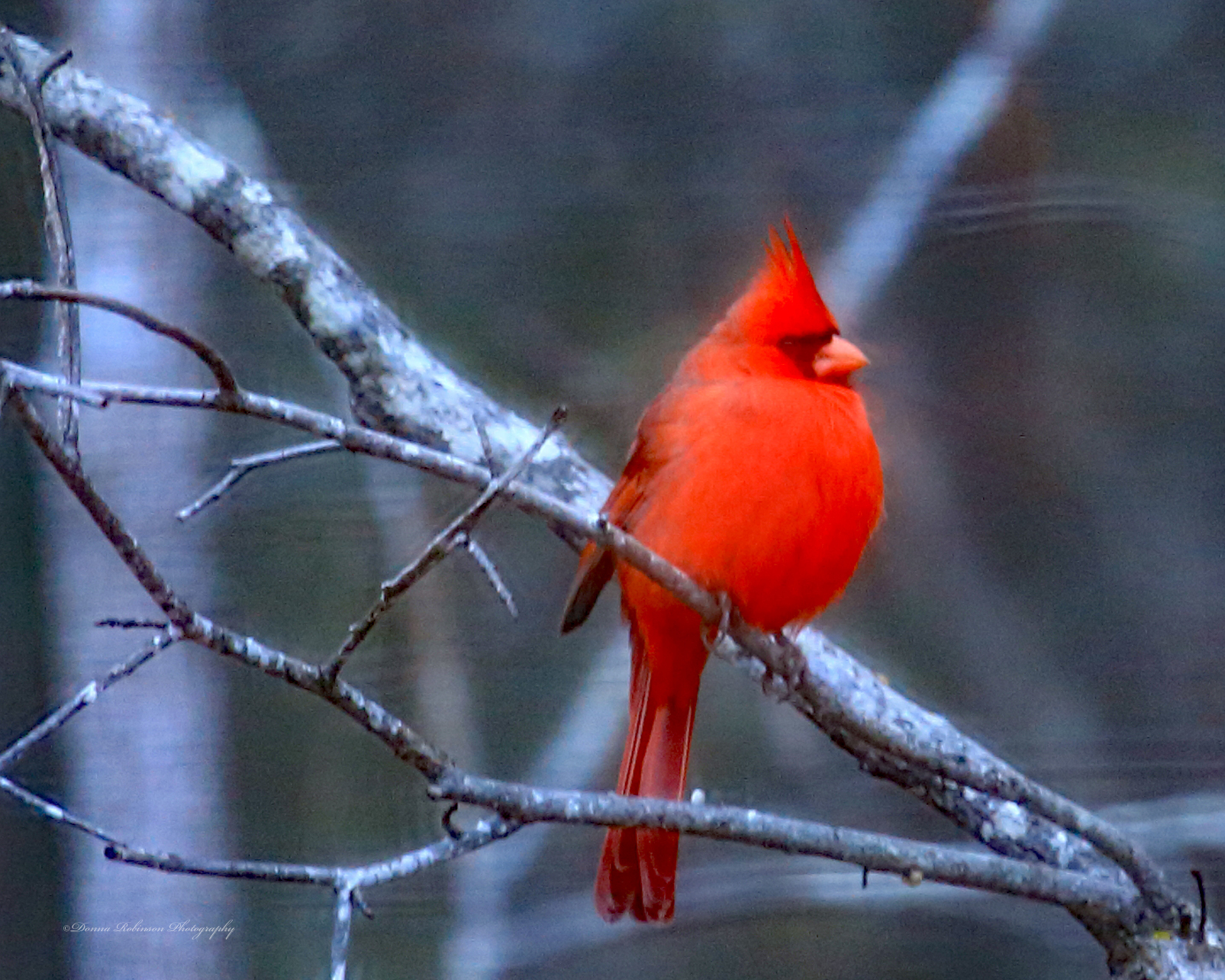
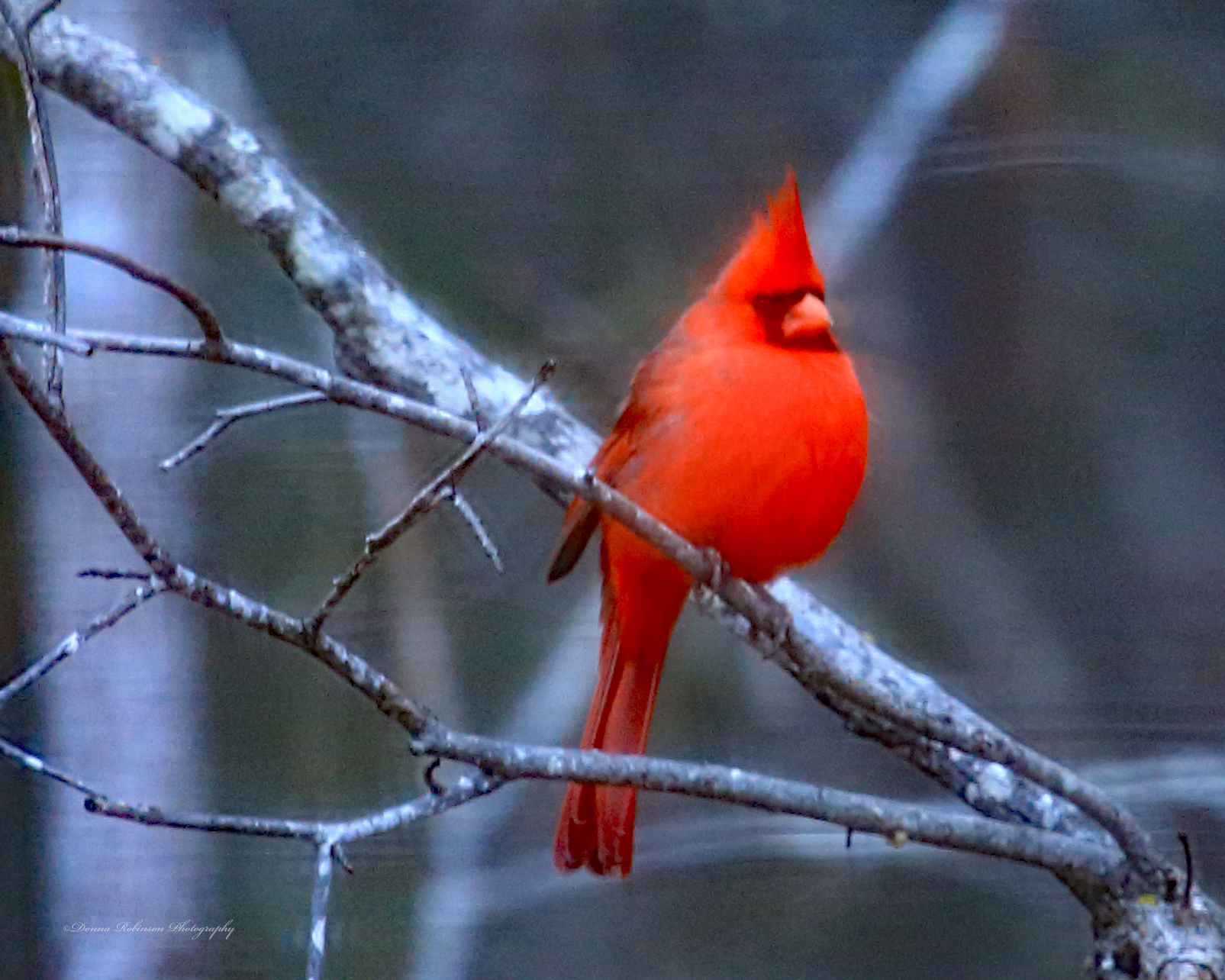
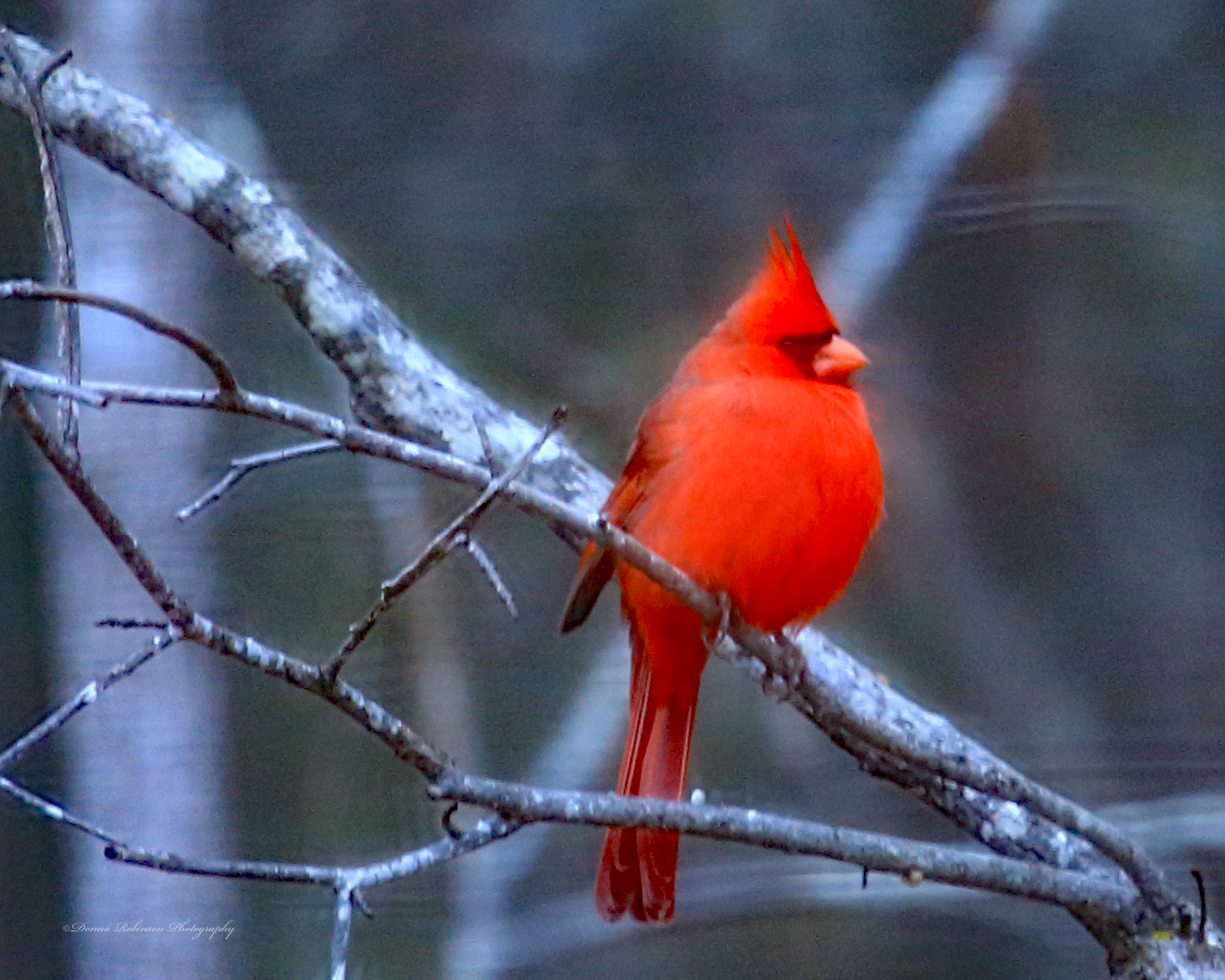
They say when cardinals appear a loved one who has passed has come to visit. Cardinals are frequent visitors to our yard so it’s hard to say whether or not they’re family members coming for a visit, or just simply coincidental visitors.
Last Sunday as I was in the kitchen meal prepping for the week out of the corner of my eye, I could see this little fellow hanging out on a bare tree limb. He was a perfectly bright red color with a beautiful black mask surrounding his beak. I desperately wanted to snap a few pictures of him, but I knew he would fly away before I could get the camera ready. To my surprise he just kept sitting there, looking around from side to side, puffing up his chest with no sign of budging.
Finally, I pulled out my camera, attached the 200m to 400m lens (the big lens as Michael calls it), raised the blinds and……..ugh! The windows have screens on them! Obviously, auto focus wouldn’t work, so I switched to manual focus. That was a little better, but not perfect. Trying to hold the camera (the big lens is heavy) and adjust the manual focus made it difficult to get a sharp image. Oh well, he was such a pretty bird I decided to make the best of it and kept on shooting.
This guy stayed on the limb for at least 10 – 15 minutes. Was it a family member? Who really knows for sure, but for me personally, just having him hang out for a while brought some comfort and a smile to my face.
“The happiness of your life depends upon the quality of your thoughts.” ~unknown
These are crazy and wild times right now and many (most) are struggling. It may be hard but do your best to keep the quality of your thoughts positive.
Ok, so this is my third week joining the “Lens Artist Challenge” and it’s official. I’m hooked! Not only with the challenges but seeing and reading all of the other wonderful posts! It’s truly one of the highlights of my week to participate in the challenges.
This week Tina brings us back to the basics and challenges us with the “Rule of Thirds.” You can read her post here. I must say, I have taken a photography course (or two) many moons ago but had completely forgotten what the 10 Rules of Photography Composition were so this was a fun challenge to revisit rule #1.
The “Rule of Thirds” says your image is divided into 9 equal segments by 2 vertical and 2 horizontal lines and you should position the most important elements in your scene along these lines, or at the points where they intersect.
Landscape photography lends itself well to this rule because you’re trying to capture and recreate in your camera what you see in real life. The rule of thirds can help you determine the focal point and how to incorporate everything else you see.
Take for instance this photo from The Pacific Coast Highway. The anchor (where your eye is drawn) is the carved out wooden stool on the lower left corner. As soon as your eye catches the seat you follow it outward to the road in the background with the coastline running parallel. Funny story behind this photo. My husband and I had passed this spot and he pulled off the road for me to take the photo. I had to turn around in the passenger seat (fortunately we had rented a convertible) to take the shot!
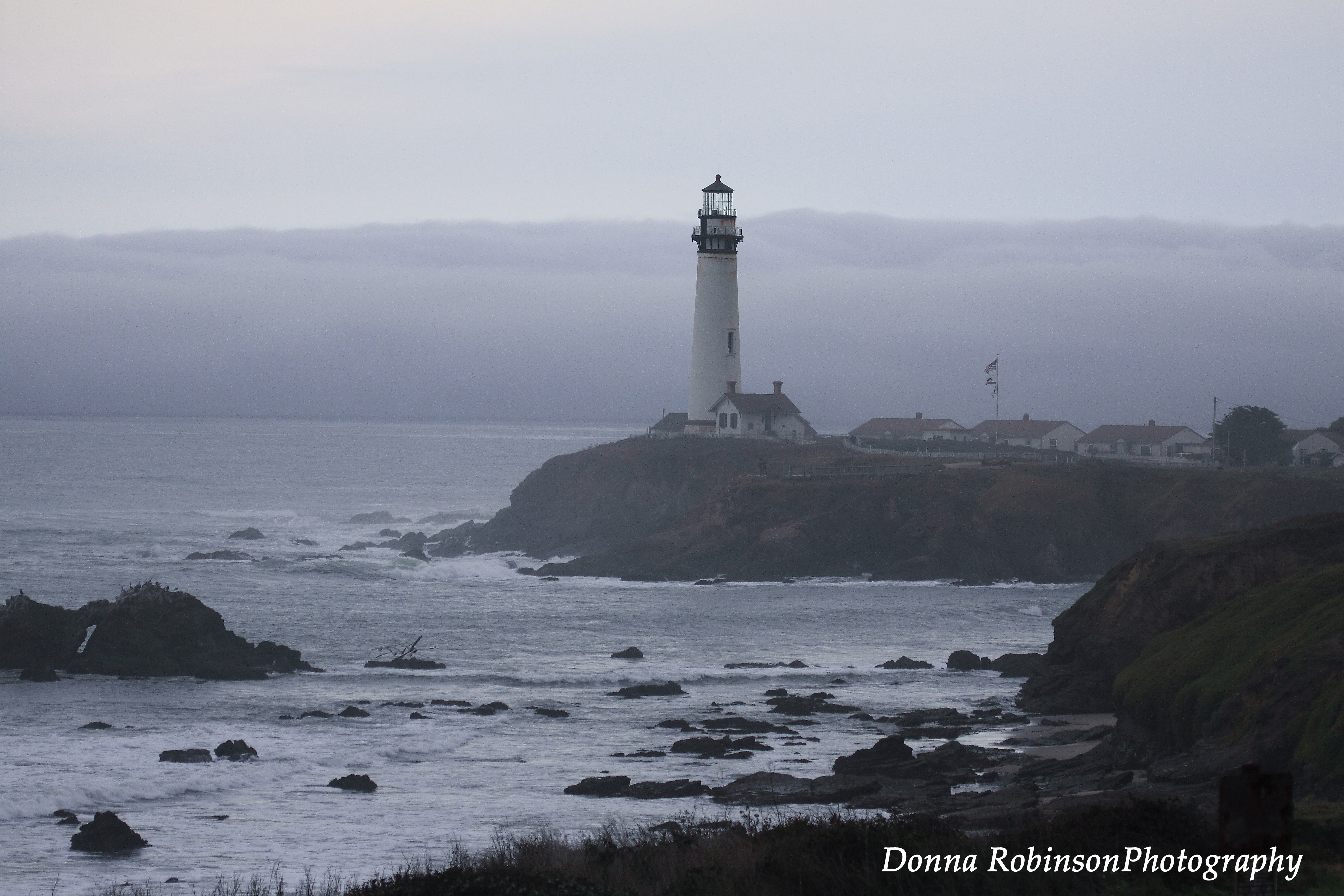
The next photo (also taken on the Pacific Coast Highway) may not quite follow the rule. If you were to put a grid over the photo the lighthouse is pretty much in the center, not on one of the vertical axis (like Tina says, rules are made to be broken). However, your eye is pulled from the lower right-hand corner (the rocky cliff) to the lighthouse. In my perspective the photo would not have told the story about the lighthouse being out on a point, had the rocky ledge in the lower right-hand corner pointed you to it.
When it comes to nature shots, that’s a completely different story. I’m always focused on capturing the subjectfirst and come back to the “Rule of Thirds” when I’m cropping and editing the photos.
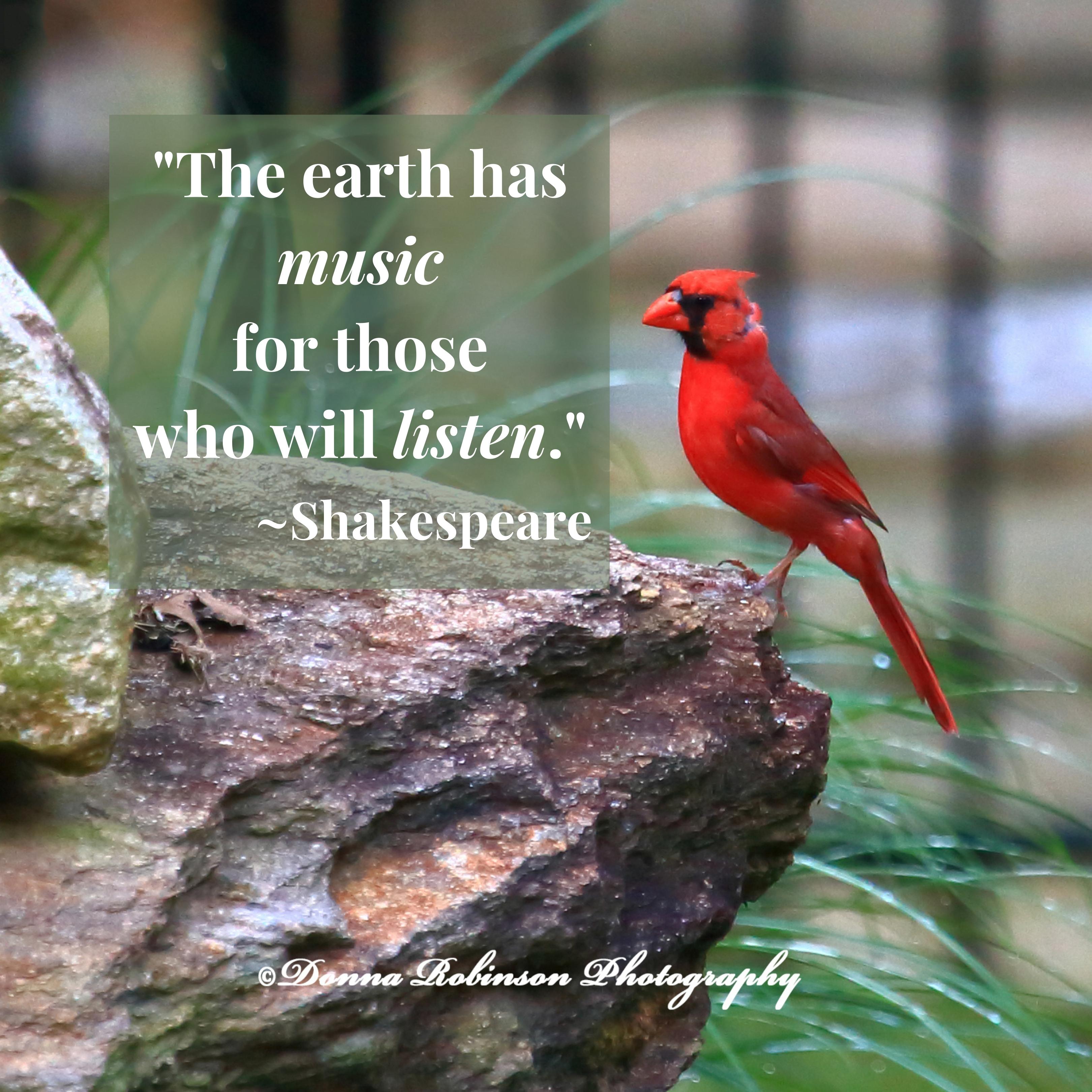
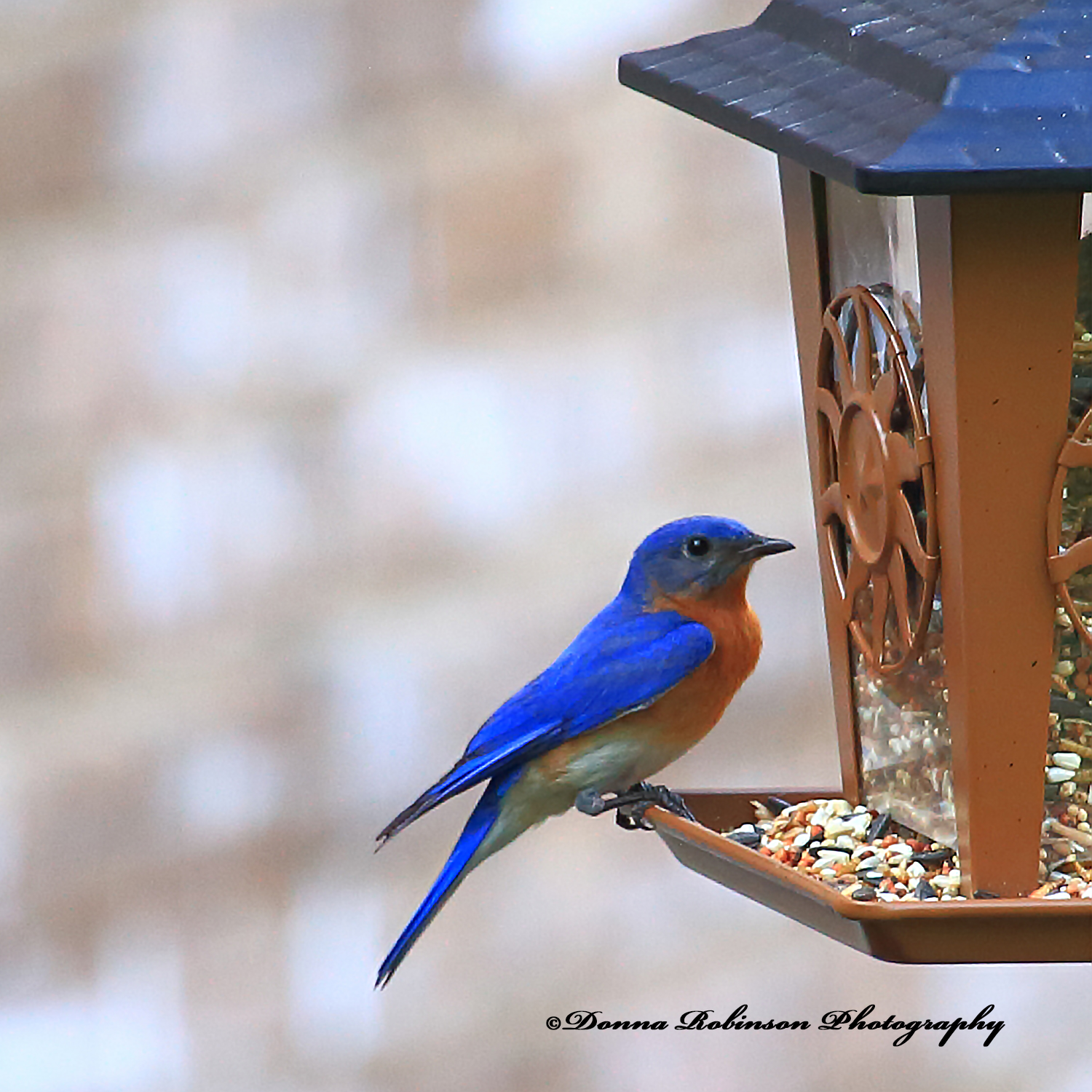
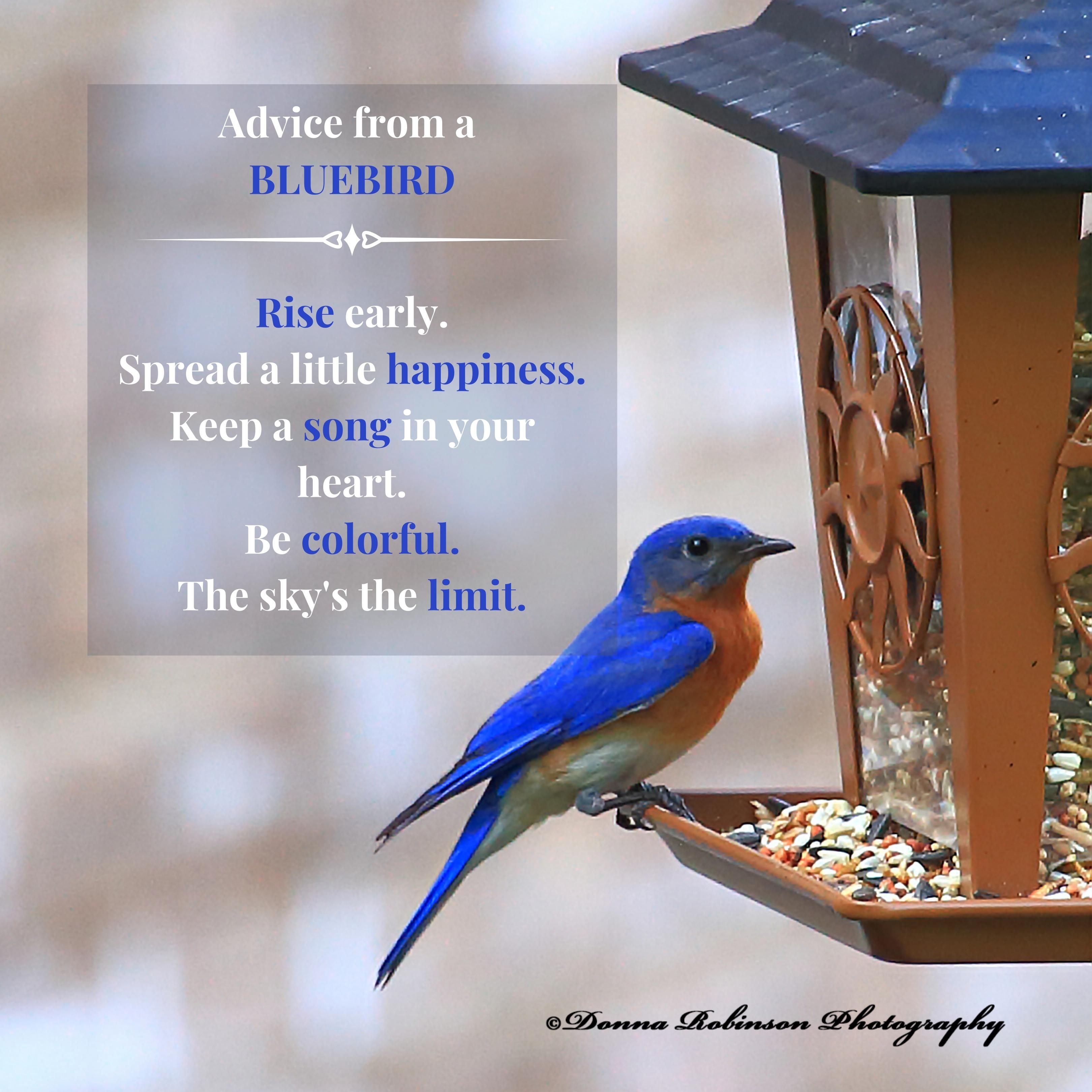
For instance, my bird shots. I like to use them for my weekly quotes so it’s important to me to get the shot of the bird and then worry about composition later. This week’s quote about bluebirds is a great example of the process I go through.
When you look at the original photo on the left it needs a lot of cropping to get to the main subject, the bluebird and the feeder (the second photo). I would rather the bird face the other direction, but I had to go with where it landed (trust me I took several shots to get this one). But what I like with the end result is the quote actually anchors/balances the photo. What do you think?
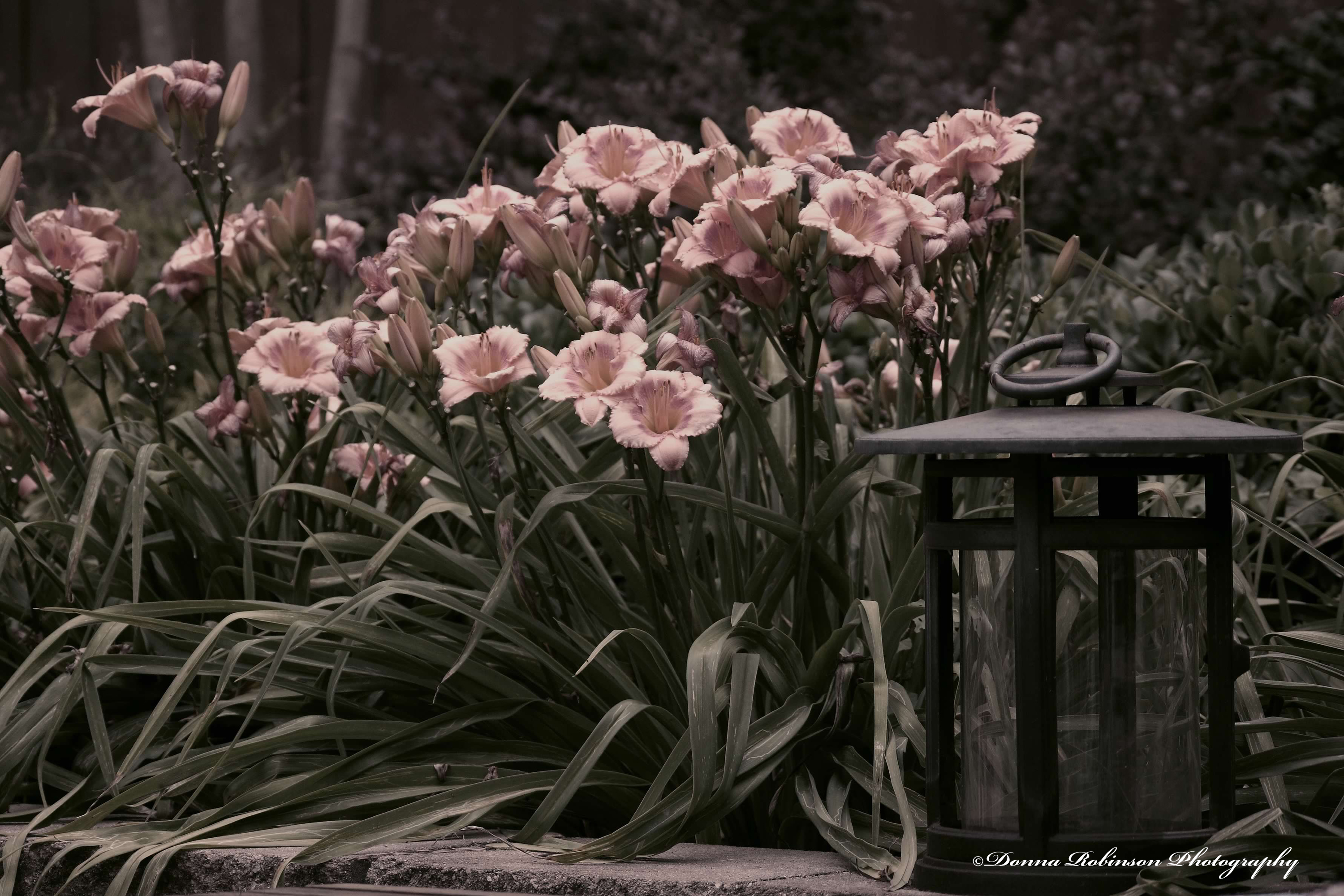
Similar to landscapes, gardening photography lends itself well to the rule of thirds, too.
Like these daylilies and black lantern. The daylilies may first catch your eye first, but because they face in the direction of the lantern, it becomes the anchor.
Or this pink hydrangea cluster. It starts at the lower left quadrant and your eye follows the clusters from left to upper middle to the right side of the image.
As Tina reminded us, rules are made to be broken. Nothing really lines up on any particular axis with this knock-out rose, but it’s obvious the bud is the focal point, accented by the Boka image of the open bloom in the background.
As a closing thought, the “Rule of Thirds” is a good tool if you find it difficult to get balance in your images.
Thank you, Tina for the refresher on the rule of thirds. I’m confident I’ll keep an eye out more when taking photos.
~Donna
P.S. –Interested in joining Lens-Artists? Click here for more information










 Donna Robinson Photography