I’ve been feeling a void in taking pictures lately. I don’t know why, but somehow, I haven’t felt very inspired. My camera has sat in the cabinet for over a month and the only pictures I have taken have been with my cell phone. It’s “ok” but I knew I needed to push myself and pull out the “real” camera. So, what better way to challenge myself than to start a 30-Day Photography Challenge. Since July has 31 days, let’s just call it a 31-Day Photography Challenge. 😉
Here’s to Day 1, a Gray House Finch hanging out on the bird feeder.
I have to admit, I don’t think I’ve ever consciously thought about shooting cinematic photos. But after reading Sofia’s challenge and pouring through my archives I found that sometimes my photos do have a “cinematic” feel to them. Sofia writes, “There are a few things that give a photo that cinematic feel: camera angles, bold and high-contrast colors, light, locations, just to name a few. The main objective is to take a shot that is part of a story, there’s mood and a sense of location; our image is but a snapshot of a much wider situation.” You can read Sofia’s challenge, here.
So, what did I uncover in my archives? Let’s take a look.
I’ve always loved this photo. It was taken during a sunrise over Atlanta, probably during the Fall season, because of the mist rising from the Chattahoochee River. I love the varied colors and how the sun gives them a slightly golden tone. This photo could easily be an opening or closing scene in a movie.
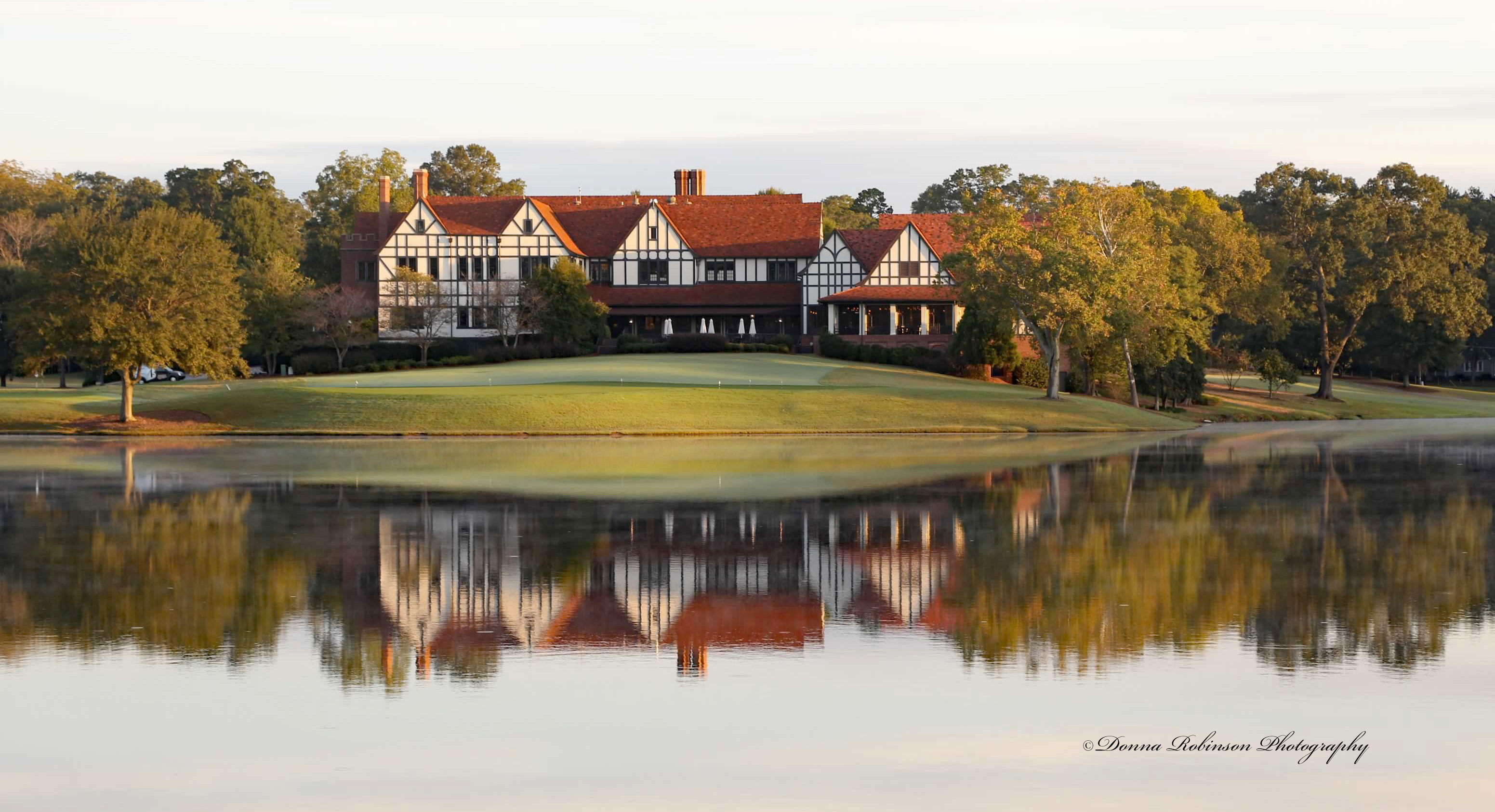
How about a shot of this beautiful East Lake Golf Club, Clubhouse. I remember taking this photo and thinking it would make a great post-card or large format photo. But as I look more closely, I could see this as an opening shot for the Tour Championship. Can’t you just hear the voice over of the announcers talking about the players and the upcoming events for the day?
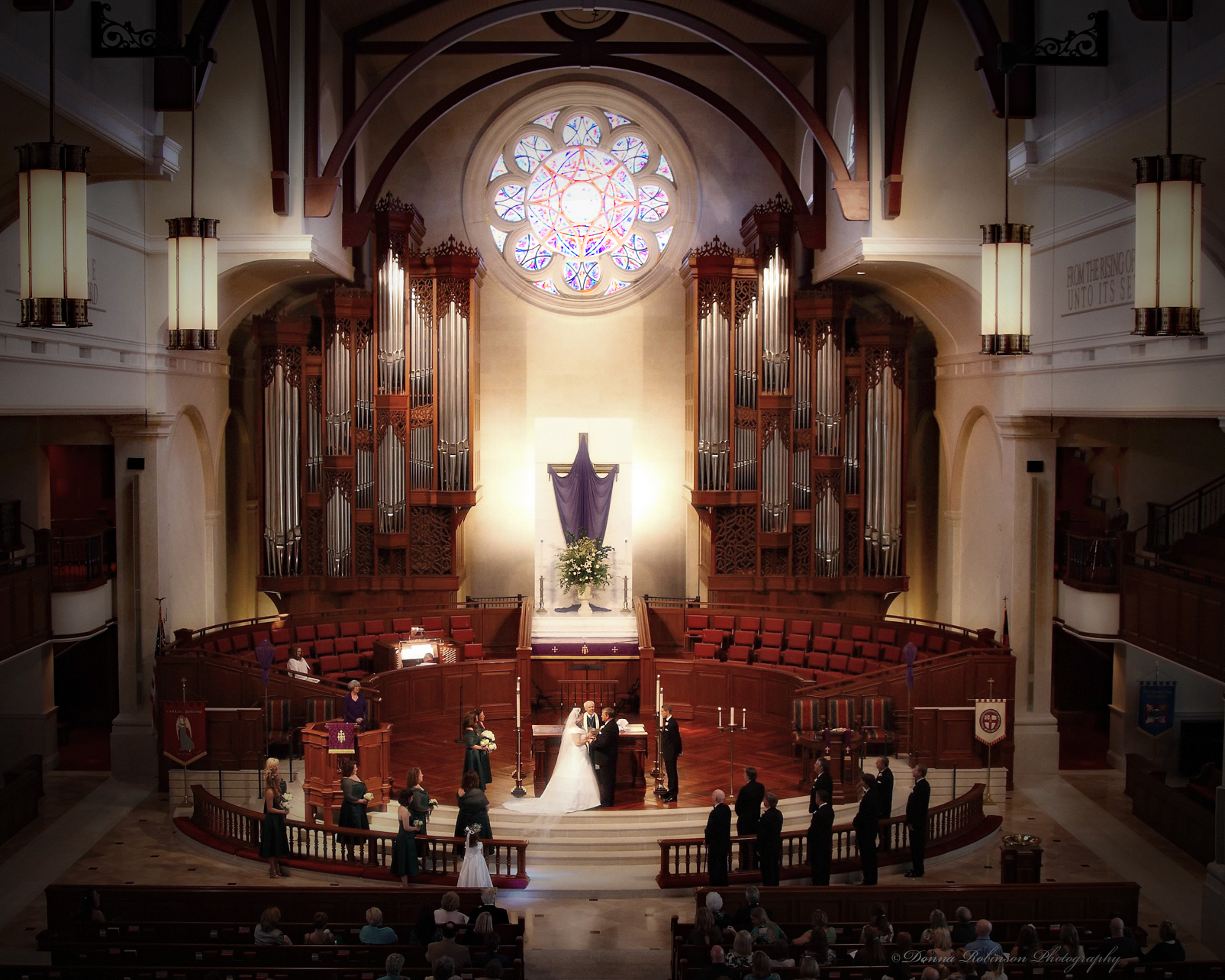
Talk about lighting, mood and the image being a snapshot of a wider situation. This wedding image has always been one of my favorite shots from this particular ceremony. I wasn’t allowed to bring my camera into the sanctuary during the actual ceremony, so my assistant and I went up into the balcony. I’m so thankful we were banned from the sanctuary because I wouldn’t have been able to get this special shot. How many movies have you seen with “cathedral style” weddings?
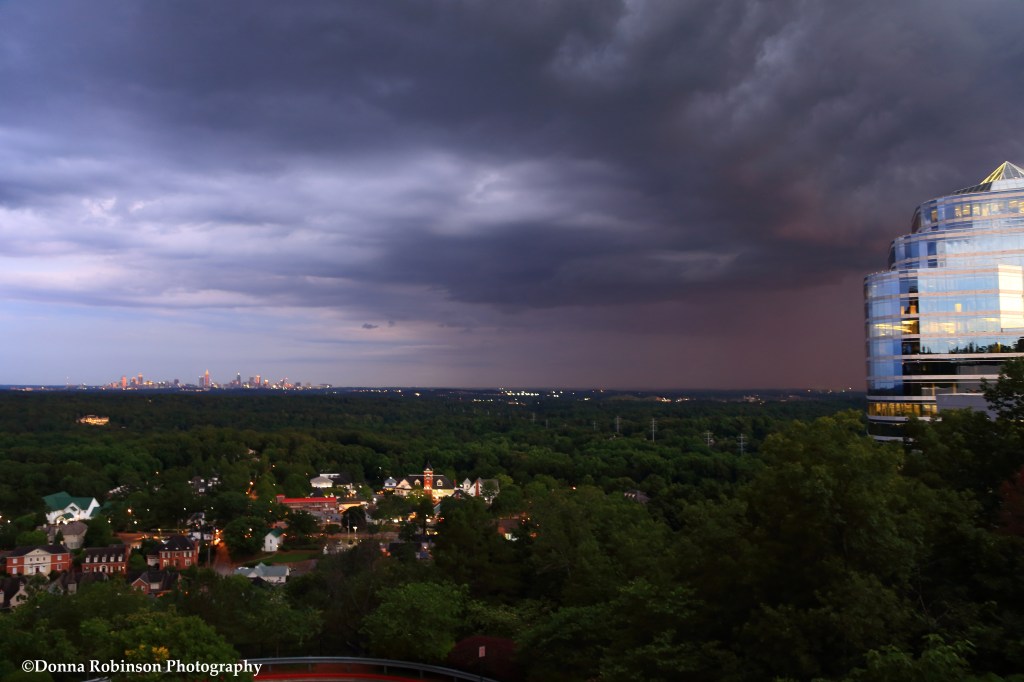
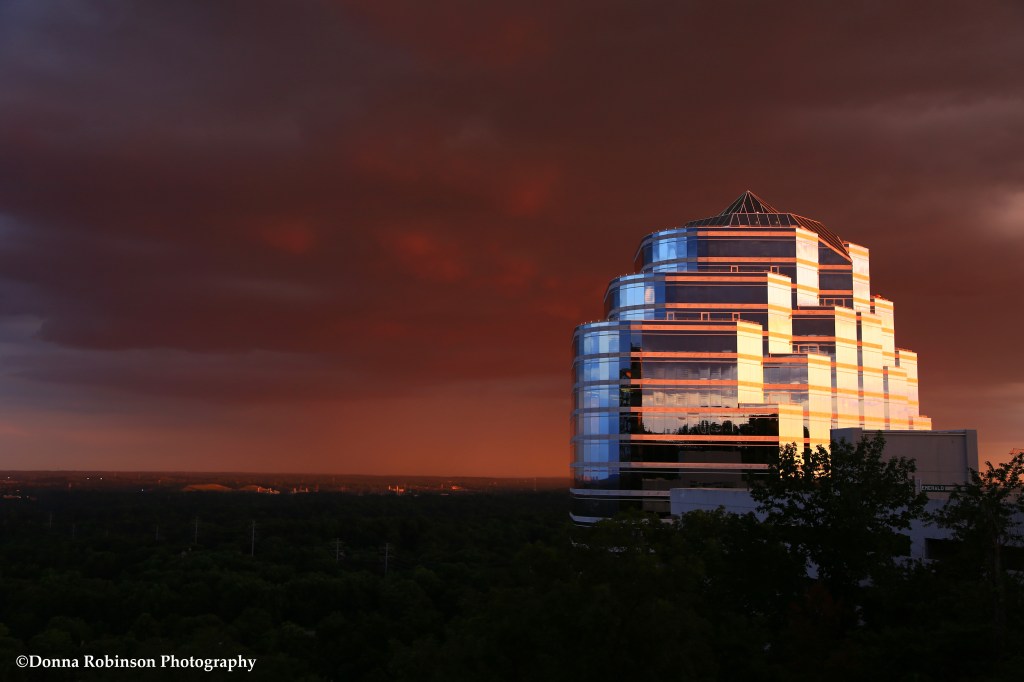
My closing few shots takes us back to downtown Atlanta. Our views of the storms that rolled through the city were amazing. Anyone of these could have easily come from a movie where a storm was integral to the storyline; lightning strikes, rolling rain clouds, showers in the distance at dawn. Each offering up its own “ominous mood.”
So, how did I do? I know one thing for sure, I will definitely be thinking about “cinematic feel” in my photos going forward.
Well, Anne sent me heading down a rabbit hole this week. A rabbit hole that almost had me on a point of no return. A rabbit hole that had me traveling back in time twenty (20) plus years. A rabbit hole full of memories and painstaking regrets of not being more organized with my photos. Nonetheless, I somehow managed to pull myself up out of the hole and focus on the challenge at hand!
This week Anne challenges us to think about abandonment in photography. You can read her full post here. I doubt there is a single photographer who isn’t drawn to “things” or “properties” that are abandoned. Afterall, photographers are curious by nature, always looking for the next photo and always looking to tell (or create a story) with their images.
Take for instance this abandoned train car, Michael and I stumbled upon in Hartwell, SC. Why it’s there I have no idea, but as I wandered around it, I couldn’t help but to think about the many passengers who traveled on this car. Who were they? Where were they going? How long had they been traveling? Why was the train left on the tracks in the middle of a field? So many questions to be answered.
Sometimes, we stumble upon unfortunate, temporary circumstances of abandonment. Take his mail carrier, who abandoned his vehicle in the midst of an unexpected Atlanta ice storm. Looks like he decided to heck with the postman’s motto “Neither snow nor rain nor heat nor gloom of night stays these couriers from the swift completion of their appointed rounds.” But there are still questions like “Where did he go?” “What happened to the mail left unattended?” I guess I can’t blame this postal carrier too much. Ice in Atlanta is not a force to be messed with.
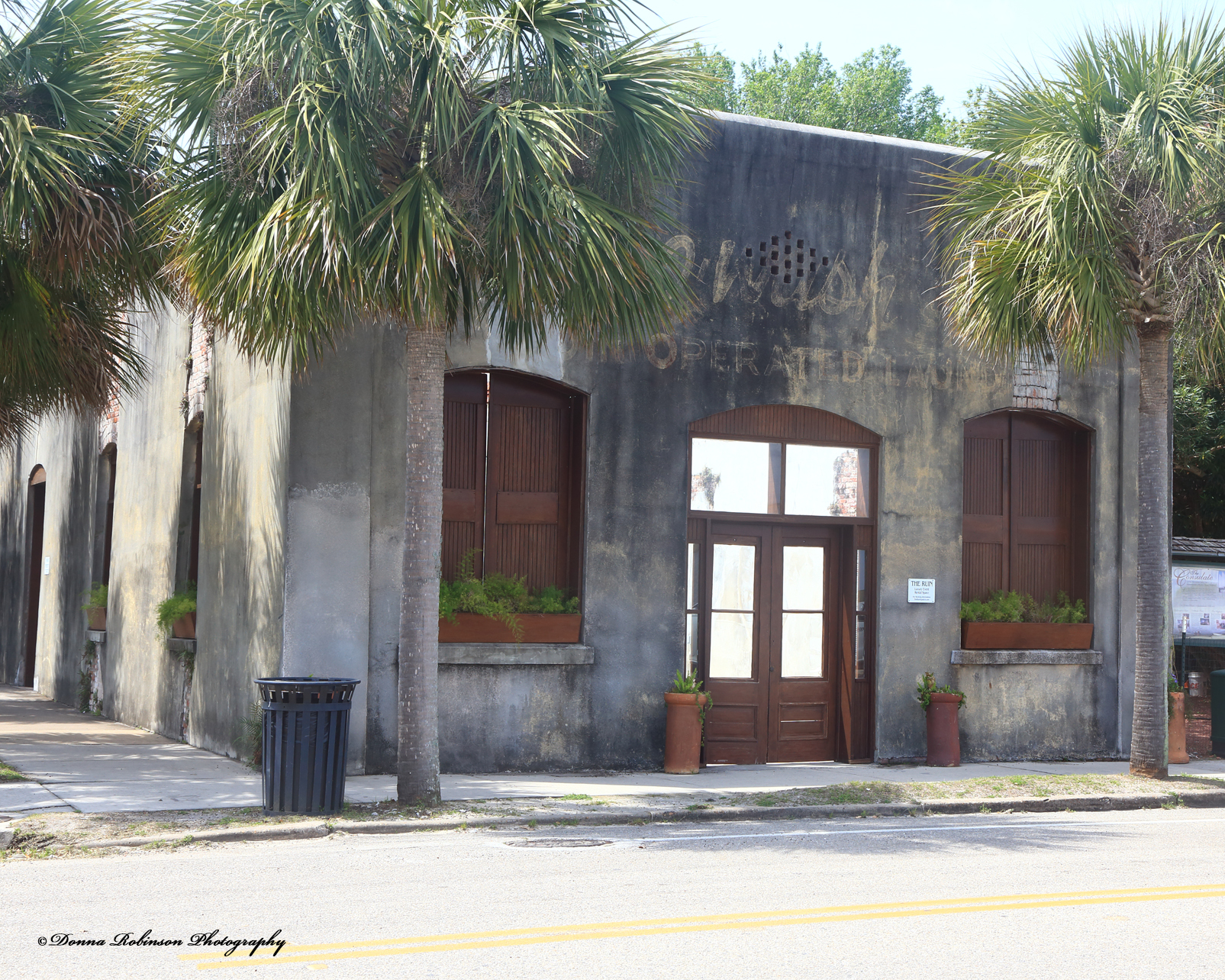
Other times, new life is breathed into the old and abandoned when communities find a way to repurpose them while preserving their original characteristics and a little bit of their history. Whether an old mill or laundry center like the photos below, you can’t help but wonder who the people were that filled these places so many years ago. What was life like during their respective time periods?
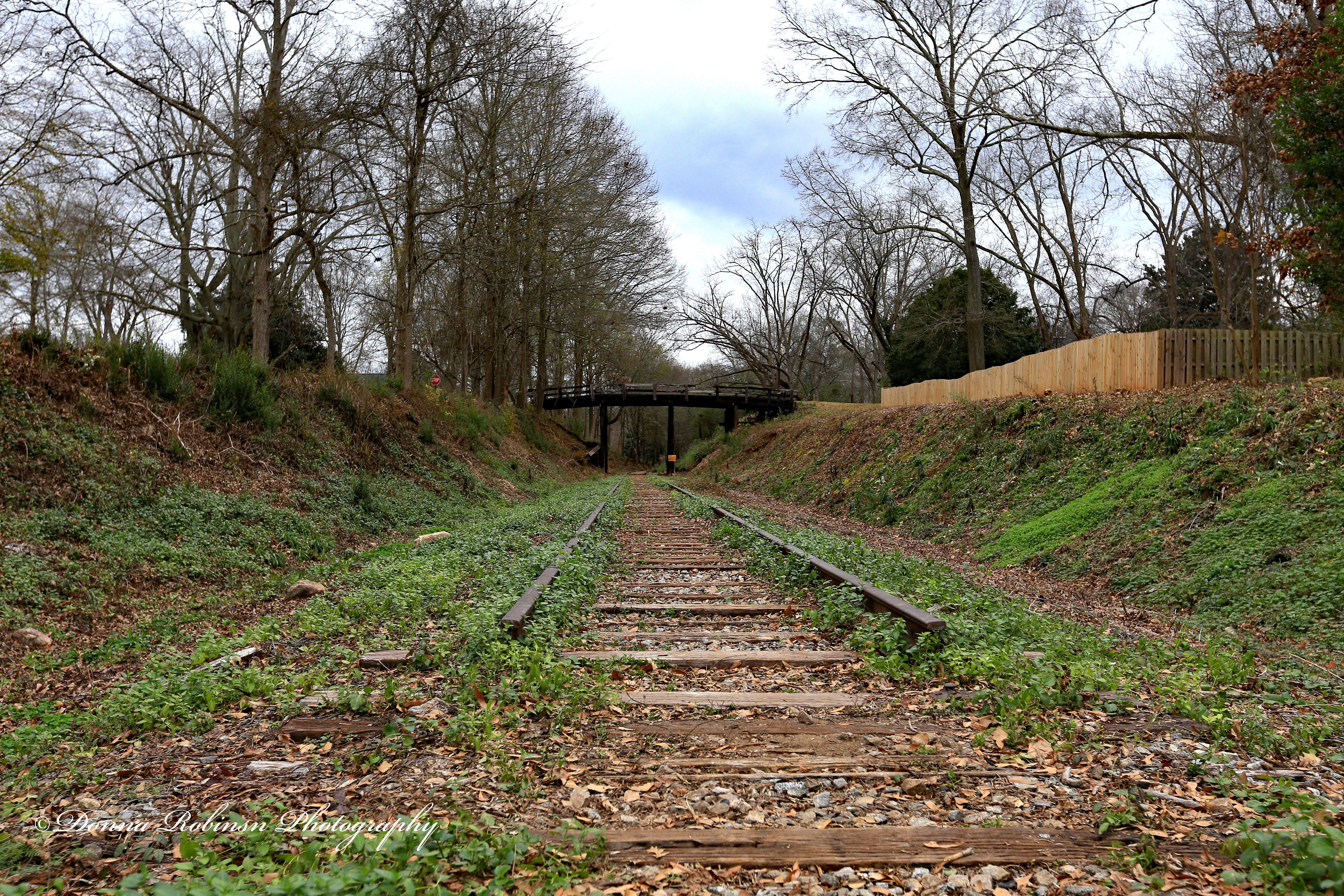
Oftentimes, abandoned places offer up great photography backdrops like the one below. Can’t you just imagine this as a backdrop for senior portraits or perhaps a movie setting? Located in the small town of Senoia, Georgia I took this photo of abandoned railroad tracks thirteen (13) years ago on one of our day trips. Little did I know at the time we would one day call this home. I’m still learning about all the history of this small town and I’m hopeful one day I’ll be able to uncover the story behind these abandoned tracks.
Thank you, Anne for this wonderful challenge and trip down memory lane. It was fun to scroll through many forgotten images and revisit days gone by. For those of you who would like to join in on this challenge, be sure to link to Anne’s post in the “comments” section and also use the Lens-Artist tag.
Ritva leads this week and boy does she have us stepping out of our comfort zone, but in a fun way. In her challenge she has us exploring abstract photography and in her words “breaking the rules of realism.”
“If you obey all the rules, you miss all the fun!”
_Katherine Hepburn
There’re quite a few ways to create abstract photography whether “in camera” or through the editing process. I thought I would share with you some images I took “in camera.”
In this first image I had read about a technique placing a baggie (or plastic wrap) over the lens to give a soft, moody kind of feel. To experiment with this technique, I shot a matted 5 x 6 photo. When I added the baggie over the lens and reshot the photo it produced an even more “antique-ish” kind of feel. It’s almost like the photo was so old that it was beginning to fade away.
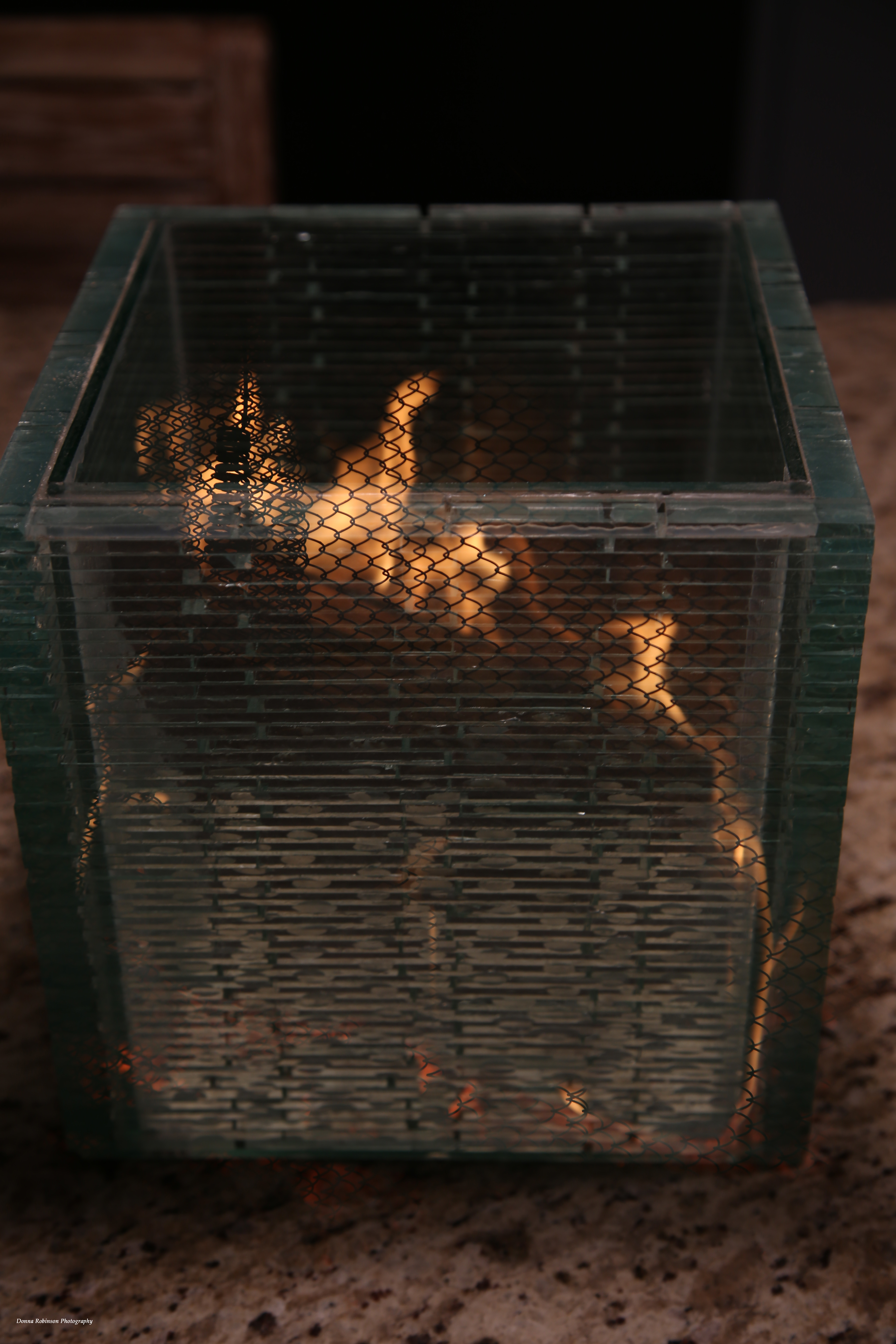
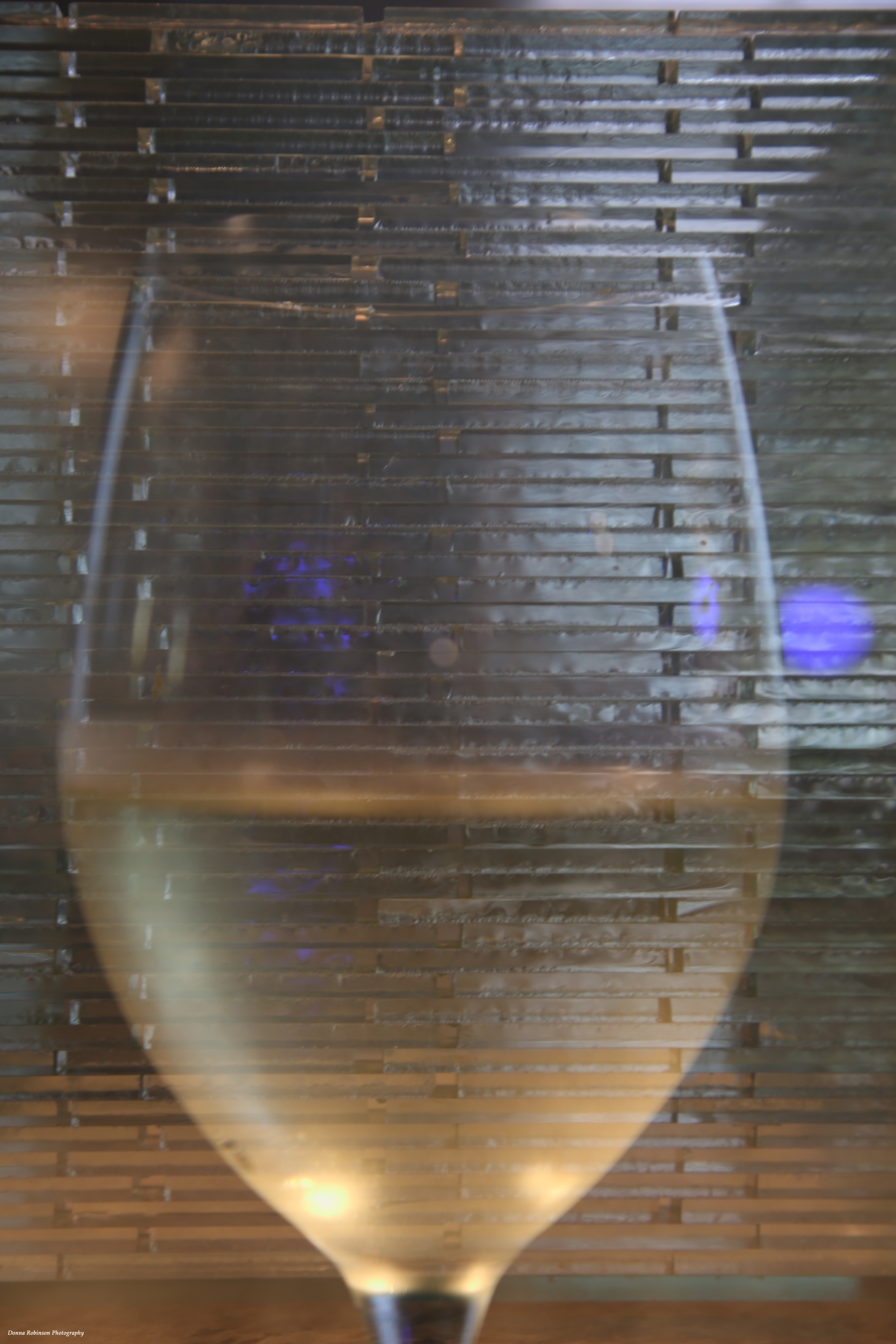
With the images below I used the “multiple exposure” setting in my Canon EOS 6D. It’s a VERY cool setting that allows you to take up to 9 different images and the camera will merge them together. I’ve only tried it with two (2) images so far.
Fire in Glass VaseYellow Daisy Floating in Bird BathChardonnay in Glass Vase
Another fun “in the camera” technique is “zooming.” A tripod or really steady hand is very helpful with this technique because as you’re using a slow shutter speed (i.e 1/5 th – 1/8th ) and as you’re taking the picture, you’re rapidly turning the lens to achieve the effect you want. Of course, you can also achieve this in Photoshop, but it’s pretty fun to challenge yourself with the camera.
Loquat BloomHavanna Cuba Acrylic PaintingBird Seed
The possibilities are limitless in creating abstract photography. It just depends on the story you’re trying to tell through your image as to what abstract technique you want to use.
Thank you Ritva for this fun and creative challenge. If you’re joining in on this challenge, be sure to link to Riva’s post in the “comments” section and also use the Lens-Artist tag.
Next week Egídio is hosting. He has some amazing photography so be sure to subscribe to his blog Through Brazilian Eyes.
This week’s Lens Artist Challenge, hosted by John, leads us down the path of examining how we edit our photos. As photographers we don’t just take a photo of what we see with our eyes, but oftentimes we take photos of what we see the end result to be. Are you with me?
I haven’t had much time behind the lens lately, so instead of going back through my library of images, I decided to get outside in our garden. I mean, what better way to share my before and after process than taking pictures in real time?!? So, here it goes.
Each of my examples were shot in RAW and first brought into the Canon Digital Professional Editing tool. There I could more accurately adjust the white balance and any other lighting/color tweaks. I’m sure I could do the same in Photoshop, but it’s what has worked for me over the years. Why fix what isn’t broke, right? I then brought all images into Photoshop to crop, make a few more minor color adjustments and apply copyright information.
Up first is one our many hydrangea shrubs. They are covered with buds this year and I’m excited to see their blooms come in. The top photo is my before shot to me it was just a little too much on the yellow green side.
In the Digital Professional editing tool, I warmed up the white balance with the temperature control and then I moved up the contrast slide a few notches and voila! The leaves are a much richer, deeper green with better definition of the veins on the leaves. Once I pulled it into Photoshop, I cropped it in to bring more focus to the cluster of buds.
Next up was our Dogwood tree. It has really given us a wonderful show of blossoms this year. I was almost a little too late in taking photos. Thankfully, I managed to get a few shots in before the next round of wind and rain blew more off the tree.
Here’s my first shot. I was using my macro lens to capture the detail of the flowers. Unfortunately, the sun was moving in and out of the clouds and I was having a hard time keeping my settings straight. Also, the wind caused a major battle in getting a sharp imagine. But, of all the images, this was the one which closely matched what I was envisioning.
In my after shot, I really like how the white balance temperature setting warmed up the darker tones of the petals and flowers. I was also able to brighten it up a little without blowing out the detail. Because I had done all the tweaking in the Digital Professional Editing tool, I only needed to crop it slightly once I brought it into Photoshop.
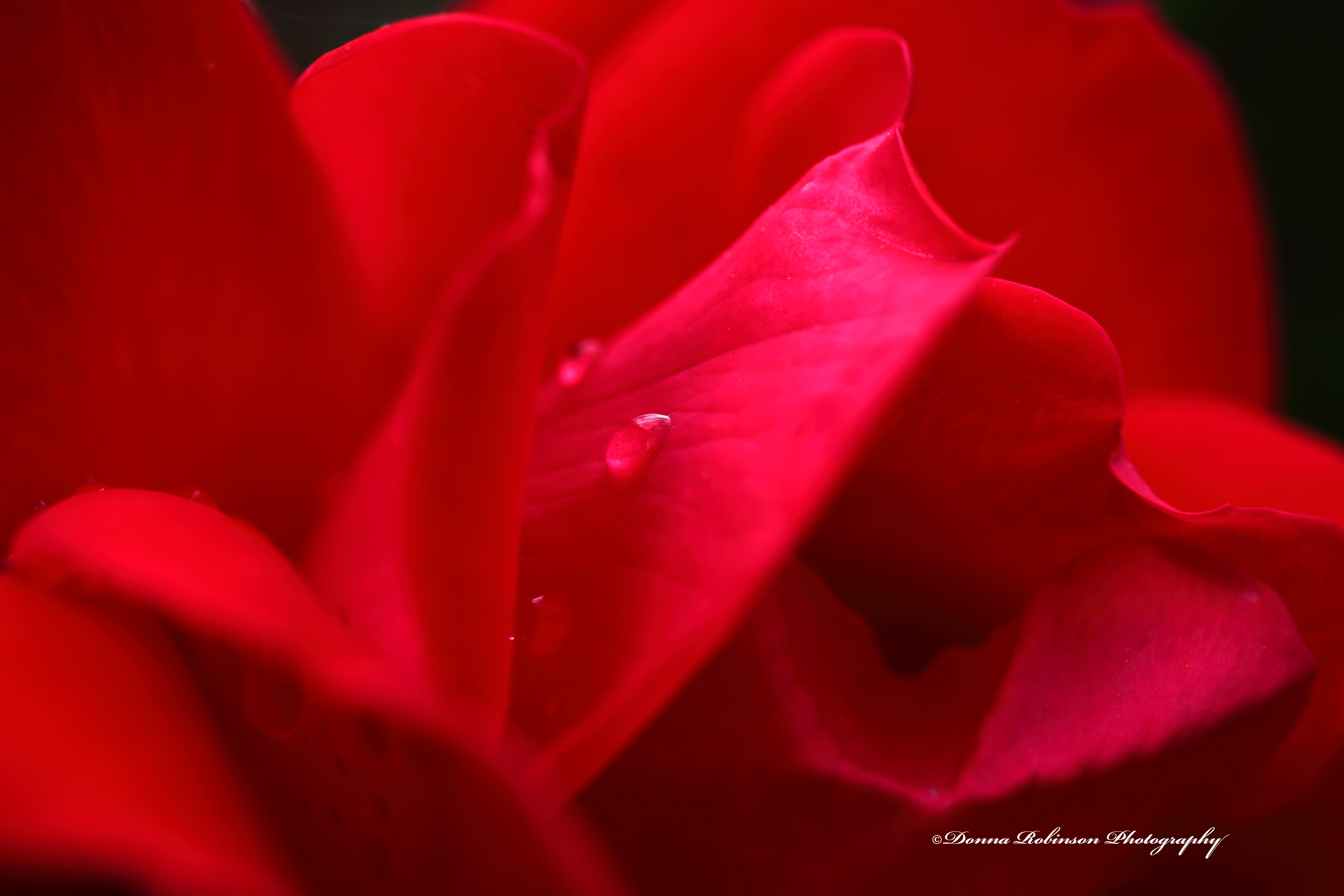
Last up in my garden tour is this rosebud. Once again, the sun and the wind were wreaking havoc on the shot (it’s a red rose, not a pink rose). Still using my macro lens, I wanted to get a better shot of one of the water droplets. That just didn’t work so I settled on a wider perspective of the various curves of the bloom.
Editing was a little challenging because to me the highlights were washing out the petals. But then I found an edit button “Linear” just under the “Contrast,” “Highlights,” and “Shadows” buttons. And just like that the entire image transformed into a beautiful red rosebud. Plus, the water droplet stands out!
But the highlight was still distracting to me. So, I went into the RGB tab and tweaked each individual color. Much better, but now it’s a little too dark.
One last little tweak and here’s the final image.
I hope you enjoyed my little tour of our garden and how I process my photos. It was nice to get outside and back behind the lens. Thank you, John for this week’s challenge.
Next week, Donna of Wind Kisses will host the challenge. You can also find more information here if you want to join the fun.
“The future belongs to those who believe in the beauty of their dreams.”
~Elenor Roosevelt
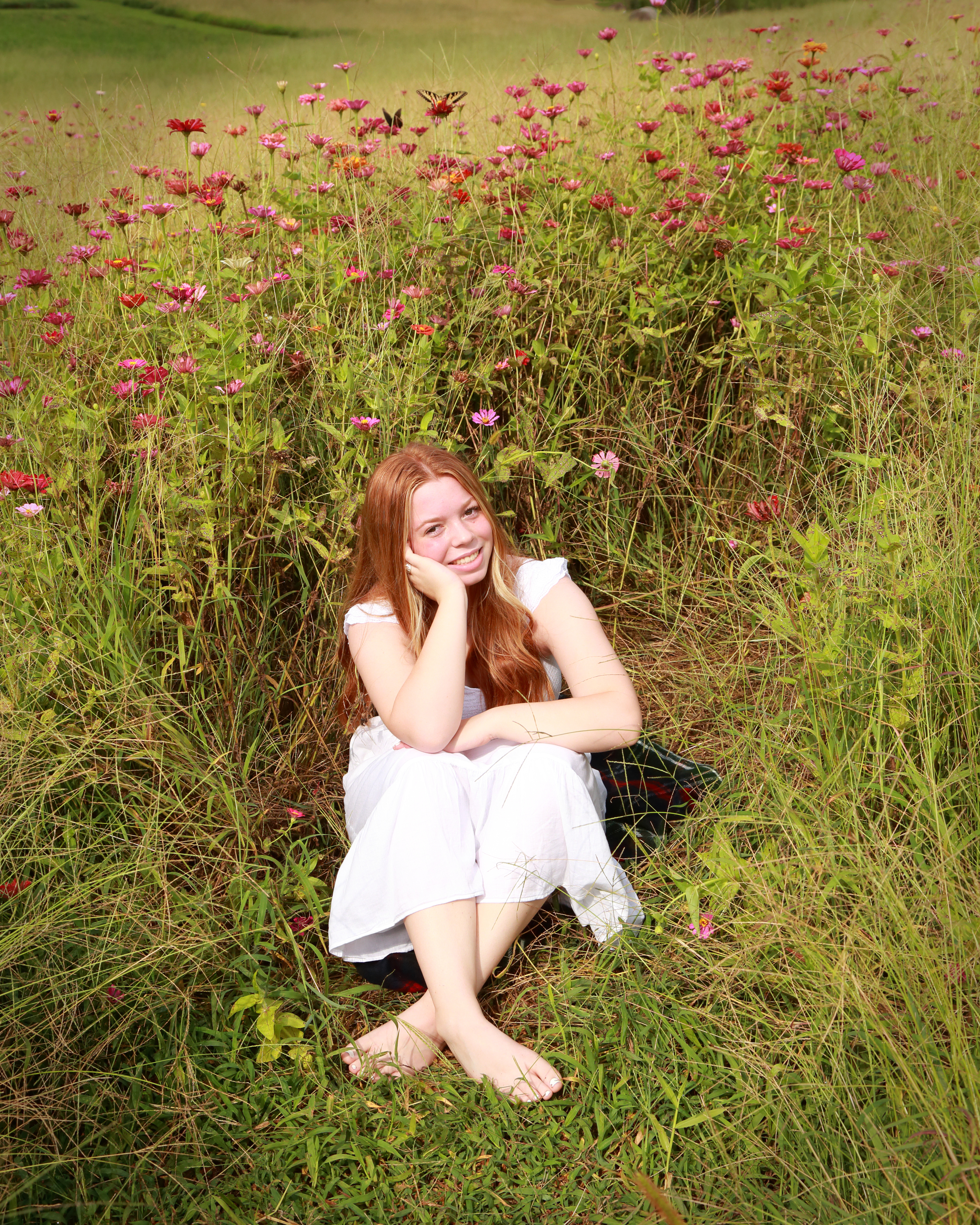
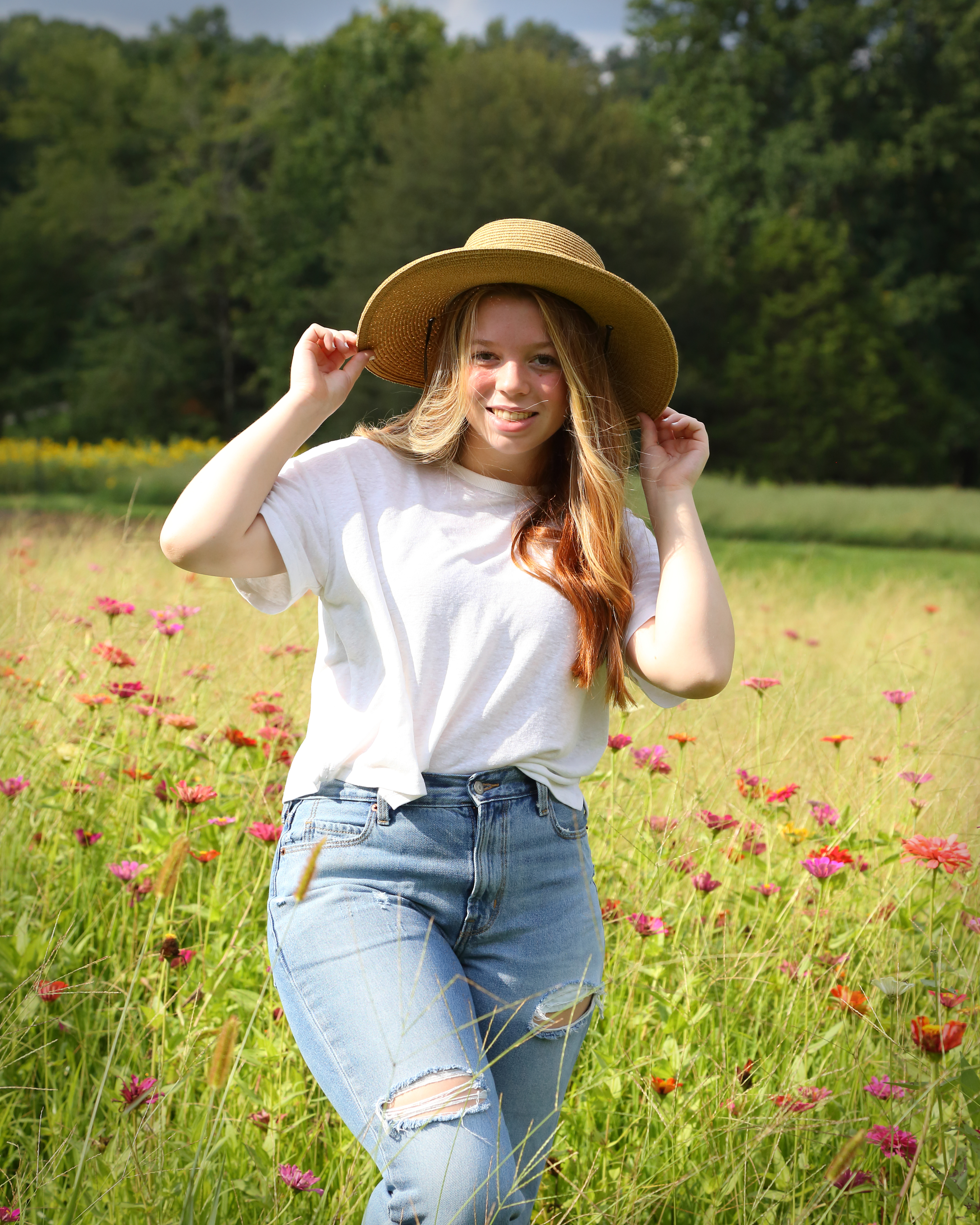
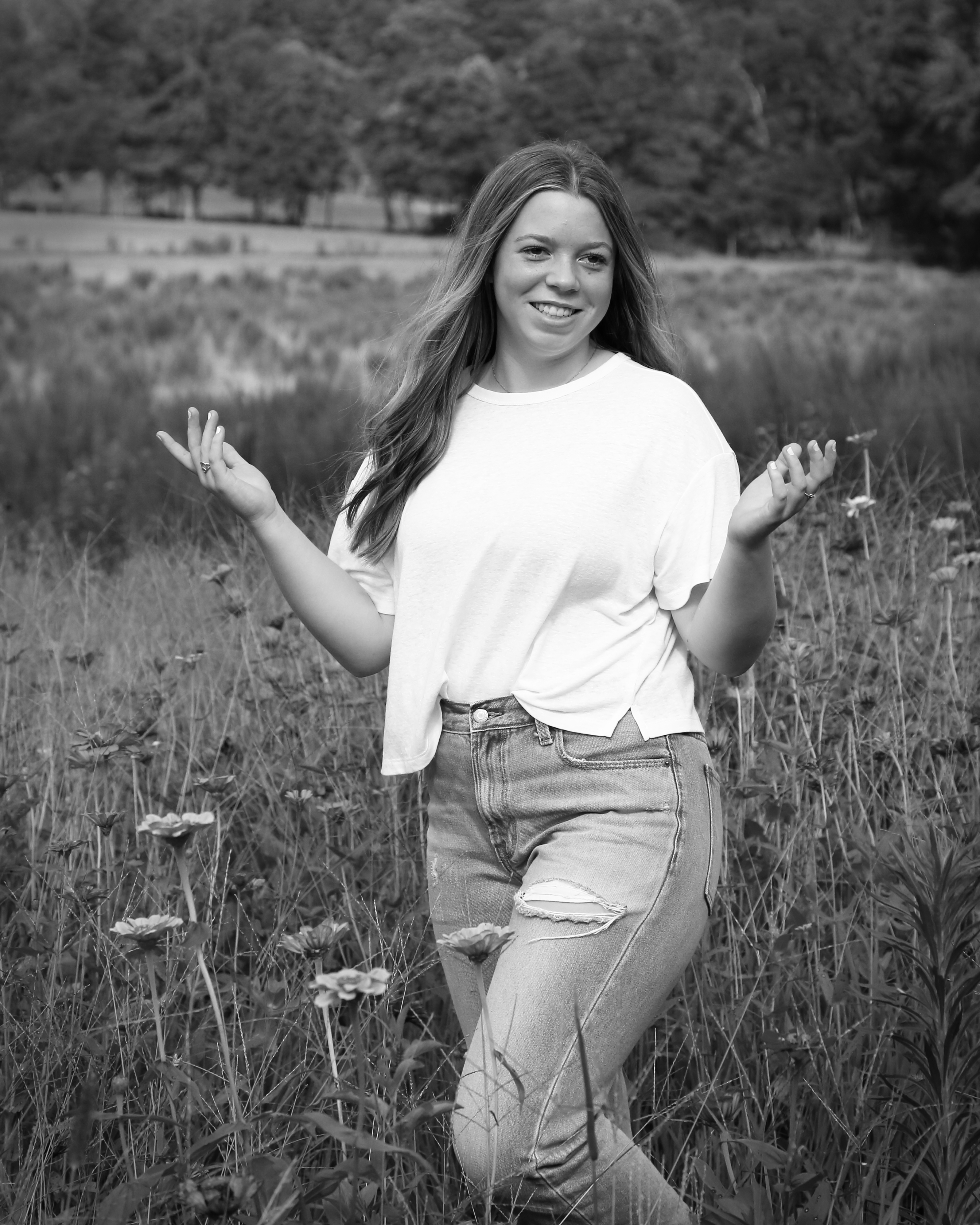
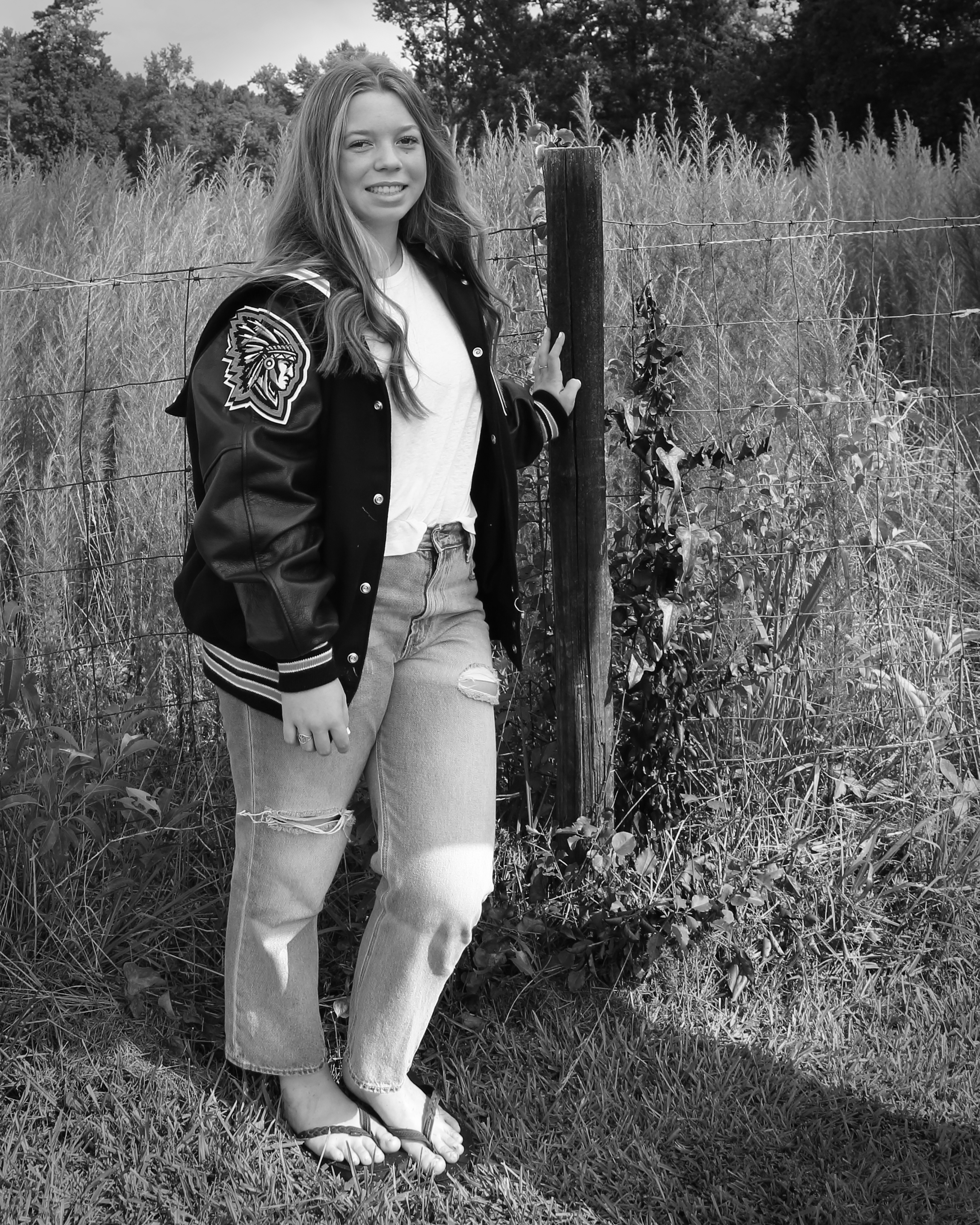
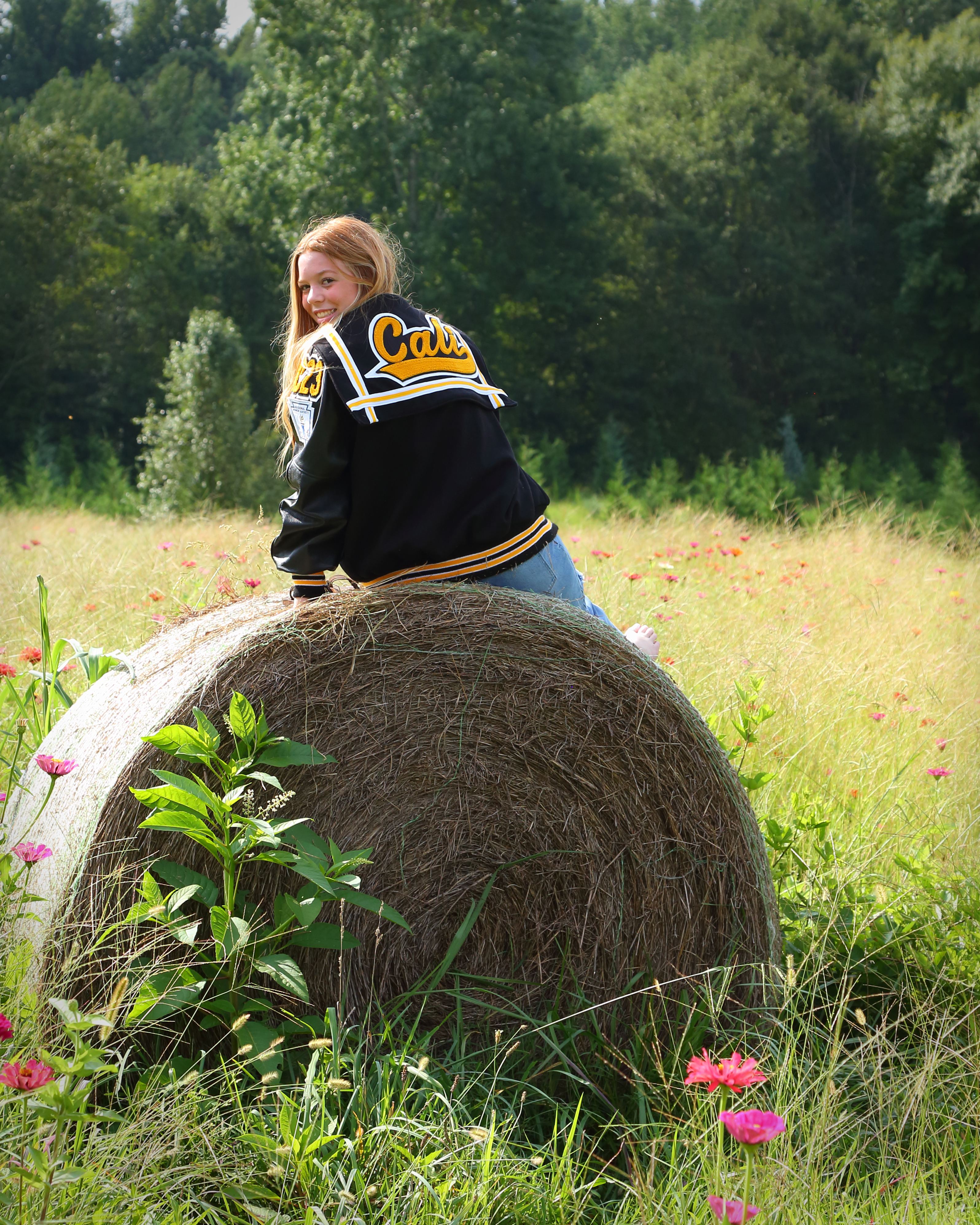
I’ve been a little busy, lately with a couple of portrait sessions and I haven’t had the chance to join in on any of the recent Lens Artist Challenges. But this week, Patti challenges us to explore what professional photographers call “working the shot” (you can read more about her challenge, here). And since you’re always “working the shot” with portrait photography, I thought I would share with you some images from a recent High School Senior Session.
Just outside of Atlanta there is a beautiful family farm called Prospect Farms. It’s truly a photographer’s paradise with several locations to shoot photos. We were scheduled to shoot in their Zenia fields, but because they had several openings that morning, we were able to wander around to some other locations on the property.
We started at 10a.m. and had one hour to shoot. Given what I thought was a short time frame I was a little nervous we wouldn’t be able get all the photos she wanted. But 600 images (yes, 600) later we ended up with more than we could have ever hoped for. Throw in a mix of sunshine and passing clouds it truly was the perfect day for a photo shoot!
“Be bold enough to use your voice, brave enough to listen to your heart and strong enough to live the life you’ve always imagined.”
~unknown
First up, the Zenia field. Cali was so prepared for this photo shoot, making my job easy! She really let her personality shine through that day.
“Take pride in how far you’ve come and have faith in how far you can go.”
~unknown
Next, the hayfield and fencepost. These were fun to shoot! There was so much texture, lighting and color to work with in both shooting and in final edits.
“Believe in yourself and you will be unstoppable.”
~unknown
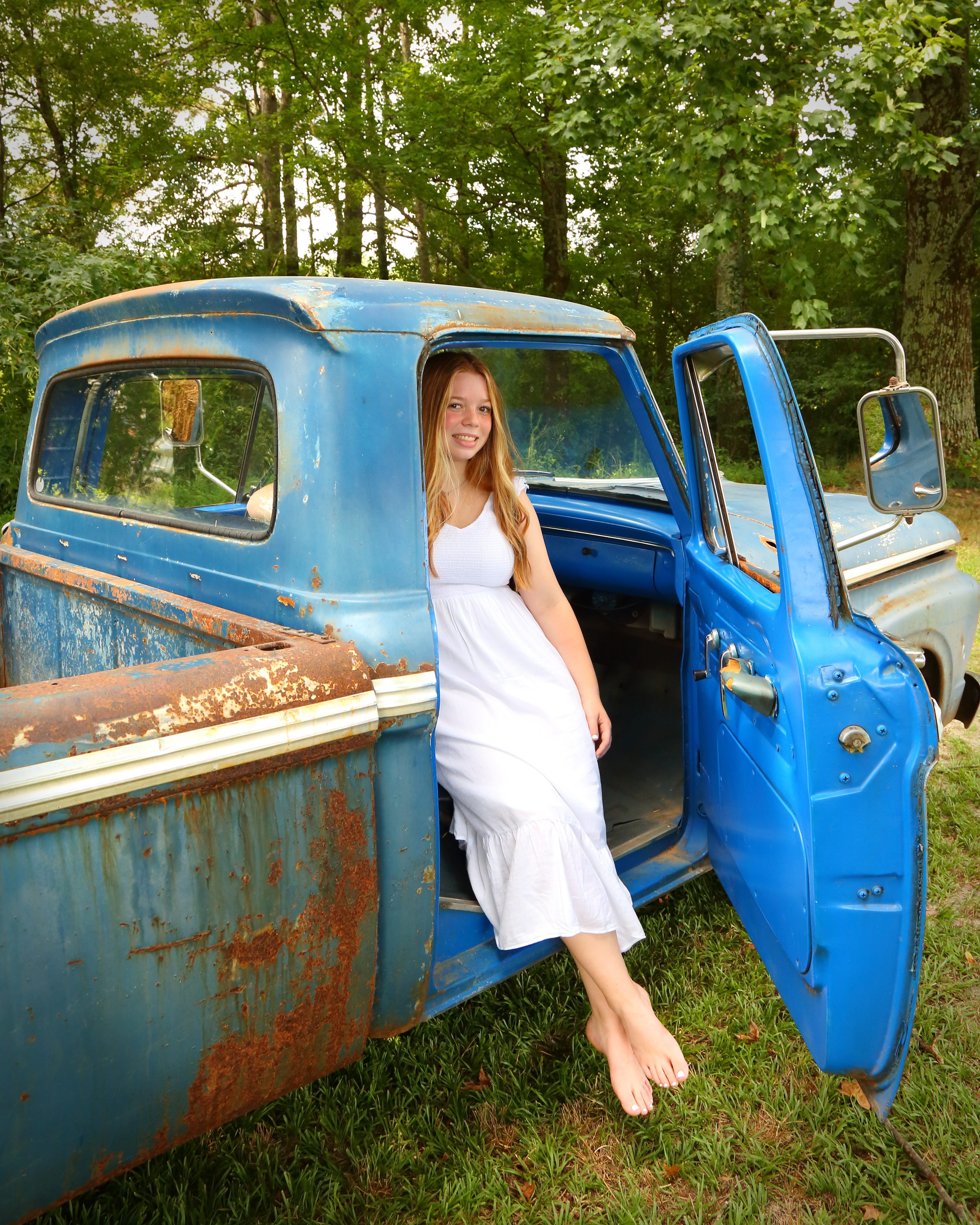
And my favorite location was this old, blue truck. What photographer can’t resist taking photos of an old, rusted out truck, right?!?!
There were a few other locations we shot, but since the challenge was “one subject three ways” my twist “was one subject in three locations.” You can view some of my other favorites from that day over on my gallery page
Thank you, Patti for this week’s challenge. I enjoyed sharing a glimpse into my other side of photography.
Next week Ann-Christine will host, so be sure to visit her site, Leya, to see what she has in store (weekly challenges post every Saturday at 12 noon EST).
Photoshop and other editing software are great tools to help a photographer distort or recreate their images. But I found a unique setting in my camera several years ago which lends itself to creating surreal images. I shoot with a Canon DSLR 6D and within the camera is a multi-exposure setting and it lets me choose up to 9 exposures in creating one image. You can read my original post here to learn more about multi-exposure in camera art.
Below are the images from my original post:
First up, yellow daisy in the birdbath. My base/background image was the birdbath with some leaves floating in the water. I then took the second image, the yellow daisy. As you can see the final image looks like the daisy is floating along with the leaves in the birdbath.
Next up, fire in a glass vase. The base image was the glass vase, and the fireplace was the overlay. I suppose with photoshop I could really get creative with this image and make some smoke out of it or change the background.
My last image is the same glass vase but with a glass of chilled wine as the overlay. Again, I suppose I could get a little more creative with the image in photoshop.
If your DSLR has this capability you should give it a try. I know after revisiting my original post I’m ready to start playing around with this setting again to see where my creativity takes me!
Until next time,
~donna
P.S. If you would like to participate in our weekly Lens-Artists Challenge, just click this link and join us on Saturdays at noon EST: Lens-Artist Challenge
P.S.S. If you are interested in purchasing unique notecards, photography or digital artwork please visit my Etsy shop by clicking on the button below.
“When life shuts a door…. open it again. It’s a door, that’s how they work!”
This week Sylvia (My Colorful Expression) encourages us to explore doors/doorways that have drawn your photographic eye. Another fun challenge for me because it gave me a chance to go through my archives and revisit some favorite places.
Like these images of an old house rapidly deteriorating on the side of HWY 341 in South Georgia. Michael and I traveled it most every time we visited St. Simons Island. It was a beautiful stretch of highway lined with farmsteads old and new, pecan groves and cotton fields. We must have passed this particular site about a dozen times before we finally stopped to take these photos.
What really stood out to me on the house was this faded blue door. Can’t you just visualize a cute, white or gray house with a bright blue door?
“So I say to you: Ask and it will be given to you; seek and you will find; knock and the door will be opened to you.”
Luke 11:9 NIV
I love old churches because of the stories they tell about the communities where they were built. Early into my transition to digital photography I became obsessed with taking photos of churches. So much so I had envisioned creating a coffee table book and naming it “Steeples I have Chased.” With the idea in my head, it wasn’t unusual for me to have Michael randomly stop so I could photograph the church. Like this one “Log Cabin Community Church.” It’s very near to where we live and has been around since 1912. Don’t you just love the bright, red doors?
What I did learn about my photography of churches (after searching through three external hard drives and my Shutterfly account) is that I haven’t done a really good job of taking photos of just the doors. Windows and alters, “yes.” But doors not so much.
I did manage to find this one from our trip to London (2010) of the main entrance to Westminster Abby. It’s definitely not my best, but that’s why we work at photography every…. single….day! Right?!?!
“The happiest of people don’t have the best of everything, they just make the best of everything.”
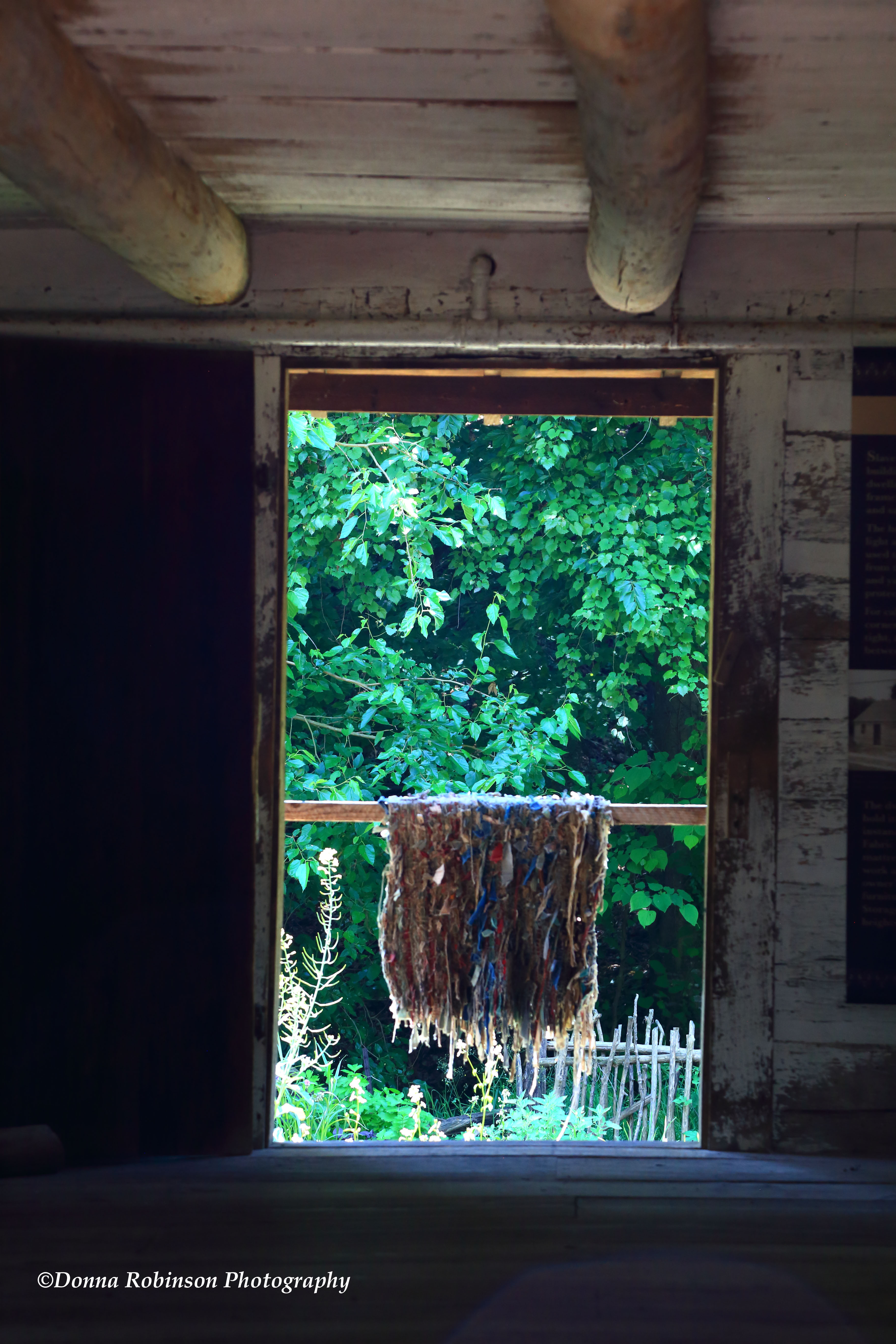
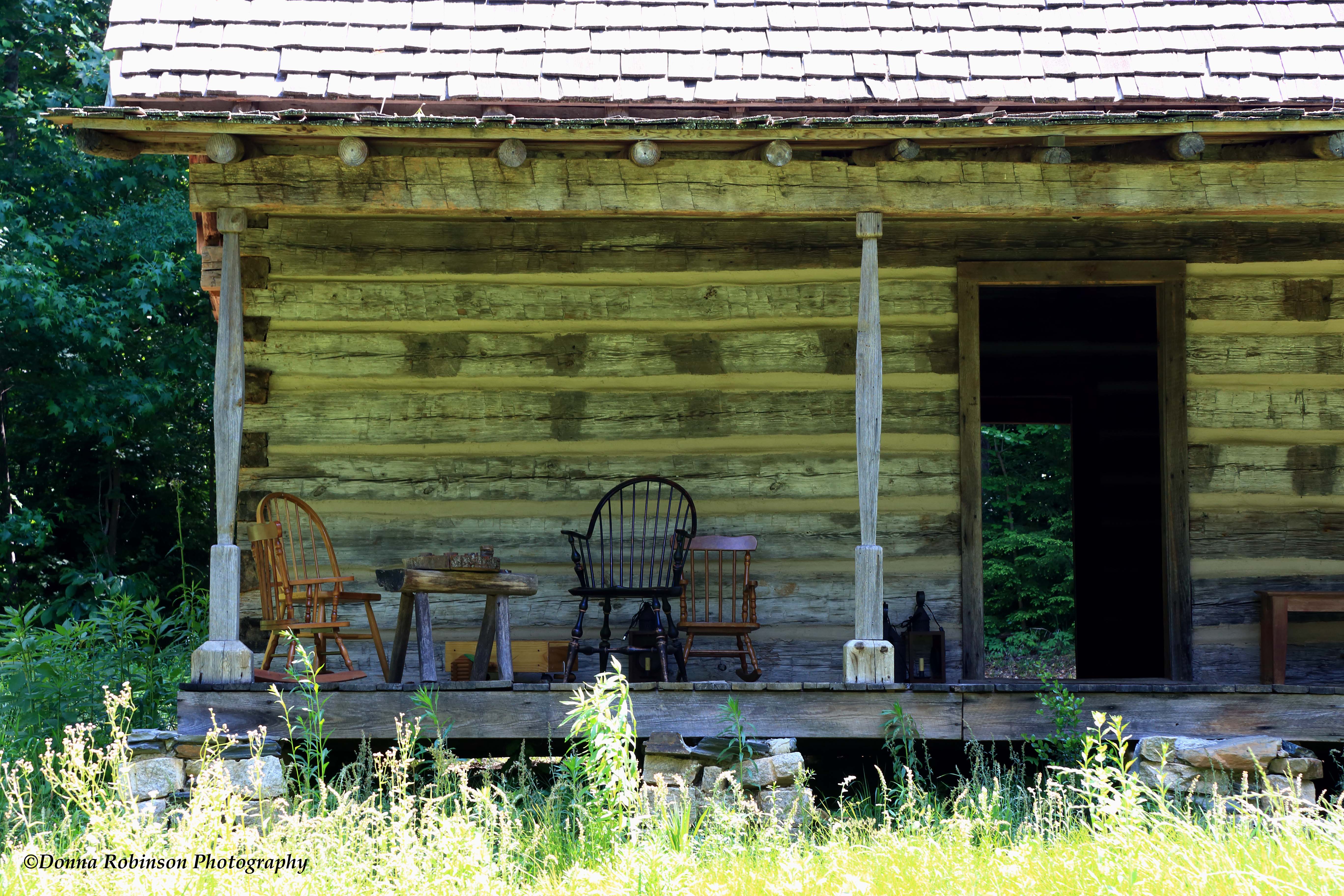
Sometimes a door really isn’t a door. It could be the front porch or simply the doorway to the home. This photo was taken at the Atlanta History Center gardens the summer I began my “re-wirement” journey. I don’t recall where the cabin originated from but what drew me in was the opposite doorway with the colorful, tattered fabric hanging on the railing. I began to imagine what the activity in the cabin was like. I’m sure to us it was a simpler way of life, but to the early settlers it was just life.
In the photo below do you see what I mean about the porch being the doorway to the home in this photo? It’s so welcoming and inviting and draws you further into the cabin.
So that’s my photo journey of doors. Lesson learned; I need to pay more attention to doors. Afterall, you never know which one will be yours to open!
Until next time,
~donna
P. S. Next week, Tina will be our host. She is a wonderful photographer so be sure to visit her site.
P.S.S. If you would like to participate in our weekly Lens-Artists Challenge, just click this link and join us on Saturdays at noon EST: Lens-Artist Challenge
P.S.S.S. If you are interested in purchasing unique notecards, photography or digital artwork please visit my Etsy shop by clicking on the button below.
Ann-Christine gives us an interesting (and fun) challenge this week with “Three of a Kind.” A great theme for any photographer (at least in my case) because we all see more than one image when we take a photograph. Some may call it perspective and while that may be true, there’s more. It’s a different way of telling a story through your images using “triptych – the art of threes.”
What do I mean? Well, let’s take a look at the photo below. It’s an abandoned passenger car and caboose sitting out in a field in Hartwell, Georgia. A pretty cool image in and of itself. It tells a story of a train no longer in use and that’s pretty much it.
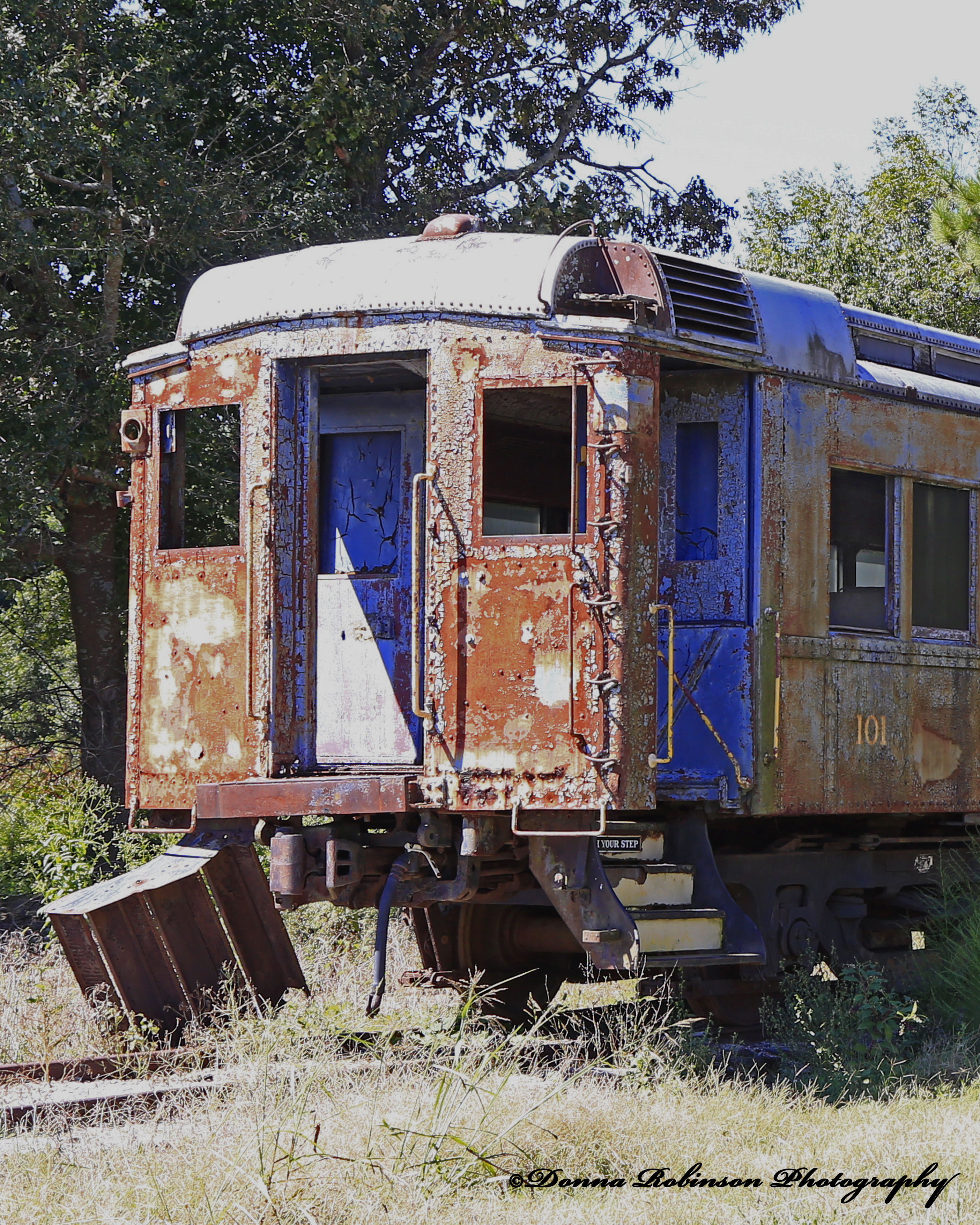
But as I walked up closer to the train other images came into play telling their own story. For instance, there’s the front of the passenger car below. How many cities had it been through? How many miles of railroad tracks had it covered? How old was it?
Then as I moved down along the side of train another image came to mind. As I peered through the window, I saw a tattered passenger seat and wondered who were the people that had traveled in seat? Where did they travel? Did they travel by themselves or with someone else? What did they see as they gazed out the window?
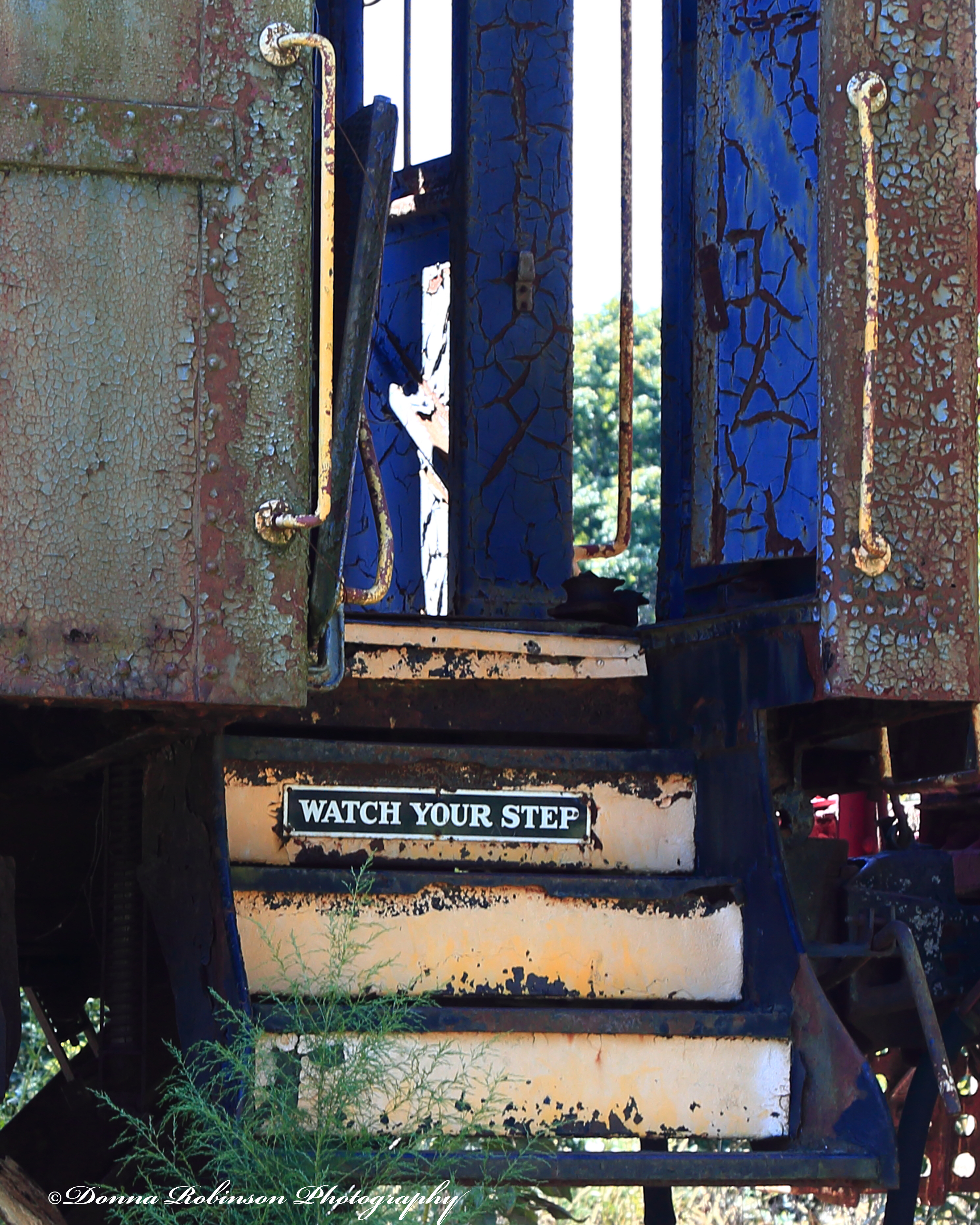
The last photo that came to mind was the “Watch Your Step” sign on the stairs leading into the passenger car. How many feet had carefully climbed the steps? What were the styles of the shoes the passengers were wearing? I tried to image the time period this train was in operation.
Other times when I photograph something, I don’t see the final image until I bring it into photoshop. I know there is more to the photo, and I have a general idea of what could be done with the image, but it isn’t until I sit down at the computer that the possibilities come into play.
Take for instance this image of the “Worth Avenue Clock Tower” located in Palm Beach, Florida. My sister-in-law had invited us to Florida for a weekend, winter getaway and asked me to take the photo for her (a small price to pay for free room and board for the weekend😉).
As you can see, I wasn’t the only one trying to get a photo of the clock tower that day. I knew I had my work cut-out for me! Not to mention it was cloudy, windy and I had to stand in the middle of two busy streets to get a full shot of the tower (the things we’ll do to get the shot, right?!?).
Thanks to the magic of photoshop I was able to make some adjustments and landed on the image below. Was it like the one she had seen in an art gallery? Nope, because I didn’t have the city permits to close off the road. Nor did I have the lighting crew or expensive lights to recreate their image. But I was able to give her something she could proudly display in her home.
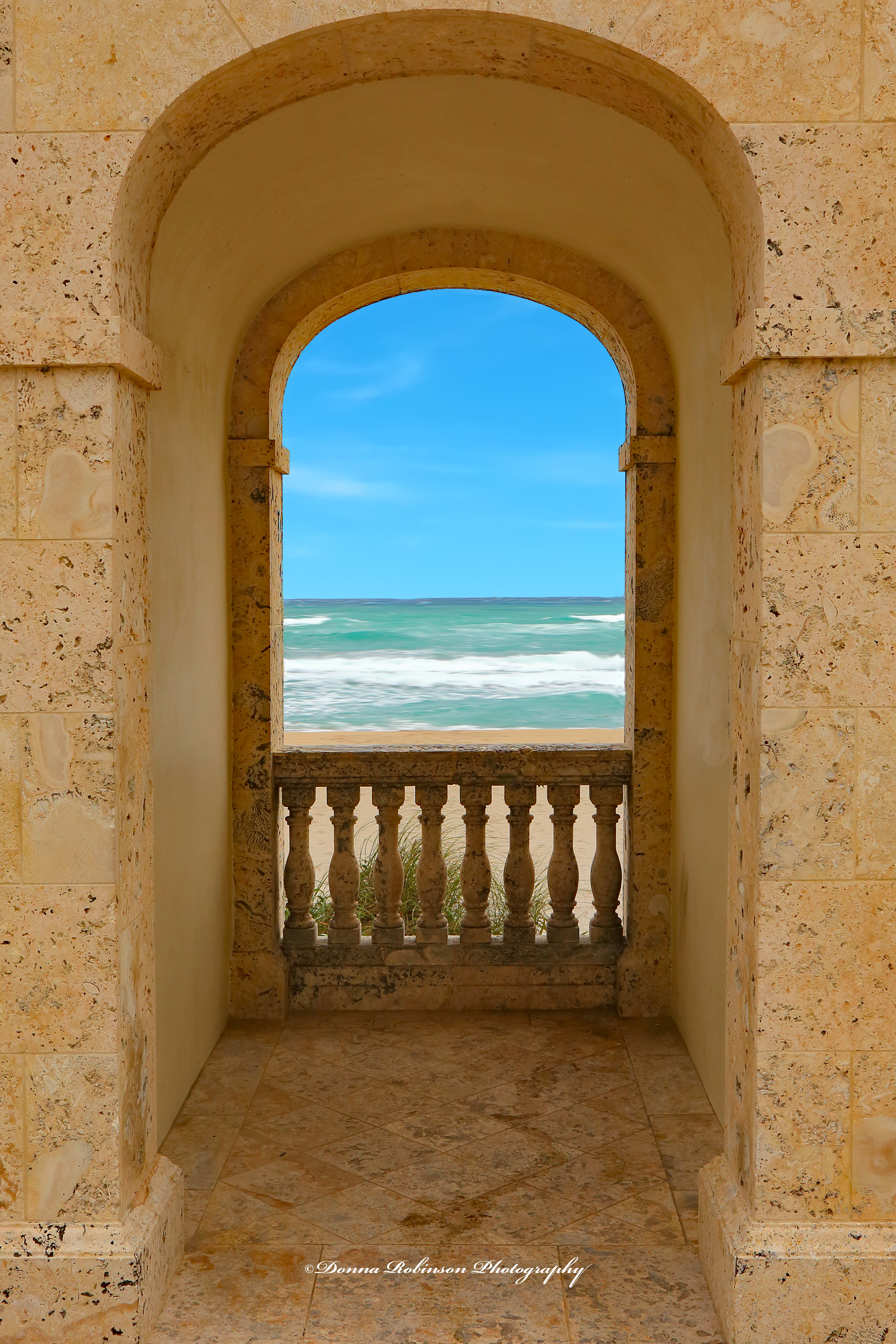
In the shot below I focused on the arches inside the tower. It was a last-minute shot (yep, there were people to photoshop out, too). I’m so glad I took it because I love how it draws your eye out to the ocean.
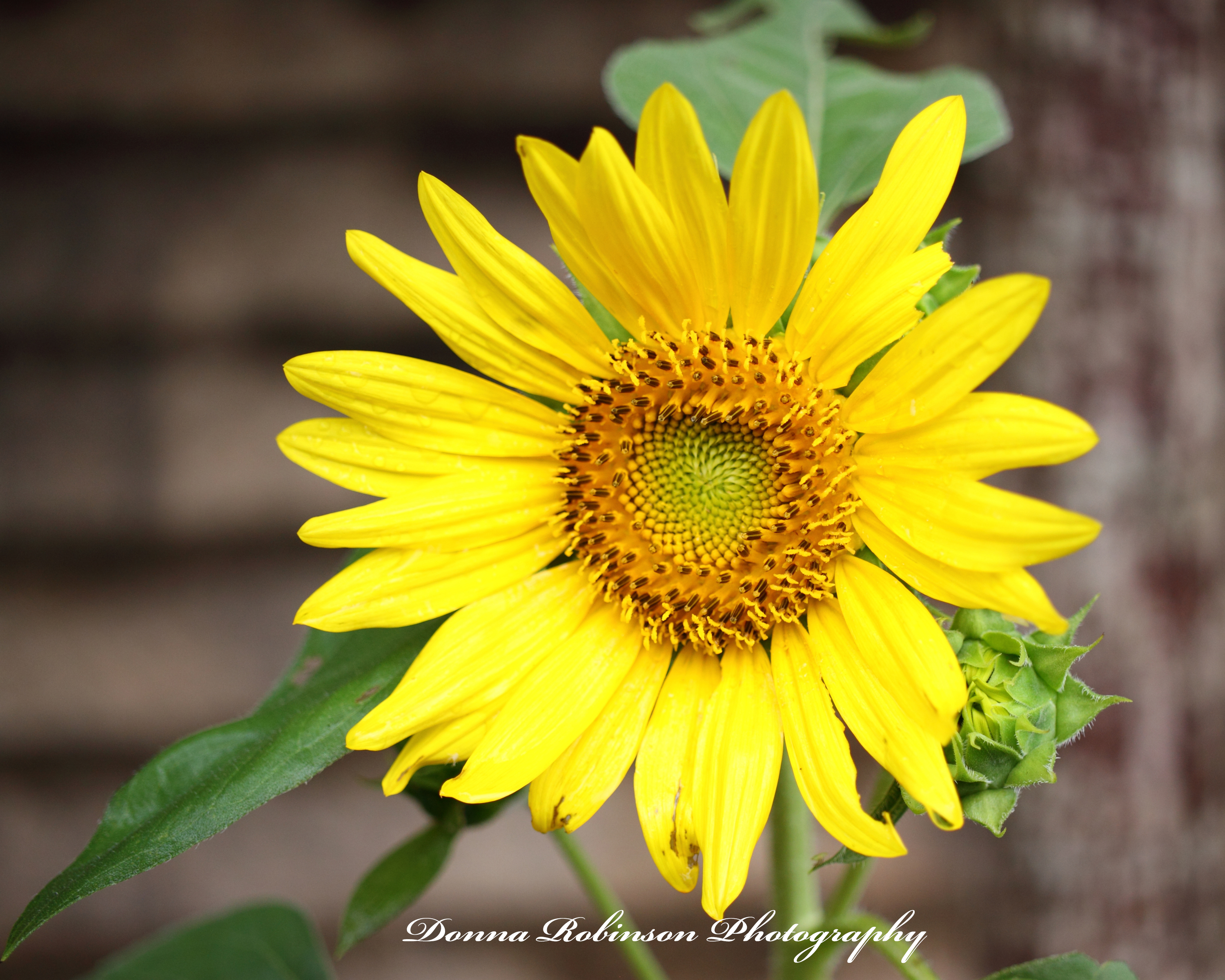
My final “Three of a Kind” is this wild sunflower from a couple of summers ago. I love how the different shapes and textures lend themselves to becoming different images all related to the first.
Thank you, Ann-Christine, for this wonderful exploration into “triptych – the art of threes.” I love learning new techniques in art and how they can be applied to my photography.
Until next time.
-donna
P. S. Next week, Sofia will be our host. Be sure to visit her site.
P.S.S. If you would like to participate in our weekly Lens-Artists Challenge, just click this link and join us on Saturdays at noon EST: Lens-Artist Challenge
P.S.S.S. If you are interested in purchasing unique notecards, photography or digital artwork please visit my Etsy shop by clicking on the button below.
When you research the history of photography (Wikipedia: History of photography) it’s quite clear you can’t have an image absent of both light and shadow. Light highlights the objects and their elements. Whereas shadows bring contrast and definition.
Mother Nature reigns when it comes to creating light and shadows. I’ll even take it another step forward and add color to the mix as well. Take for instance these shots I took from a blood moon eclipse event a few years ago. Science tells us the moon shines as a result the sun reflecting off the side of the moon visible to us. In the photos below you see how the light shows us the details of the craters and as the moon rotated around the earth shadows formed until the moon was covered in darkness. As the eclipse progressed through the night sky, the shadows disappeared reveling the moon again, but it had turned red.
It was pretty spectacular to watch this event occur, although it was pretty cold that night!
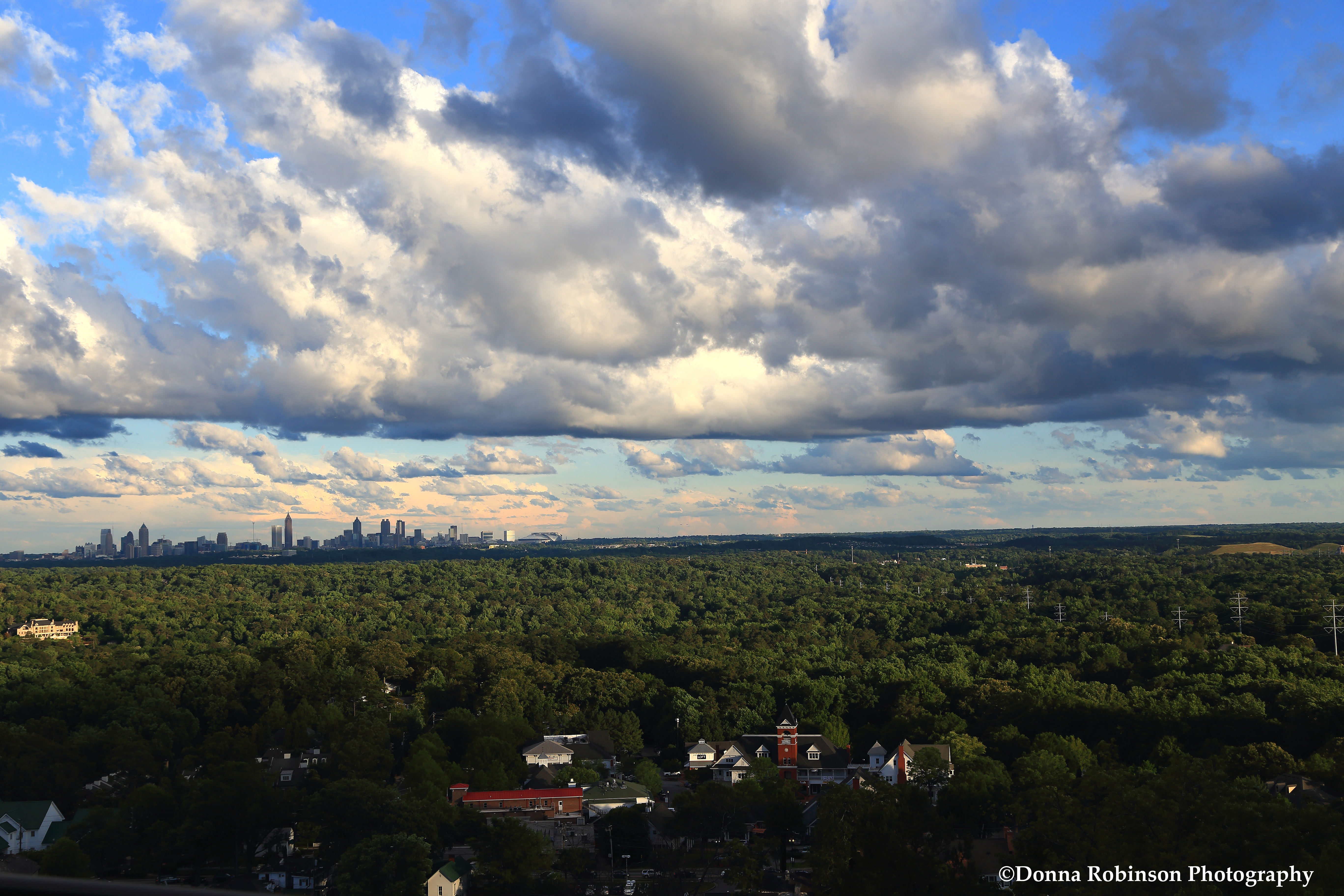
Or, what about clouds! In the photo below the light fills the clouds, their formation gives way to shadows producing depth and definition in both the clouds and on the city skyline. Don’t you want to just jump on one of these clouds and float away?
How about a storm rolling in at sunset? This image faces South, so the sun was setting to the right of the frame, reflecting in the glass building. But notice what happens to the rain cloud as your eye moves right to left away from the building. Because of the setting sun the clouds/sky change from a pinkish/blueish rain shower to a somewhat clear, blue sky over the city. This was a pretty fascinating storm to watch.
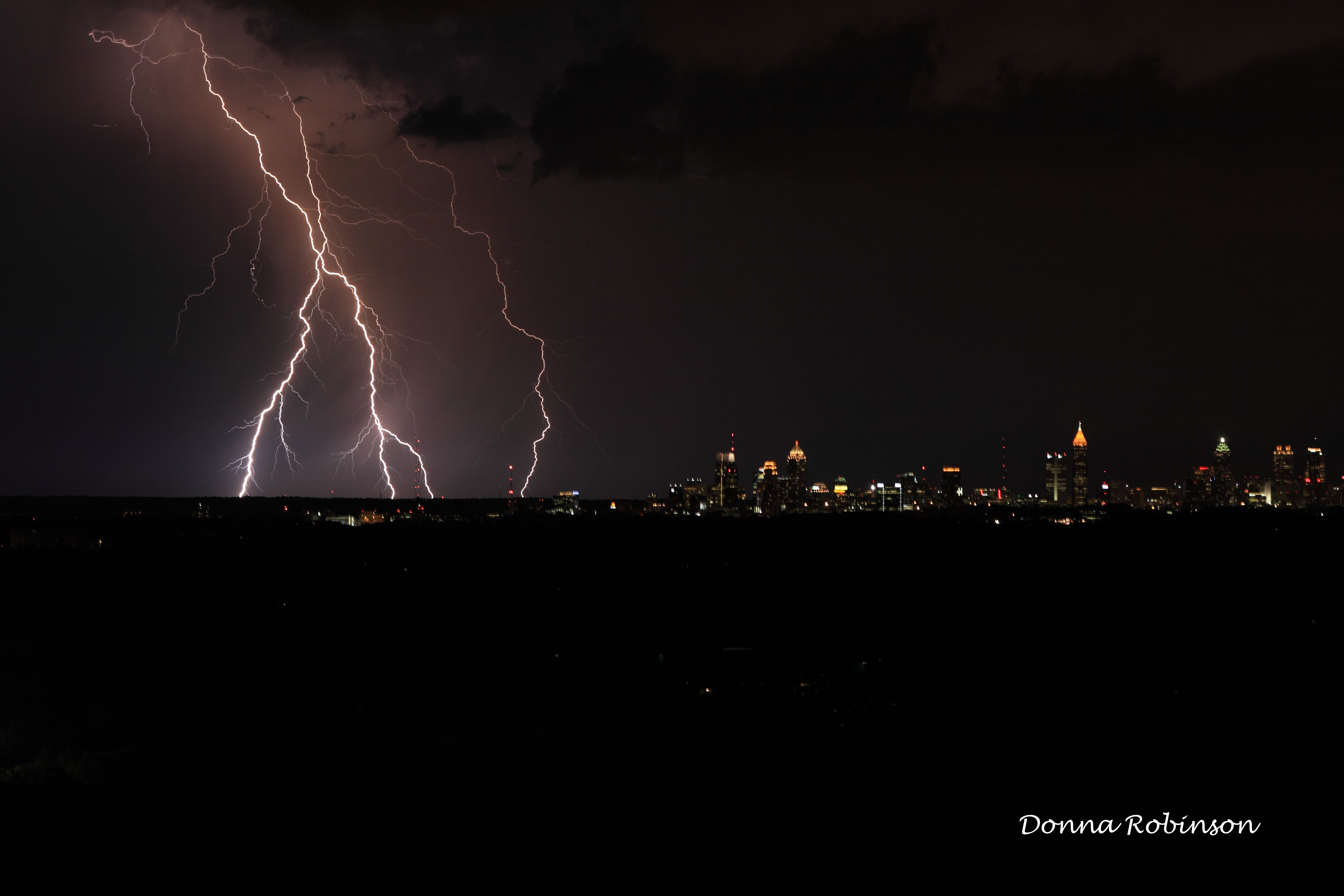
Who can resist watching a thunderstorm? We were sitting on our balcony one night and I must have taken over a hundred photos to get this shot. I love how the electricity in the air is so full of light that it transforms the dark sky into a pinkish/purple hue while giving way to the outline of the storm cloud. Doesn’t the lightning strike look like a giant spider next to the city skyline?
Then there’s a rainbow just after the rain when the sun along with the atmosphere creates a prism of color. Not only does the sun create the rainbow, but it colorizes the remaining clouds and skyline below.
Thank you, Patti for this wonderful challenge. I’ve enjoyed seeing everyone’s collection of amazing photography and interpretation while revisiting my own experiences with light and shadows through nature. I’m looking forward to seeing what Ann-Christine has in store for us next week.
Until next time!
~donna
P.S. If you would like to participate in our weekly Lens-Artists Challenge, just click this link and join us on Saturdays at noon EST: Lens-Artist Challenge
P.S.S. If you are interested in purchasing unique notecards, photography or digital artwork please visit my Etsy shop by clicking on the button below.



























 Donna Robinson Photography